English
 русский
 简体中文
简体中文


The forging shop cutting 2,000 steel billets per shift faces a simple problem: a single-piece band saw keeps the operator busy and the blade idle. Load one billet, clamp, cut, unload, repeat. The machine spends as much time waiting as it does cutting. A multiple billet automatic sawing machine changes that dynamic. It groups several billets into one clamp, advances them automatically to a programmed length, and cuts the entire bundle in a single stroke. The cycle produces several finished pieces at once, and the operator is freed from loading, measuring, and clamping tasks between every workpiece.
What Defines a Multiple Billet Automatic Sawing Machine
A multiple billet automatic sawing machine is a production band saw built to cut more than one billet per cycle. Billets, whether round, square, rectangular, or slab-formed, are loaded side by side into a bundle, clamped as one group, and fed automatically to a programmable stop. The saw frame then lowers through the full bundle cross-section in one pass.
Bundle cutting is the capability that separates these machines from standard saws. A conventional band saw holds one workpiece; a bundle-capable machine applies uniform clamping pressure across the whole group so the blade cuts every billet at the same time. The productivity effect is immediate: a machine cutting a bundle of six 100 mm square steel billets removes metal at the rate of one 300 mm x 100 mm block, but delivers six pieces per cycle instead of one.
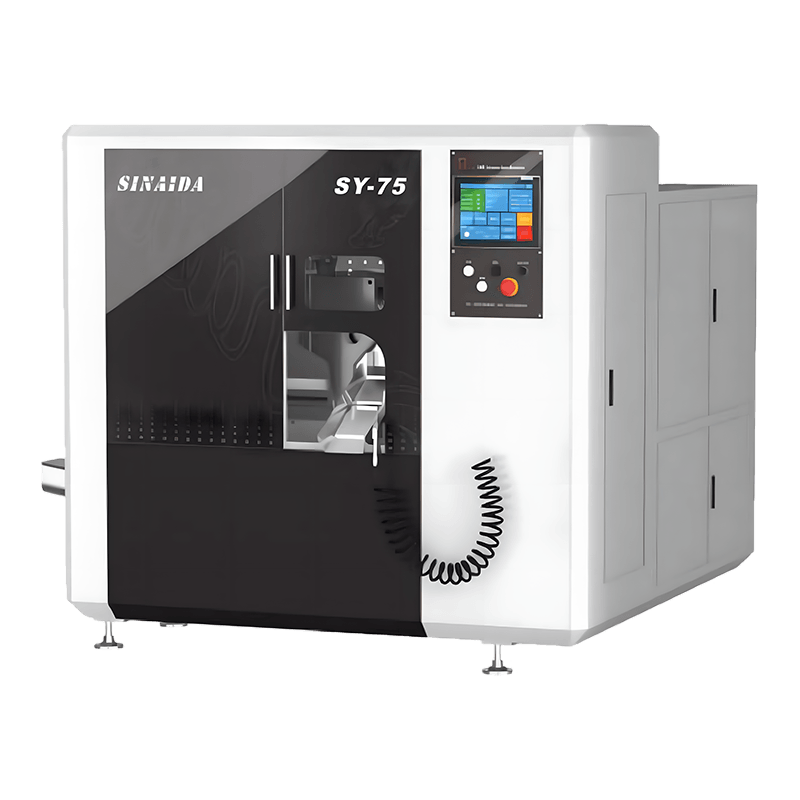
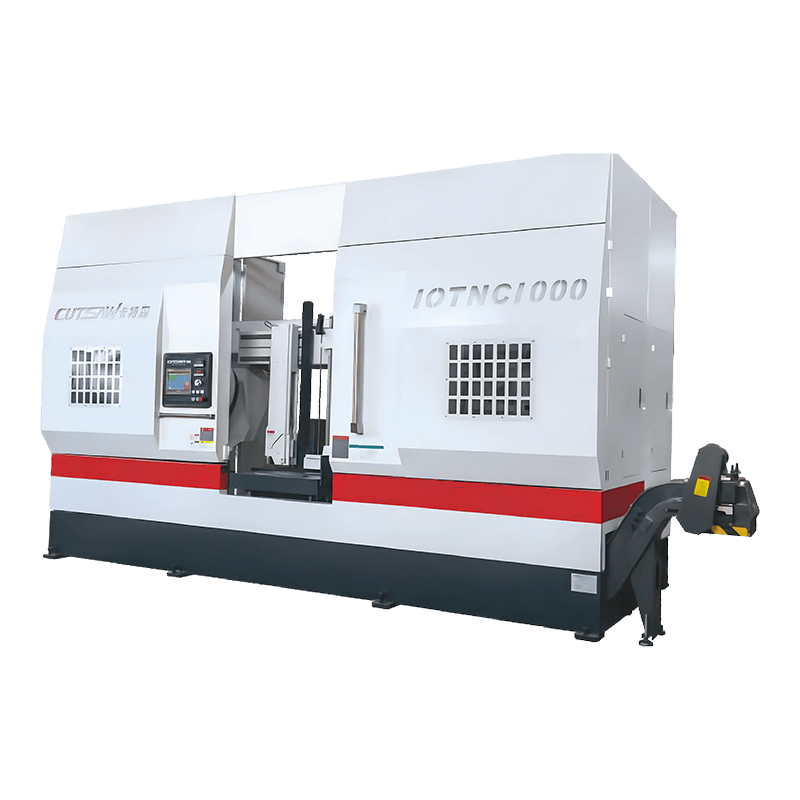
This is the design logic behind the IoTNC300 high-speed CNC band saw with bundle cutting. It combines a high blade speed, a bundle-capable vise, and servo-controlled feed for batch production. For a plant cutting identical billets daily, that combination turns sawing into an automated cell rather than a manual task.
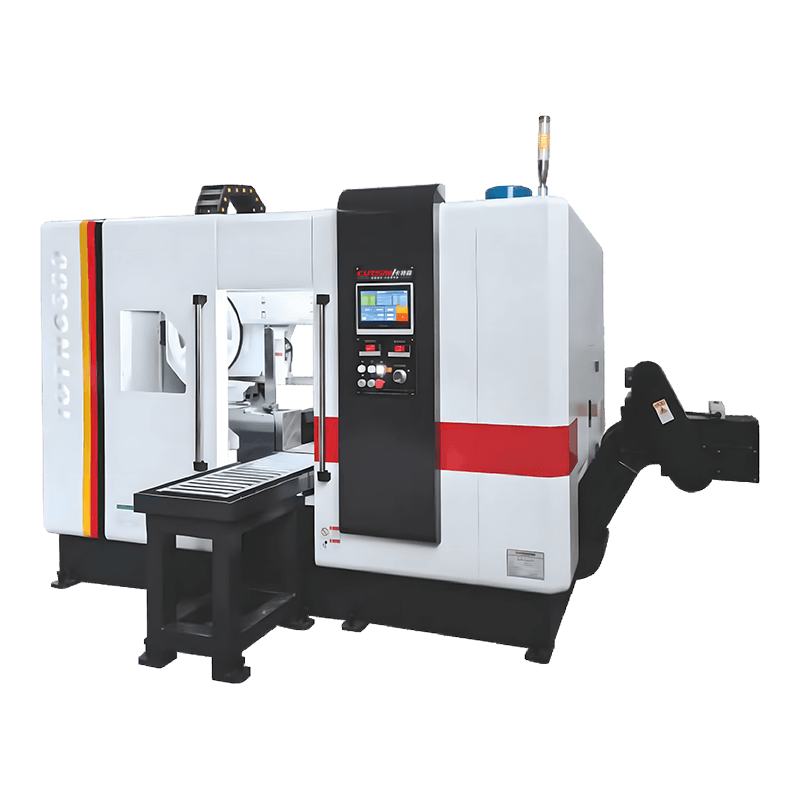 OEM/ODM IOTNC300 High Speed CNC Band Saw Machine with Bundle Cutting Function foZhejiang SINAIDA Machine tools Co.,Ltd is Top China OEM/ODM IOTNC300 High Speed CNC Band Saw Machine with Bundle Cutting Function for Ste...View Product →
The practical definition also includes automatic length stop, hydraulic clamping, and a control system that stores cutting programs. Without those features, a machine is just a larger band saw; with them, it supports near-unattended cycles.
Key Specifications to Compare Before Buying
Build a short specification list before comparing models. The parameters below have the largest effect on bundle capacity and cycle time.
| Parameter | What It Controls | What to Look For |
|---|---|---|
| Bundle capacity (width x height) | Maximum cross-section cut in one pass | Match your largest billet bundle, not single billets |
| Blade speed | Cutting rate and blade life | Variable speed drive covering roughly 20-150 m/min |
| Blade dimensions | Frame size and cutting depth | Longer and wider blades improve stability |
| Feed system | Length accuracy and cycle consistency | Servo feed with programmable cut length |
| Clamping system | Bundle rigidity during the cut | Hydraulic clamp with adjustable pressure |
| Control system | Automation and repeatability | Stored programs for different billet sizes |
Read the capacity rating as a bundle, not as a single bar. A machine rated for a 300 mm round bar may still be too small for six 100 mm bars if the vise opening cannot accept the total bundle width.
Automation Levels: What Automatic Actually Means
Semi-automatic saws require the operator to load billets, start the cycle, and wait for the blade to return. That is acceptable for occasional bundle work. For long production runs, consider three automation stages.
- Automatic feed: roller tables or a shuttle vise advance the bundle to the cut line after every stroke.
- Programmable length control: the control system stores target cut length, piece count, and feed rate, so the operator selects a job number instead of measuring each billet.
- Full integration: the saw connects to upstream handling and downstream discharge equipment, useful in continuous extrusion or forging lines.
The KT330Z automatic feed band saw sits in the middle stage. It advances the work automatically and holds a consistent cut length without constant operator attention. For a shop moving from single-piece cutting to bundle work, that is usually the first upgrade.
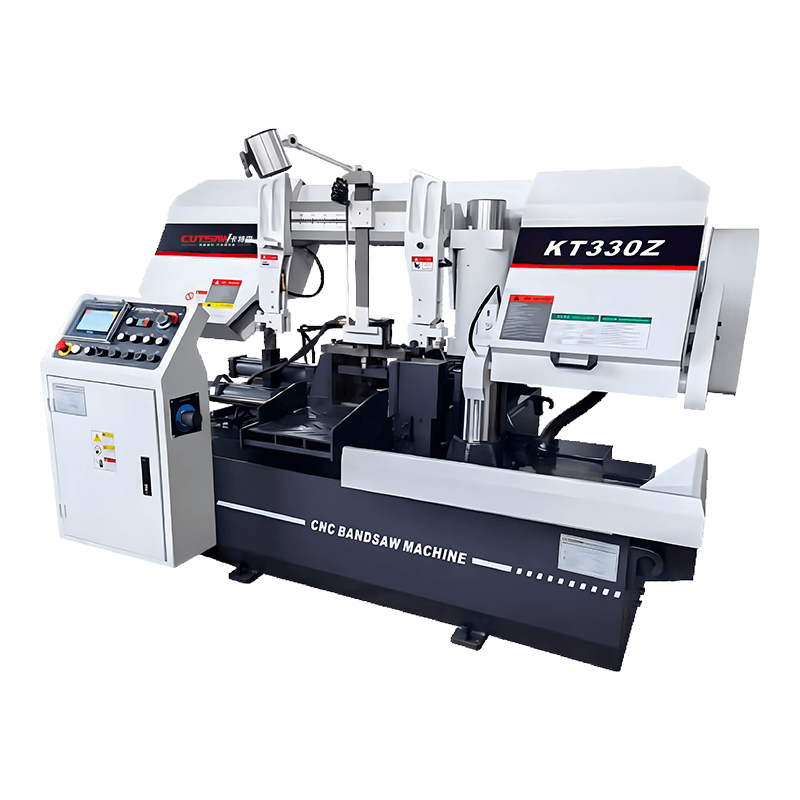 OEM/ODM KT330Z Automatic Feed Band Saw Machine Manufacturers, Factory - ZhejiangZhejiang SINAIDA Machine tools Co.,Ltd is Top China OEM/ODM KT330Z Automatic Feed Band Saw Machine Manufacturers and Factory, High perfor...View Product →
One point deserves emphasis: automatic feed does not mean automatic loading. An operator still builds the bundle on the infeed table, because bundle composition changes with material grade and size. The machine's job is to make the cutting cycle fully automatic once the bundle is in place.
Aluminum, Steel, and Copper: Matching the Saw to the Material
Billet sawing appears most often in aluminum extrusion, steel forging, and copper or brass processing. Each material puts different demands on the machine.
- Aluminum billets are soft and gummy. They need high blade speed, often 90-180 m/min, sharp tooth geometry, and flood coolant to prevent chip welding. Clamping is easy, but the blade gullet can pack if the tooth pitch is too fine.
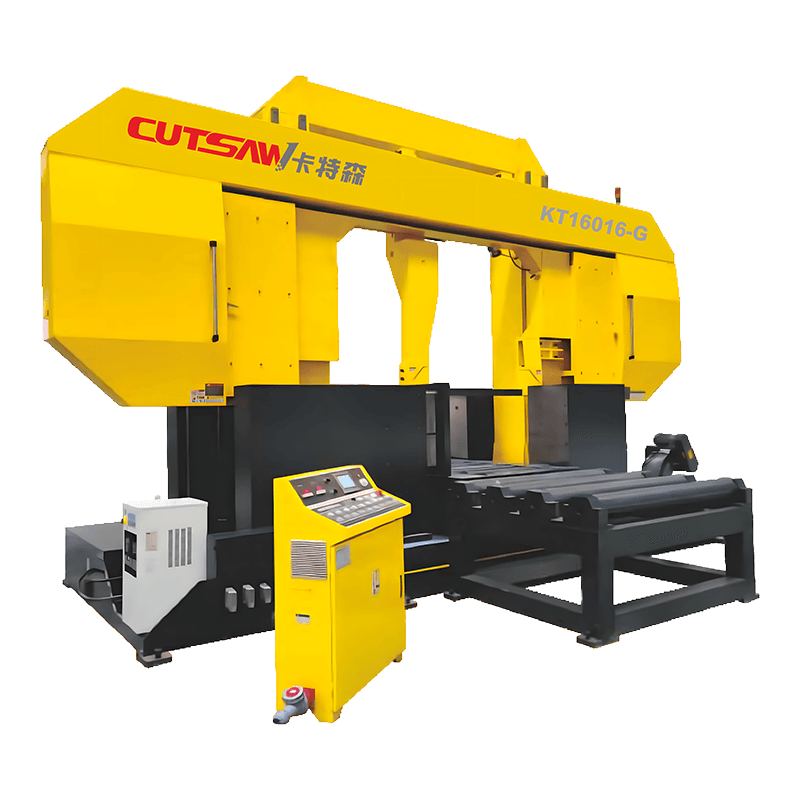
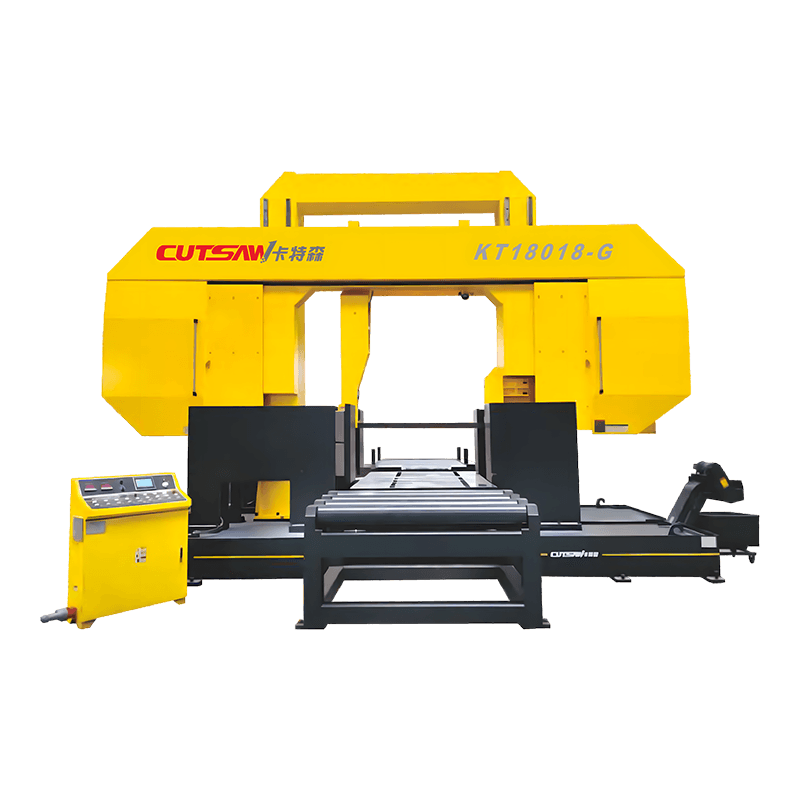
- Steel billets are tougher. Speed drops to roughly 25-60 m/min for carbon steels, and the machine needs feed force and rigidity to hold straightness. A double-column frame is preferred here for stability; the guide to double-column band sawing machines explains why that structure resists deflection under load.
- Copper and brass cut well at moderate speeds but produce fine chips that are hard to clear, so a chip conveyor and good coolant filtration make a real difference.
Straightness tolerance also separates machine classes. A production band saw on a well-clamped bundle typically holds cut face squareness within roughly 0.5 mm per 100 mm of material thickness. A CNC machine with constant hydraulic load can hold tighter results because the blade descent is regulated against measured cutting resistance rather than a fixed feed rate. That is why constant-load features appear on saws intended for hard steel billet work.
Blade Selection, Cutting Accuracy, and Common Pitfalls
Blade selection is the first thing operators get wrong on bundle cutting. The effective cut width is not the single billet diameter; it is the total width of the clamped bundle. A coarse pitch blade may seem right for a large metal mass, but if the bundle consists of 80 mm bars with small gaps between them, the blade sees interrupted cutting. Variable-pitch bimetal blades are the practical default because they handle fluctuating tooth engagement better than fixed-pitch designs.
Accuracy problems usually begin with clamping. An uneven bundle lets individual billets shift under the blade, producing a taper or a rounded corner on one piece. Check three things before worrying about the blade.
- Bundle height should be even across the full width; place the largest billets at the bottom.
- Clamping pressure must prevent shifting without deforming soft aluminum.
- Blade guides should sit close to the workpiece; wide guide spacing amplifies deflection.
Cutting speed and feed rate must also be set for the total bundle mass, not the final piece size. In automatic operation, the control compensates during the downward stroke. On semi-automatic machines, the operator must adjust feed when bundle size changes. That is why servo-fed CNC machines deliver more consistent surface finish and dimension control across a long shift.
Choosing the Right Machine for Your Production Volume
Start from production volume and billet size, not from machine price. The right choice changes with throughput.
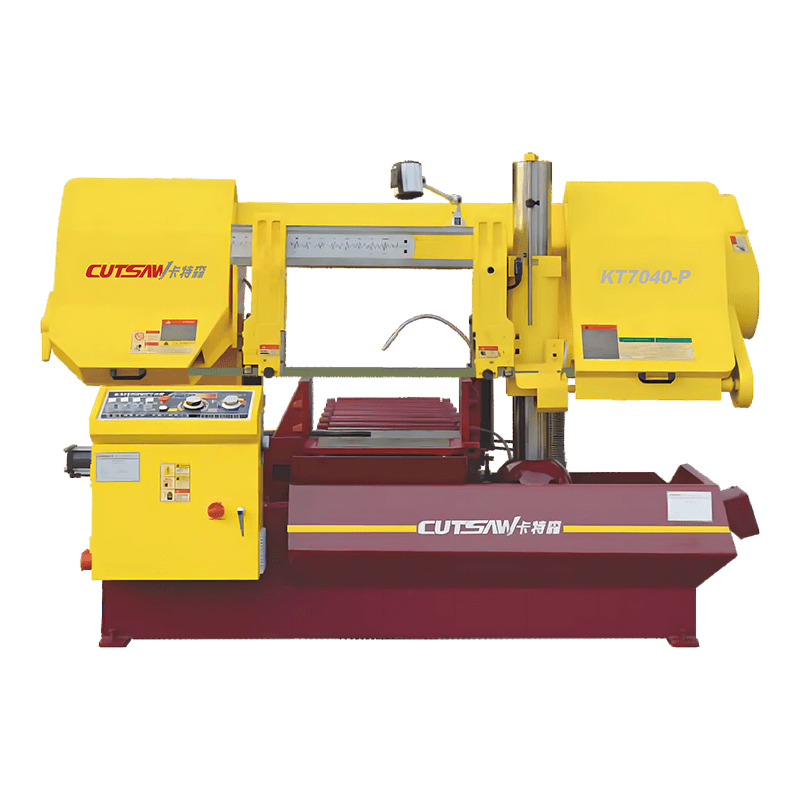
- Up to 500 billets per shift with frequent size changes: a semi-automatic hydraulic band saw with bundle clamping and an adjustable stop is enough.
- 500 to 1,500 billets per shift with repeated sizes: choose an automatic feed machine with programmed length control and a powered roller table.
- More than 1,500 billets per shift or very large bundles: a full CNC machine, such as the KT860NC fully automatic metal band saw
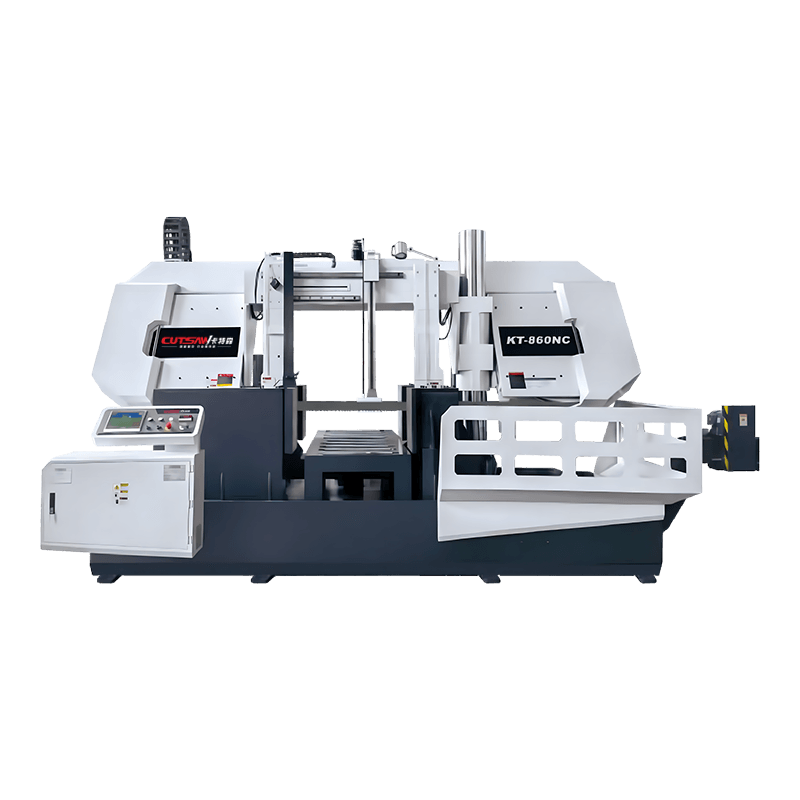 OEM/ODM KT-860NC Horizontal High-Speed Full Automatic Band Saw machine for MetalZhejiang SINAIDA Machine tools Co.,Ltd is Top China OEM/ODM KT-860NC Horizontal High-Speed Full Automatic Band Saw machine for Metal Manu...View Product →, combines servo feed, high blade speed, and automatic discharge for near-unattended operation.
Frame construction matters as much as automation. Double-column and gantry frames resist blade deflection better than cantilever designs, especially on wide bundles. And capacity must always be checked as a bundle: measure the total bundle width, height, and weight, then compare them with the machine's vise opening and feed table rating.
Finally, fold operating costs into the decision. Automatic machines use more power and need more planned maintenance, but they reduce cycle time per piece. The fair comparison is cycle time per billet, not per bundle, because a bundle of six billets produces six parts in roughly the time a single-piece saw cuts one.
A multiple billet automatic sawing machine is the most direct way to raise throughput in a shop that cuts identical billets in volume. The three decisions that matter are bundle capacity, clamping integrity, and automation depth. Align them with your material and shift volume, and the saw becomes a dependable cell that does not need constant watching. For a closer look at the models mentioned here, browse the full range of CNC band sawing machines and compare their bundle capabilities against your target cycle time.