English
 русский
 简体中文
简体中文


Introduction to CNC Band Sawing Machines
In today's fast-paced manufacturing environment, precision and efficiency are critical to staying competitive. CNC band sawing machines have become an integral part of modern manufacturing processes, offering automated, high-precision cutting solutions for a wide range of materials. These machines combine the power of traditional band saw technology with the advanced capabilities of Computer Numerical Control (CNC), enabling manufacturers to achieve accurate, repeatable cuts with minimal manual intervention.
Unlike manual band saws, which require operators to control the cutting speed, feed rate, and blade position, CNC band saws automate these functions, ensuring consistently high-quality results. This automation not only increases cutting precision but also improves productivity and reduces human error.
Whether cutting metals, plastics, or composites, CNC band saws are used in various industries, including metalworking, aerospace, automotive, and construction. The adaptability and efficiency of these machines make them invaluable for tasks ranging from complex geometric cuts to high-volume production runs.
As industries continue to embrace Industry 4.0 and the integration of AI and machine learning, CNC band saws are evolving to offer even greater levels of performance, connectivity, and automation. This technological evolution opens up new possibilities for improving cutting processes, reducing waste, and optimizing machine performance.
Understanding Band Sawing Technology
Band sawing technology has been an essential part of manufacturing for many decades, and it continues to evolve. At its core, a band saw is a versatile cutting tool that uses a continuous band of metal, often called a saw blade, which runs over two pulleys to cut through a wide range of materials, from metals to plastics to wood.
The Basics of Band Sawing
The fundamental principle of band sawing is relatively simple: a continuous, toothed band is drawn through a material to make a precise cut. The band blade moves in a continuous loop, with the teeth of the blade interacting with the material to remove material as it moves through. Unlike traditional circular saws, which rely on rotating blades, band saws are linear, with the blade running in a constant direction, allowing for more precise control over the cut.
There are two primary components to consider in band sawing: blade type and cutting action.
- Blade Type: Band saw blades come in various shapes, sizes, and tooth configurations, each designed for specific materials and applications. Common materials for band saw blades include high-speed steel (HSS), carbide-tipped steel, and bi-metal construction, each offering different advantages in terms of durability, cutting speed, and resistance to heat and wear.
- Cutting Action: The cutting action of a band saw differs from other saw types. As the blade moves through the material, it engages the workpiece at a set angle, gradually removing material as it progresses. The blade's teeth and geometry are carefully engineered to ensure smooth and efficient cutting while minimizing friction and heat generation. This design helps extend the life of the blade and the machine while maintaining a high level of cutting precision.
Horizontal vs. Vertical Band Saws
Band sawing machines come in two main configurations: horizontal and vertical, each serving different purposes depending on the material being cut and the desired cutting capacity.
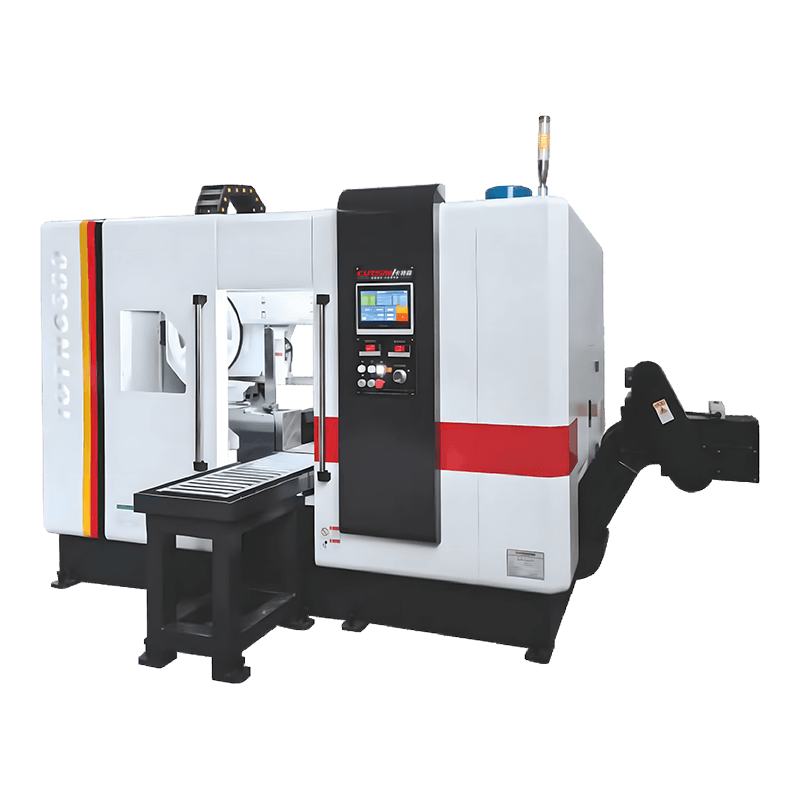
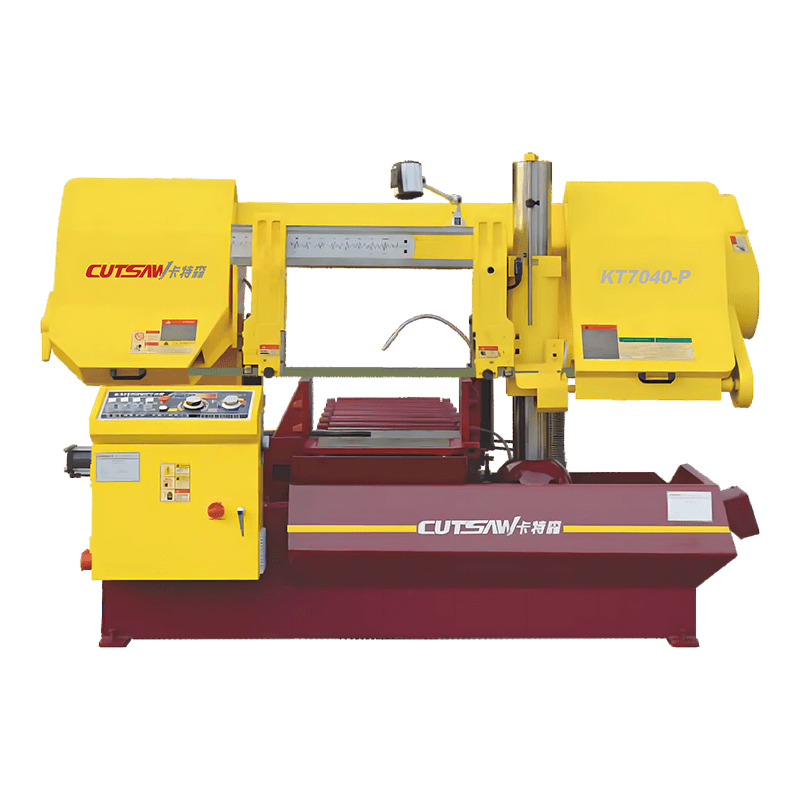
- Horizontal Band Saws: In a horizontal band saw, the blade is positioned horizontally and moves in a back-and-forth motion across the material. Horizontal band saws are primarily used for cutting long pieces of material, such as bars, tubes, and beams. The workpiece is typically stationary, while the saw blade moves up and down. Horizontal band saws are ideal for heavy-duty cutting applications and are commonly used in the metalworking industry to cut through steel, aluminum, and other metals.
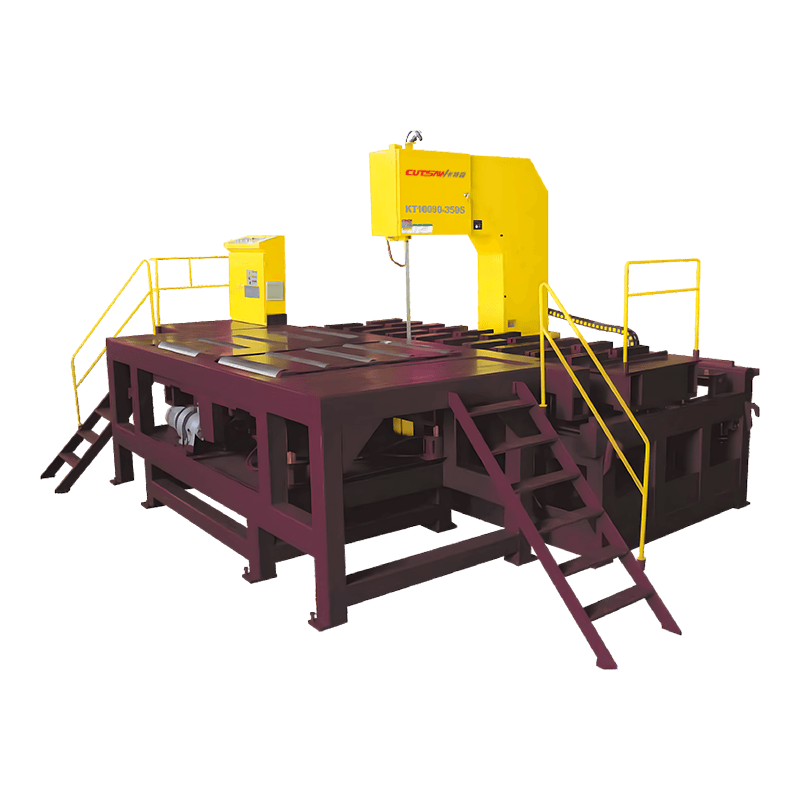
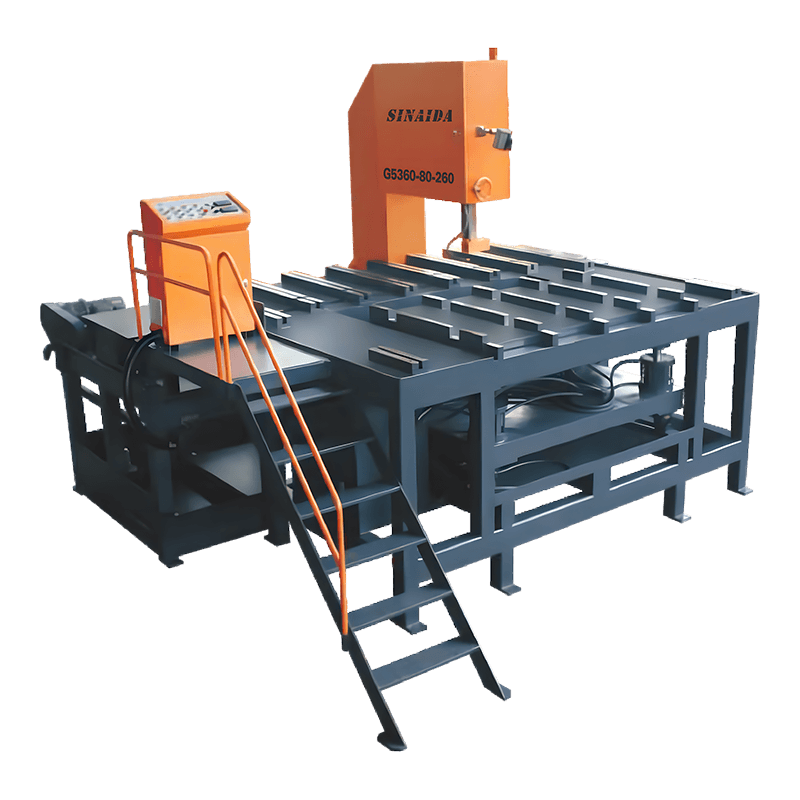
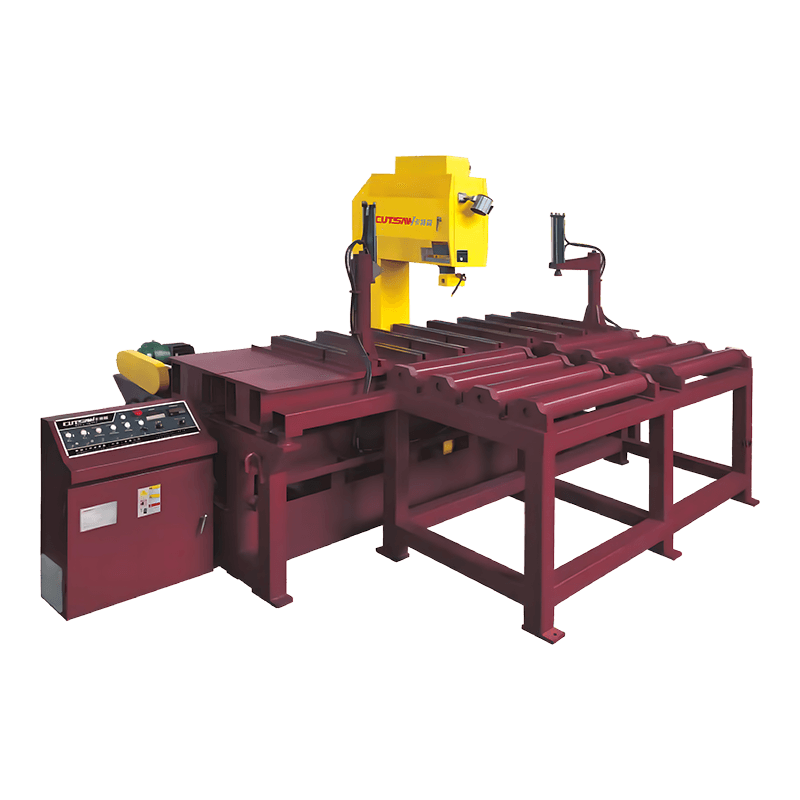
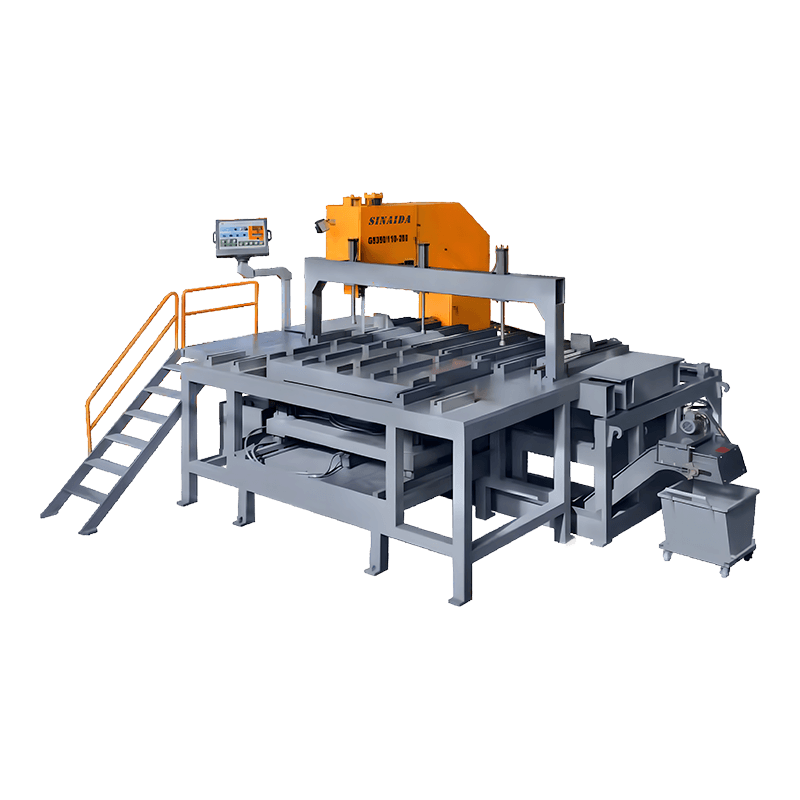
- Vertical Band Saws: In contrast, vertical band saws position the blade vertically and allow for the workpiece to move into the cutting area. This setup is often used for more intricate or irregular cuts. Vertical band saws are typically found in woodworking and plastics industries, where complex or curved cuts are needed. These machines excel at handling smaller workpieces with intricate geometries.
Both types of saws can be equipped with CNC technology to improve automation, precision, and cutting efficiency, but their distinct configurations cater to different manufacturing needs.
Key Features of CNC Band Saws
When discussing CNC integration in band saws, the first step is understanding the role that Computer Numerical Control (CNC) plays in the sawing process. CNC technology allows for the automation of multiple functions in the sawing machine, significantly improving performance and consistency.
Here are the key features of CNC band saws that make them stand out:
- Blade Speed and Feed Rate Control: CNC systems enable precise control over both blade speed and feed rate, which is crucial for achieving optimal cutting performance. The CNC controller adjusts these parameters based on the material type, thickness, and required cut, reducing the potential for error and improving the overall quality of the cut. This control also helps extend blade life by ensuring the cutting process is always operating at ideal conditions.
- Adaptive Cutting: Advanced CNC systems can adjust the cutting parameters in real-time based on feedback from the material being cut. This feedback loop allows the saw to adapt to changes in material properties, such as hardness or density, ensuring a smooth and efficient cut every time.
- Automatic Material Feeding and Clamping: One of the most significant advantages of CNC band saws is the automated material handling system, which feeds, aligns, and clamps the workpiece without manual intervention. This automation reduces the need for operator input, increases cutting speed, and ensures that the material remains securely in place throughout the process.
- Cutting Path and Geometry Programming: CNC band saws allow manufacturers to program complex cutting paths and shapes directly into the machine’s control system. This is especially beneficial in industries like aerospace or automotive, where precision cuts with tight tolerances are required. The ability to easily program and modify cutting geometry minimizes material waste and ensures a high level of accuracy.
Material Compatibility
One of the primary reasons why band sawing is so widely used is its versatility. Band saws can cut through a wide range of materials, including metals, plastics, and even composites. The design of the band saw blade allows it to adapt to various material characteristics, making it a highly flexible tool for different industries.
- Metals: Steel, aluminum, and other metals are among the most common materials cut by CNC band saws. The high cutting power of CNC band saws makes them suitable for slicing through tough materials with precision.
- Plastics and Composites: CNC band saws are also used to cut plastics, which require a different cutting approach to avoid melting or distortion. Specialized blades and slower feed rates are often employed to ensure clean cuts without damaging the material.
- Wood and Other Materials: In certain applications, CNC band saws can also handle wood and other softer materials, providing manufacturers with a wide range of cutting capabilities.
The ability to work with such a broad range of materials makes CNC band saws a go-to solution for many different industries, from metalworking to construction.
CNC Integration and Automation
CNC (Computer Numerical Control) technology has revolutionized many aspects of manufacturing, and the CNC band sawing machine is no exception. The integration of CNC into band sawing systems has significantly transformed how cutting tasks are performed, offering enhanced precision, automation, and efficiency. The combination of mechanical engineering with digital control systems allows these machines to perform tasks with much greater accuracy and consistency than traditional manual band saws.
What Is CNC Integration?
At its core, CNC integration in band saws refers to the use of a computerized control system to automate the key functions of the sawing process. These systems provide precise control over various machine parameters, including blade speed, feed rate, cutting path, and material handling. Unlike manual band saws, which require operators to adjust these settings manually, CNC systems allow manufacturers to input predefined cutting instructions that are automatically followed by the machine.
The integration of CNC in band saws is typically facilitated by a controller (often a PLC or dedicated CNC control unit) that communicates with the machine’s servo motors, sensors, and other components. Through this integration, the machine can carry out tasks such as material feeding, clamping, and cutting with minimal human input.
The control system is often programmed with specialized software, allowing operators to set parameters for different materials, cutting angles, cutting speeds, and blade types to ensure the most efficient cutting performance for each specific task.
Automation Benefits in CNC Band Saws
The integration of automation into band sawing machines offers several key benefits that contribute to improved performance, higher productivity, and consistent results. Some of the primary advantages of CNC automation include:
- Enhanced Precision: CNC technology allows for fine-tuned control of the cutting process. Parameters like feed rate, blade speed, and cutting depth can be set with remarkable accuracy. As a result, CNC band saws are capable of producing tighter tolerances and more precise cuts compared to manual methods, making them ideal for applications requiring high-quality finishes.
- Increased Repeatability: The ability to program a machine to execute the same cut consistently means that CNC band saws can perform the same operation over and over without any degradation in quality. This repeatability is crucial in mass production and high-volume cutting applications, where maintaining consistency is key to ensuring product quality and minimizing waste.
- Reduced Human Error: Traditional band saws rely heavily on operator skill and experience, which introduces variability into the cutting process. With CNC automation, the machine carries out the tasks based on pre-programmed instructions, reducing the likelihood of human error. This leads to more uniform results and minimizes defects caused by inconsistent manual settings.
- Faster Cutting Speeds: CNC-controlled band saws can operate at optimal speeds without the need for constant manual adjustments. Automation ensures that the machine can cut faster while maintaining precision, thereby reducing cycle times and increasing overall throughput.
- Improved Efficiency: CNC automation optimizes the cutting process by adjusting parameters based on the material type, thickness, and cutting requirements. This results in better use of materials and reduced waste. Additionally, CNC systems enable quicker material handling and fewer operator interventions, allowing for continuous production and higher efficiency.
Key Aspects of CNC Automation in Band Saws
CNC integration in band saws brings together several critical components that enable automation. These components work in harmony to ensure that the entire cutting process is carried out efficiently and with the highest level of accuracy.
- CNC Control System: The CNC controller acts as the “brain” of the system, receiving programming instructions and translating them into machine actions. Modern CNC systems are equipped with user-friendly interfaces that allow operators to input cutting programs directly or through CAD/CAM software. Some advanced systems are even equipped with touchscreen displays and remote monitoring, providing real-time feedback and control.
- Material Feeding and Clamping Systems: Automation of material handling is one of the standout features of CNC band saws. Automated material feeding systems ensure that the workpiece is loaded correctly and consistently positioned for each cut. Once the material is in place, clamping systems hold it securely, preventing any movement during cutting. This not only improves precision but also increases safety by reducing the need for manual adjustments.
- Servo Motors and Drives: CNC band saws are equipped with servo motors that drive the movement of the saw blade, material feed systems, and other mechanisms. These motors allow for precise control of speed and position, making it possible to adjust cutting parameters quickly and accurately. The precise control offered by servo motors ensures a smooth, consistent cutting process with minimal vibration.
- Cutting Path Programming: A key feature of CNC band saws is the ability to program complex cutting paths and geometries into the machine. These paths can be adjusted to accommodate curved, angled, or interrupted cuts, which would be difficult or impossible to achieve with traditional manual methods. The CNC system allows for precise control over the cutting angles and the progression of each cut, enabling the machine to cut intricate shapes and patterns with minimal effort.
- Integrated Coolant Systems: Many CNC band saws are equipped with coolant systems that spray a cooling liquid onto the cutting area during operation. This helps reduce friction and heat, extending the life of the saw blade and ensuring a clean, smooth cut. The automation system regulates the flow of coolant based on the cutting conditions, ensuring optimal cooling throughout the process.
Applications of CNC Band Sawing Automation
The ability to automate various processes and adjust parameters automatically has made CNC band saws an invaluable tool across a wide range of industries. Here are a few examples of how CNC automation is used in various sectors:
- Metalworking: In the metalworking industry, CNC band saws are commonly used for cutting through tough materials like steel, aluminum, and titanium. Automation allows manufacturers to program precise cuts in complex shapes, enabling efficient production of metal components for industries such as aerospace, automotive, and construction.
- Aerospace and Automotive Industries: Precision cuts are essential in industries where high-quality components are required. CNC band saws can be programmed to cut parts for aircraft, automobile components, and other mission-critical products, ensuring that each piece meets exacting specifications.
- Woodworking and Plastics: CNC band saws are also used in the woodworking industry to create detailed cuts in both wood and plastic materials. The flexibility of CNC automation allows for easy adaptation to different materials and cutting styles, reducing manual labor and increasing productivity.
Key Components of a CNC Band Sawing Machine
CNC band sawing machines are sophisticated systems that combine mechanical, electrical, and software components to achieve precise cutting in a variety of materials. The integration of CNC technology with traditional band saws has significantly enhanced their functionality, enabling automatic adjustments and ensuring high-quality cuts with minimal human intervention. Understanding the key components of a CNC band sawing machine is essential for recognizing how these systems operate and what makes them so effective in modern manufacturing.
Saw Frame and Structure
The saw frame is the backbone of the CNC band saw, providing the structural support for the entire machine. It is responsible for maintaining the rigidity and stability required to produce accurate cuts. The frame is typically made from strong, durable materials like steel or cast iron to minimize vibration and deformation during the cutting process.
- Importance of a Rigid Frame: A rigid frame is crucial for maintaining the accuracy of the cuts. Any flexing or distortion of the frame can lead to inaccuracies in the cutting path, affecting the precision of the finished product. The frame supports the saw blade, material clamping systems, and the CNC control unit, ensuring that each component functions together seamlessly.
- Design Considerations: The design of the saw frame is often optimized for the type of material being cut. For instance, heavy-duty models designed to cut metal will have a more robust, reinforced frame to withstand the forces exerted during cutting, while lighter versions may be sufficient for plastics or wood.
Blade Guidance System
The blade guidance system ensures that the saw blade remains properly aligned during the cutting process, helping to maintain cutting accuracy and blade life. A properly aligned blade is essential for achieving straight, consistent cuts, and for preventing the blade from deflecting or veering off course.
- Blade Tensioning: The blade guidance system typically includes mechanisms for maintaining the proper tension of the band saw blade. Adequate tension ensures that the blade remains taut, preventing it from deflecting or vibrating, which could compromise the cut quality. Tension can be adjusted manually or automatically, depending on the design of the machine.
- Guide Rolls and Bearings: The guidance system usually incorporates guide rolls and bearings that hold the blade in position as it moves through the material. These components help reduce friction and wear, extending the lifespan of both the blade and the machine. Some systems also include cooling mechanisms to further reduce friction and heat buildup.
- Adjustability: Some high-end CNC band saws come with adjustable blade guides that can be fine-tuned to accommodate different blade sizes and cutting requirements. This flexibility ensures that the machine can handle a variety of materials and cutting angles with high precision.
CNC Control System
At the heart of every CNC band saw is the CNC control system, which serves as the "brain" of the machine. This control system allows operators to program, monitor, and adjust cutting parameters with incredible precision. The integration of CNC technology into band saws has significantly improved their performance, offering automated functions that reduce operator input and minimize errors.
- Programming and Control: The CNC control system allows users to input cutting instructions, such as the blade speed, feed rate, cutting angle, and path. These instructions are then processed by the system and sent to the machine's motors and actuators to execute the cuts. The ability to program complex cuts and geometries into the system increases the flexibility of the band saw, enabling it to handle intricate or irregular cutting tasks with ease.
- User Interface: Modern CNC band saws come with intuitive user interfaces, which may include touchscreens, programmable logic controllers (PLCs), or remote access systems. These interfaces make it easier for operators to input and modify programs, monitor machine status, and troubleshoot issues. Many systems also provide real-time feedback and diagnostics, which help operators adjust settings for optimal performance.
- Automation Features: The CNC control system also oversees automated functions, such as material feeding, blade speed adjustments, and coolant flow. This level of automation ensures that the machine operates efficiently, with minimal manual intervention required from the operator.
Material Feeding and Clamping System
One of the key advantages of CNC band saws is their ability to handle material feeding and clamping automatically. These systems are designed to ensure that the workpiece is securely positioned and fed into the cutting area with minimal manual effort.
- Material Feeding Mechanism: Automated material feeders are used to move the material into the cutting zone with precise control over the speed and alignment. This ensures that the material is consistently presented to the saw blade, reducing the chances of misalignment or uneven cuts. Some machines are equipped with adjustable feeding systems that can accommodate different material sizes, thicknesses, and shapes.
- Clamping System: The clamping system holds the material securely in place during the cutting process, preventing any movement that could lead to inaccuracies or defects. In CNC band saws, this clamping is often automated, with pneumatic or hydraulic systems used to secure the material before the cut begins. The ability to automatically clamp and release materials helps speed up the cutting process and reduces the need for manual intervention.
- Safety Features: Automated feeding and clamping systems also help improve safety. By reducing the need for manual handling, operators are less likely to come into contact with the saw blade or other moving parts. Additionally, many systems are designed to automatically stop or adjust if a material feed malfunction is detected.
Coolant System
The coolant system is a vital component of CNC band saws, helping to reduce heat and friction during the cutting process. Without proper cooling, the saw blade could overheat, causing premature wear or failure, as well as poor cutting results. The coolant system plays a crucial role in maintaining blade performance and ensuring high-quality cuts.
- Coolant Application: Coolant fluids are directed onto the blade and cutting area to lubricate and cool both the blade and the material being cut. This helps to prevent heat buildup, which can cause the material to warp or the blade to lose its edge prematurely. Additionally, coolant helps to flush away debris and sawdust, which can clog the cutting area and reduce efficiency.
- Types of Coolants: Different types of coolant are used depending on the material being cut. For instance, water-based coolants are commonly used for cutting metals, while oil-based coolants may be used for cutting harder materials like titanium. Some CNC band saws are equipped with variable coolant flow systems, which adjust the coolant flow rate based on cutting conditions, optimizing cooling performance.
- Filter and Recirculation: Many modern CNC band saws have built-in filtration systems that clean the coolant as it circulates, ensuring that the coolant remains effective throughout the cutting process. This reduces the frequency of coolant replacement and helps maintain a cleaner work environment.
Drive Motors and Servo Systems
The drive motors and servo systems are responsible for the movement and operation of key components, such as the saw blade, material feed, and clamping mechanisms. These motors are designed to provide precise, controlled motion to ensure that the cutting process proceeds smoothly and efficiently.
- Blade Drive Motors: The blade is typically driven by a powerful motor that maintains the necessary speed and force to cut through the material. The motor speed can be adjusted based on the material type and the required cutting conditions, with CNC control systems providing automatic adjustments during operation.
- Servo Motors for Precision: Servo motors are used to control the movement of various components, such as the material feed and the positioning of the cutting head. These motors provide high-precision movement, ensuring that the cutting path is followed with accuracy and consistency.
Advantages of Using CNC Band Saws
CNC band saws have become a cornerstone in modern manufacturing due to their unparalleled precision, efficiency, and versatility. Unlike traditional manual band saws, which rely heavily on operator skills and adjustments, CNC band saws automate and optimize the entire cutting process, making them ideal for high-precision, high-volume production environments.
Precision and Accuracy
One of the most significant advantages of CNC band saws is their ability to achieve exceptional precision and tight tolerances. Unlike manual sawing methods, where cutting accuracy can be affected by human error, CNC band saws rely on computerized control systems to maintain exact cutting parameters.
- Consistent Cuts: With CNC technology, the machine follows pre-programmed instructions with high accuracy, ensuring that each cut is made with the same precision as the previous one. This level of repeatability is essential for industries that require consistent part dimensions and high-quality finishes, such as the aerospace, automotive, and medical device industries.
- Minimized Human Error: Manual band sawing relies on the operator to adjust settings like blade speed, feed rate, and cutting angles, all of which can introduce errors into the cutting process. CNC band saws eliminate this risk by automatically adjusting these parameters based on pre-set programs, ensuring that every cut is accurate and reliable.
- Tighter Tolerances: CNC band saws are capable of achieving extremely tight tolerances, often within fractions of a millimeter. This makes them suitable for applications that demand high precision, such as cutting metal components for aircraft engines or medical implants.
Increased Efficiency and Productivity
The automation provided by CNC band saws not only improves cutting precision but also significantly boosts productivity. These machines can operate continuously without the need for constant manual adjustments, allowing for faster cycle times and higher throughput.
- Faster Cutting Speeds: CNC band saws can operate at higher speeds compared to manual saws, especially when cutting materials that are optimized for the specific machine settings. The CNC controller adjusts the feed rate and blade speed based on the material type, ensuring optimal cutting conditions for maximum efficiency.
- 24/7 Operation: Many CNC band saws are designed for unattended operation, meaning they can run around the clock with minimal supervision. Operators can load materials, set the program, and let the machine carry out the cutting tasks. This is particularly useful for high-volume production environments, where maximizing machine uptime is critical for meeting production deadlines.
- Reduced Setup Times: Traditional band saws often require operators to spend significant time adjusting settings and preparing the machine for each new job. CNC band saws reduce these setup times by enabling quick programming and automatic adjustments, allowing for faster transitions between different cutting tasks.
- Higher Throughput: With automated material feeding, clamping, and cutting, CNC band saws can process multiple pieces of material in a shorter time frame. This leads to higher throughput, which is especially beneficial in industries that need to maintain high production volumes.
Material Savings
Optimizing material usage is a key concern for manufacturers looking to improve profitability, and CNC band saws excel in this area. The precision and automation of these machines help reduce material waste, ensuring that manufacturers get the most out of their raw materials.
- Optimized Cutting Paths: CNC band saws are capable of optimizing cutting paths, ensuring that the material is used efficiently with minimal scrap. The computer-controlled system can calculate the best way to arrange cuts to maximize material usage, reducing waste and lowering material costs.
- Reduced Tolerances and Scrap: Since CNC band saws provide greater precision than manual machines, the need for rework is greatly reduced. A more accurate cut reduces the likelihood of defective or off-spec parts, which would otherwise need to be scrapped or reworked.
- Less Material Wastage: CNC systems are capable of calculating the most efficient cutting patterns, especially when dealing with expensive materials like metal or specialized composites. This is particularly important in industries like aerospace or automotive, where material costs can be a significant portion of production expenses.
Improved Safety
Safety is a top priority in any manufacturing environment, and CNC band saws help improve safety by automating many aspects of the cutting process that would traditionally require human intervention. Reducing operator involvement in critical machine functions minimizes the risk of accidents and injuries.
- Reduced Operator Exposure to Hazards: Manual band saws require operators to be in close proximity to the cutting blade, increasing the risk of injury from flying debris, blade contact, or other hazards. With CNC band saws, operators can program the machine remotely, allowing them to maintain a safer distance from the cutting action.
- Automated Material Handling: Many CNC band saws are equipped with automated material feeding and clamping systems, reducing the need for manual material handling. This not only speeds up the process but also minimizes the chances of mishandling or accidents during setup and cutting.
- Safety Features and Monitoring: Modern CNC band saws often come with built-in safety features, such as emergency stop buttons, sensors, and overload protection, which automatically stop the machine if a safety issue is detected. In addition, real-time monitoring of the cutting process can alert operators to potential problems before they escalate, further enhancing workplace safety.
Improved Workflow and Reduced Labor Costs
CNC band saws streamline the entire cutting process, making it easier to integrate them into larger manufacturing workflows. The automation of repetitive tasks reduces the need for manual labor, allowing operators to focus on higher-level tasks such as programming, machine maintenance, and quality control.
- Reduced Need for Skilled Labor: CNC band saws automate many of the tasks traditionally performed by skilled operators, such as adjusting settings, measuring cuts, and monitoring material flow. This reduces the need for highly specialized labor and lowers overall labor costs.
- Integration into Automated Manufacturing Systems: CNC band saws can be easily integrated with other automated equipment, such as robotic arms, conveyors, and pallet systems. This integration creates a seamless manufacturing process, where materials are automatically loaded, cut, and moved to the next stage without human intervention.
- Higher Flexibility: CNC machines can be quickly reprogrammed to handle different cutting tasks, making them adaptable to a wide range of projects. This flexibility allows manufacturers to respond more quickly to changing demands and product specifications without extensive downtime or reconfiguration.
Enhanced Versatility
Another significant advantage of CNC band saws is their versatility. These machines can handle a wide range of materials, including metals, plastics, wood, and composites, making them suitable for a variety of industries.
- Material Compatibility: Whether cutting through steel, aluminum, or plastics, CNC band saws are capable of handling a diverse array of materials with the same level of precision and efficiency. The machine’s CNC controller can adjust the cutting parameters for different materials, ensuring optimal performance regardless of the material type.
- Complex and Intricate Cuts: CNC technology allows for the cutting of complex shapes and geometries that would be difficult or impossible with manual methods. Whether it's cutting curves, angles, or irregular patterns, CNC band saws can handle intricate designs with ease, making them ideal for industries like aerospace and automotive.
Applications of CNC Band Sawing Machines
CNC band saws are among the most versatile and widely used cutting tools in modern manufacturing, providing automated, high-precision cutting across a wide range of industries. The integration of CNC technology into band sawing machines has significantly expanded their capabilities, making them essential for applications requiring consistent quality, intricate shapes, and fast, efficient production.
Metalworking Industry
The metalworking industry is one of the largest and most common sectors that rely on CNC band saws. These machines are essential for cutting various metals, including steel, aluminum, titanium, and other alloys, with high accuracy and efficiency.
- Steel Cutting: CNC band saws are particularly effective at cutting carbon steel and stainless steel, which are commonly used in construction, automotive, and heavy machinery manufacturing. The saws provide smooth, burr-free cuts, which are important when the steel parts are used for critical applications.
- Pipe and Tube Cutting: CNC band saws are frequently used to cut metal pipes and tubes to precise lengths and angles. The ability to program and automate cuts allows manufacturers to process a large volume of pipework quickly and consistently, which is crucial in industries like construction, shipbuilding, and oil and gas.
- Aluminum and Non-Ferrous Metals: While CNC band saws excel at cutting ferrous metals, they are also used to cut softer metals like aluminum and copper. These metals are often found in aerospace components, automotive parts, and electronics. CNC band saws can make precise cuts on aluminum bars, plates, and extrusions with minimal heat buildup, which is crucial for maintaining the material's integrity.
- Customization and Profiling: For industries that require specific metal profiles or custom shapes, CNC band saws can be programmed to cut complex, intricate patterns, including beveled edges, arcs, and other customized geometries. This level of flexibility makes CNC band saws ideal for producing parts with highly specialized dimensions.
Aerospace Industry
The aerospace industry demands cutting-edge precision and reliability, both of which CNC band saws deliver. Aircraft components often need to meet stringent tolerances and high standards of safety, making CNC band saws the perfect solution for these applications.
- Titanium and Composites: Titanium, a material widely used in aerospace due to its strength and low weight, can be challenging to cut manually. CNC band saws are designed to handle titanium and other difficult-to-cut materials like composites and high-strength alloys. The precise control of cutting speed and blade tension allows for the creation of complex shapes without compromising the material’s structural integrity.
- Wing and Fuselage Components: CNC band saws are used to cut structural parts for aircraft wings, fuselages, and landing gear components. These parts often require complex, accurate cuts, which CNC band saws are capable of performing without deviation, reducing the likelihood of defects and minimizing material waste.
- Fast and Efficient Production: CNC band saws can handle the high-volume cutting of aerospace components, allowing manufacturers to quickly and efficiently produce the large quantities of parts needed for assembly lines. Automation also helps ensure that the cuts are identical, reducing the risk of inconsistencies between components.
Automotive Industry
In the automotive industry, CNC band saws are used to produce a wide range of parts, including chassis components, engine parts, and structural elements. The automotive sector demands high-volume production, and CNC band saws help manufacturers meet these needs while ensuring precise cuts and material savings.
- Chassis and Frame Parts: CNC band saws are often used to cut large, heavy-duty materials such as steel tubes and beams used in the manufacture of vehicle frames. The ability to make precise cuts quickly and with minimal operator intervention improves production efficiency and reduces the risk of defects.
- Engine Components: Precision cuts are also required for engine components such as pistons, crankshafts, and cylinder heads. CNC band saws are highly effective at cutting these parts from high-strength materials with intricate dimensions. The automation features ensure that all cuts are made according to the required specifications, which is vital for the performance and safety of the vehicle.
- Customization for Aftermarket Parts: Many aftermarket automotive parts, such as custom exhaust systems and specialized fittings, require unique cuts and profiles. CNC band saws can be programmed to accommodate these specific needs, providing manufacturers with the flexibility to produce both standard and custom parts with high precision.
Construction Industry
In the construction industry, CNC band saws are employed to cut materials like steel, concrete, and wood, making them an indispensable tool for producing components that are integral to building and infrastructure projects.
- Rebar Cutting: Rebar, the steel reinforcement bars used in concrete structures, requires accurate and efficient cutting to the correct lengths. CNC band saws are frequently used in rebar cutting, where precise cuts are necessary to ensure the bars fit properly in construction projects like bridges, highways, and skyscrapers.
- Structural Steel Cutting: In large-scale construction projects, CNC band saws are used to cut structural steel beams and plates that are welded together to form the skeleton of buildings, bridges, and other infrastructure. The precision and speed of CNC band saws help reduce both production time and material waste.
- Wood and Composite Materials: Some CNC band saws are equipped to cut wood, plywood, and composite materials, which are widely used in residential and commercial construction. These saws ensure clean, smooth cuts, which are essential for fitting materials together with minimal adjustments.
Woodworking Industry
In addition to cutting metals, CNC band saws are also employed in woodworking, where they offer high precision for cutting intricate patterns and curves in wood and wood-based materials.
- Custom Joinery: CNC band saws are widely used for making precise cuts in wood for furniture manufacturing, cabinet making, and wooden structures. The ability to program cuts for custom joinery ensures that all pieces fit together perfectly, reducing the need for manual adjustments and increasing production speed.
- Cutting Veneers and Laminates: CNC band saws can be used to cut veneers and laminates, which are thin layers of wood or composite materials often used for decorative purposes. The precision of the CNC band saw ensures that these delicate materials are cut cleanly without damage.
Plastic and Composite Manufacturing
CNC band saws are also used to cut plastics and composites, materials that are found in industries ranging from electronics to packaging and marine manufacturing.
- Cutting Thermoplastics and Thermosets: In the production of plastic components, CNC band saws can make clean, precise cuts through materials such as acrylic, PVC, and polycarbonate. These materials require different cutting techniques to avoid warping or cracking, and CNC band saws can be programmed to adjust cutting speed and blade tension accordingly.
- Composites and Carbon Fiber: Composites, especially carbon fiber, are increasingly used in industries like aerospace, automotive, and sports equipment due to their strength-to-weight ratio. CNC band saws are well-suited for cutting these materials, offering the necessary precision to meet tight tolerances without compromising the integrity of the fibers.
Other Industries and Niche Applications
Beyond the industries discussed, CNC band saws find applications in a range of niche sectors:
- Medical Device Manufacturing: CNC band saws are used to cut materials for medical implants, prosthetics, and surgical instruments. The high level of precision required for these parts makes CNC band saws a critical tool in producing medical devices that meet strict regulatory standards.
- Art and Sculpture: Artists and sculptors use CNC band saws to cut various materials, including wood, stone, and metal, to create intricate sculptures and art pieces. The ability to program complex shapes and curves allows for the creation of detailed and precise artwork.