English
 русский
 简体中文
简体中文


Picture a cutting bay where the same bar stock runs across three shifts. Morning parts come off the saw square and on length. By the second shift the lengths drift, one heavy billet makes the blade chatter, and part of the afternoon batch needs rework before it can move to the lathe. The cause is rarely a weak machine. It is the variation that enters whenever cutting speed, feed pressure and positioning depend on who is standing at the control panel. A CNC band sawing machine exists to take those decisions away from the operator and turn them into programmed, repeatable cycles.
That is a meaningful shift for any shop that cuts metal more than a few hours a week. CNC control does not simply add a screen to a hydraulic saw. It changes where accuracy comes from: instead of relying on an experienced eye to judge when the blade is cutting cleanly, the machine regulates feed and blade speed against what the material actually requires. The practical result is that tolerances hold across long runs, blade life becomes more predictable, and one operator can supervise several machines.
What a CNC band sawing machine actually controls
To evaluate a CNC band saw, look at the functions the control system owns:
- Indexing position: the machine measures and advances the workpiece to a programmed stop length before every cut, typically with a servo-driven feed carriage.
- Clamping sequence: hydraulic vises grip the material on both sides of the blade so the cut stays square under heavy feed pressure.
- Blade speed and feed rate: the control adjusts band speed and descent force automatically instead of leaving them on manual valves.
- Cycle completion: the saw stops the frame, opens the vises, advances the material and repeats without operator intervention between cycles.
Those four functions separate a CNC band saw from a machine that simply uses hydraulics to lower the saw frame. For production cutting, the most valuable combination is indexing accuracy and servo-controlled feed, because dimensional error between parts creates rework downstream. Shops that move from manual to CNC often find that machining operations stop absorbing extra stock allowance and that scrap from short cuts or tapered faces disappears. The measurable effects of this shift are covered in more detail in our article on how CNC band sawing machines support precision cutting in production.
Reading the specifications that matter
CNC band saws differ less in claimed accuracy than in how the control system manages the cutting cycle. The table below compares three representative configurations from the CUTSAW series to show how the control concept changes as production demands grow.
| Model | Control approach | Feed system | Typical production role |
|---|---|---|---|
| KT360Z horizontal CNC band saw | Programmable CNC cutting cycles | Automatic material feed carriage | General bar and billet cutting with frequent job changes |
| KT560NC constant-load CNC band saw | Constant-load hydraulic control | Servo-assisted blade feed | Batch cutting where blade load varies with section shape |
| IoTNC430 AI-optimized high-speed band saw | AI-optimized cutting parameter adjustment | High-speed variable-frequency blade drive | Mixed material batches that need fast parameter switching |
Read capacity figures carefully. A band saw's rated round capacity refers to the largest workpiece that fits between the guides, not necessarily the size that can be cut efficiently all day at production rates. Blade speed range matters just as much: a wider range lets the same machine cut structural steel, stainless billets and aluminum with predictable surface quality. Positioning accuracy and repeatability, normally stated by the builder in millimetres, determine whether a programmed cut-off length stays trustworthy over hundreds of cycles. Ask the supplier for the repeatability figure, not just the advertised maximum capacity, because part-to-part consistency is exactly what automation is supposed to buy.
Matching the machine configuration to the workpiece
Workpiece geometry should drive machine selection before price or brand is considered. Three configurations cover the majority of production cutting tasks.
Angle cuts and mitering
When a job calls for 45-degree notch cuts in structural sections, a dedicated angle or rotary band saw removes the need for secondary milling setups. The GZX4235X and GZX4240X NC rotate band saws use servo-controlled rotation to position the blade head at programmed angles, which keeps the cut square across the full width of the profile. Rotary angle machines such as the S320Z serve the same purpose when the entire cutting head must swivel for compound miters.
Large sections and double-column stability
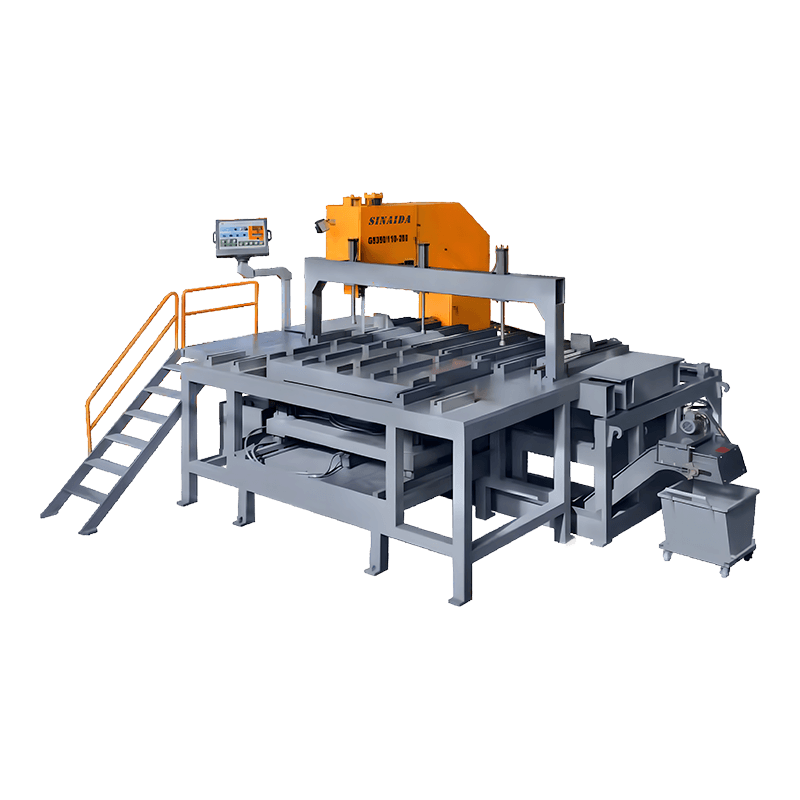
Once workpieces exceed the width of a typical C-frame saw, double-column construction becomes the correct starting point. Twin vertical columns guide the saw frame evenly, so blade pressure stays balanced across the entire head instead of cantilevering from one side. The G4232, G4265 and the KT70 to KT120 double-column models cover the range from medium billets to heavy steel sections. For very large blocks or long beams, gantry-type machines such as the GK42130 and GK4280-140 provide the rigidity needed to keep the cut straight where stop accuracy alone is not enough. If you are weighing this type of construction against a lighter frame, our guide to double-column band saw machines explains how guide structure affects long-term accuracy.
Vertical machines for plate and beam cutting
Horizontal band saws dominate bar and billet cutting, but plate, sheet stack and long beam work often suits a vertical machine better. Vertical CNC band saws such as the KT5050250S hold the work on a horizontal table and let the blade cut downward, which gives a clear sightline for layout lines and makes it easier to support large flat parts. The G5335 to G5385 vertical series extends the same principle to steel cutting and rotating beam work.
Automation levels: from basic CNC to adaptive cutting
Once the workpiece type is clear, decide how much of the cutting cycle should run without an operator. The levels below represent real capability tiers, not marketing labels.
Entry-level CNC
For shops that run batches with frequent changeovers, a machine like the KT360Z horizontal CNC band saw brings programmable lengths and automatic feed without the cost of complex material handling. The operator enters part length and quantity, and the saw indexes and repeats from stock loaded on the feed table.
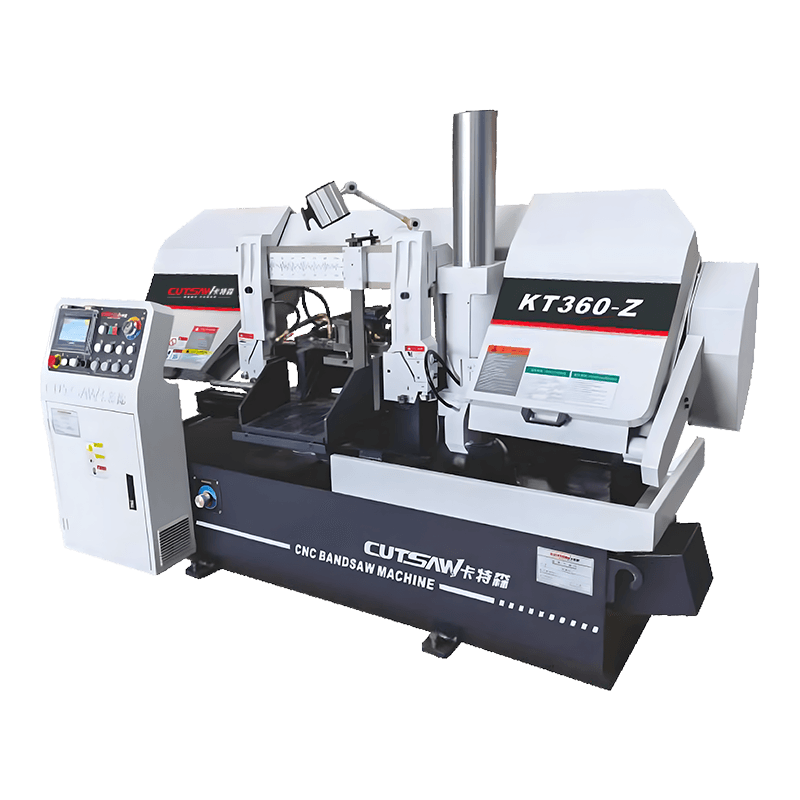 OEM/ODM KT360-Z Horizontal CNC Band Saw Machine Manufacturers, Factory - ZhejianZhejiang SINAIDA Machine tools Co.,Ltd is Top China OEM/ODM KT360-Z Horizontal CNC Band Saw Machine Manufacturers and Factory, High perfo...View Product →
Constant-load cutting
The next step up is constant-load control, which adjusts blade feed in real time to maintain a set cutting force. This matters when one machine cuts solid bars, tubes and structural profiles: a tube's internal void reduces the cutting area instantly, and a constant-load system lightens feed pressure instead of letting the blade drop through the section and chip its teeth. The KT360NC and KT460NC are typical of this group, with the KT560NC fully automatic CNC band saw designed specifically for sustained batch production.
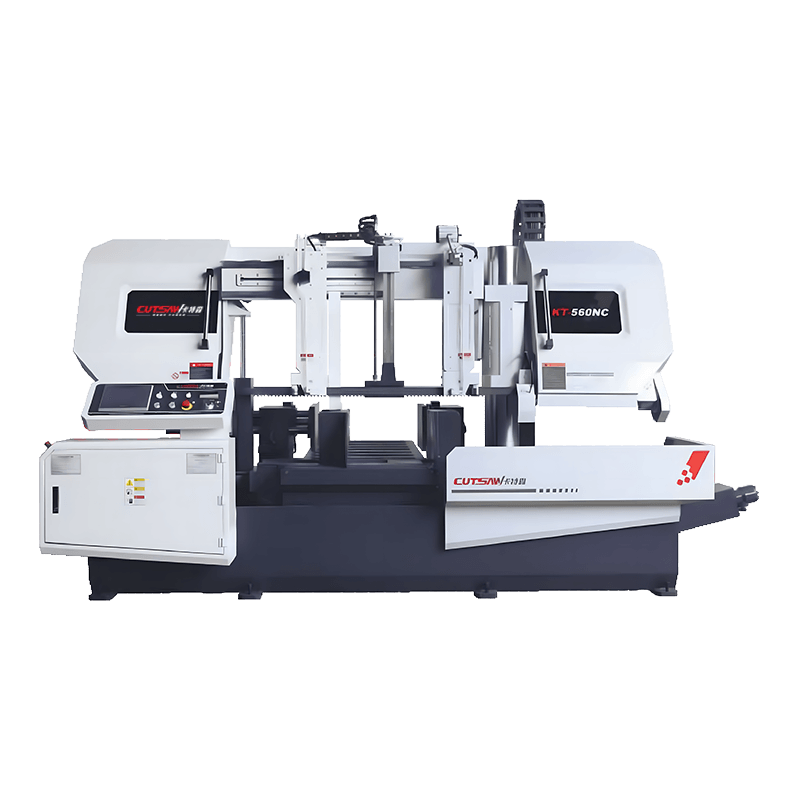 OEM/ODM KT-560NC Fully Automatic CNC Band Saw Machine Horizontal Band Saw ManufaZhejiang SINAIDA Machine tools Co.,Ltd is Top China OEM/ODM KT-560NC Fully Automatic CNC Band Saw Machine Horizontal Band Saw Manufacture...View Product →
Smart high-speed control
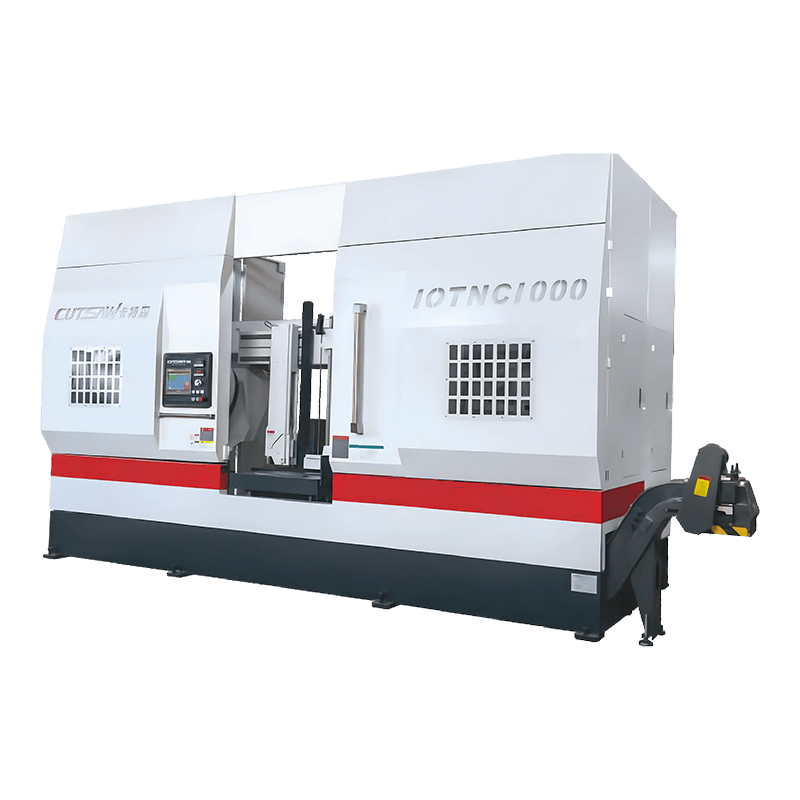
The newest machines in the CUTSAW line combine high-speed blade drives with adaptive parameter setting. The IoTNC430 AI-optimized high-speed band saw, for example, uses AI optimization to adjust blade speed and feed according to the material being cut, while the IoTNC300 supports bundle cutting so one cycle cuts multiple bars stacked together. For a shop cutting thousands of identical parts per week, the productivity gain comes more from shorter cycle time and unattended operation than from a slightly tighter single-part tolerance.
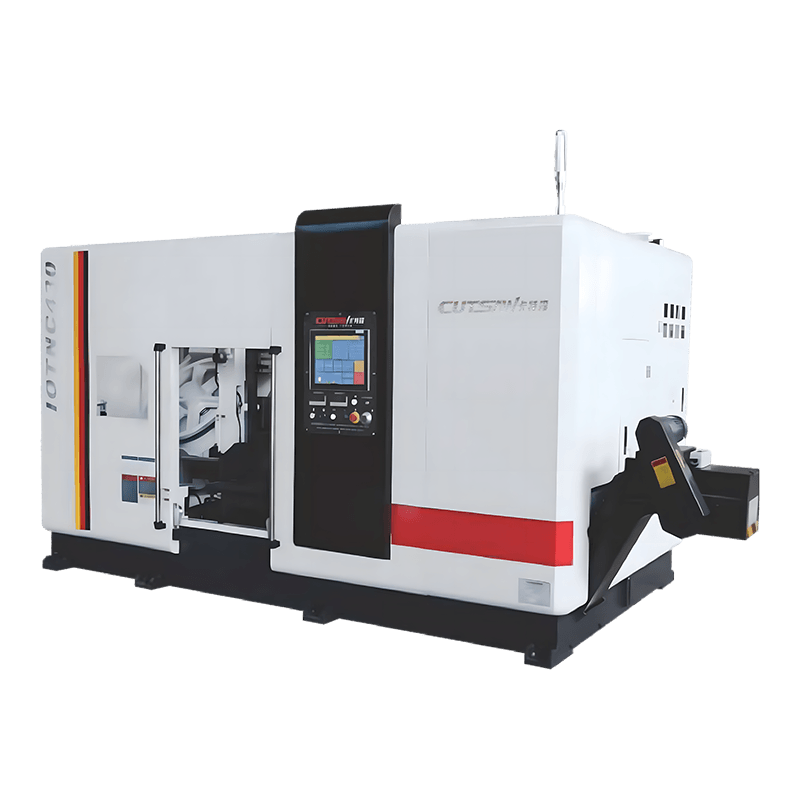 OEM/ODM IOTNC430 AI-Optimized high speed Band Saw Machine Manufacturers, FactoryZhejiang SINAIDA Machine tools Co.,Ltd is Top China OEM/ODM IOTNC430 AI-Optimized high speed Band Saw Machine Manufacturers and Factory, ...View Product →
Practical buying considerations
Once the machine type is clear, supplier capability becomes the deciding factor. Three checks will cover most procurement situations.
- Certification. ISO 9001 quality management and CE safety certification show that the manufacturer builds to a defined process rather than to a price alone. SINAIDA publishes both on its product range and adds China Mechanical Safety Certification on its machines.
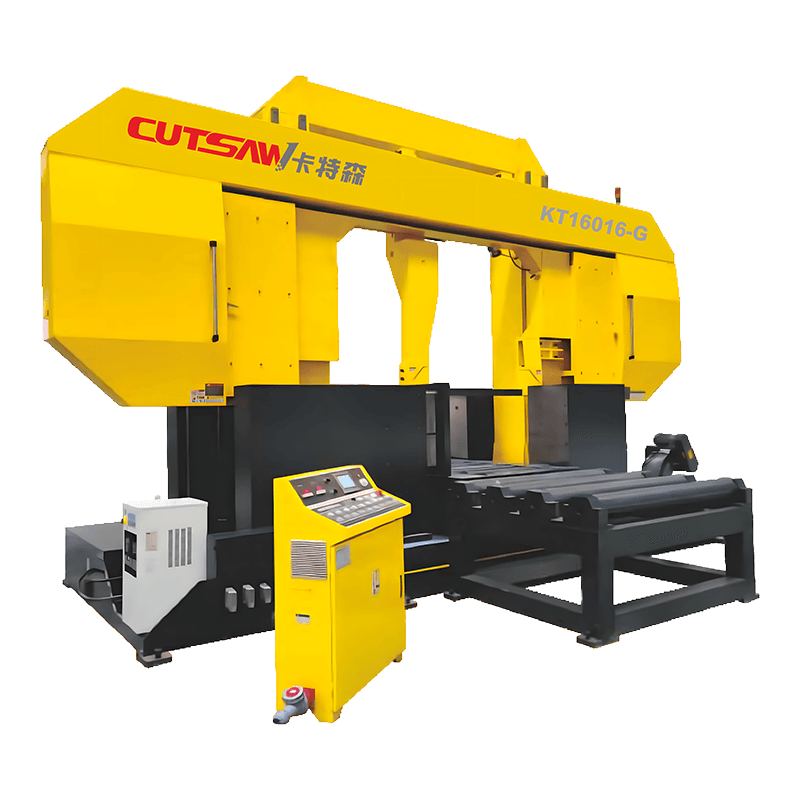
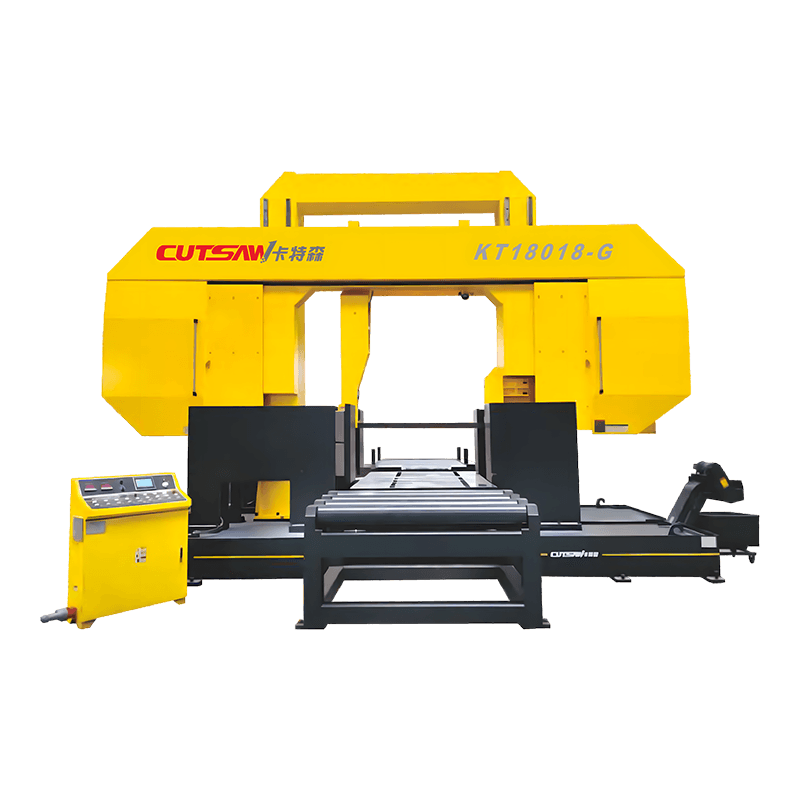
- Customization. Oversized billets, unusual part lengths and special clamping needs are common in real workshops. A builder that designs custom gantry machines, as SINAIDA does with its KT16016G and KT18018G models, handles these cases more safely than one that only sells catalog units.
- Reference industries. SINAIDA states that its CNC sawing machines support China's aerospace supply chain and that it has been recognized as a qualified supplier to the China Academy of Launch Vehicle Technology. That background signals machining stability and disciplined documentation, even when the application is conventional.
Order lead time and production capacity also deserve attention. SINAIDA quotes an annual output of 3,600 machines, which means standard models come from an established production line and custom projects move through a dedicated design process rather than being assembled from spare parts.
Choose the machine that holds your tolerance across a full shift, not only on the first part after setup. Start from the workpiece list, match the control level to batch size, and confirm that the supplier can build, certify and support the machine over its working life. The full CNC band saw product range at SINAIDA covers that spectrum, from automatic-feed entry models to AI-optimized high-speed machines in the IoTNC series.