English
 русский
 简体中文
简体中文


Industrial Craft — Cutting Technology
The band saw is not simply a tool that cuts — it is a system of continuous motion, precision, and material economy that quietly shapes entire industries, from steel fabrication floors to fine furniture ateliers.
The Direct Answer
A band saw machine is used to cut metal, wood, plastic, and other solid materials into precise shapes, lengths, and profiles using a continuous toothed metal blade looped around two or more wheels. In industrial settings, a cutting band saw machine is the primary tool for sizing raw stock — bars, pipes, structural beams, and billets — before machining or welding. In workshops, band saws handle everything from resawing lumber to cutting intricate curves in furniture components. The core value of this machine lies in its ability to make continuous, low-friction cuts with minimal material waste, something few other saw types can match.
Unlike reciprocating saws that stop and start with every stroke, a band saw blade moves in one continuous direction. This constant motion reduces heat buildup, extends blade life, and allows operators to cut thicker or harder materials without excessive strain on the machine. That single mechanical advantage explains why band saws remain indispensable across metal fabrication shops, sawmills, meat processing plants, and hobbyist workshops alike.
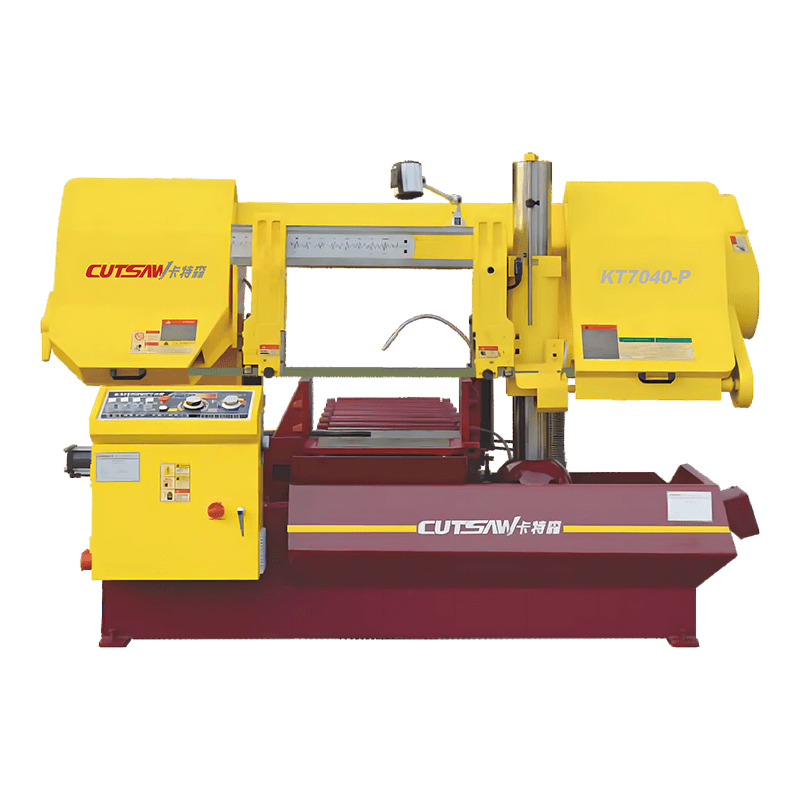
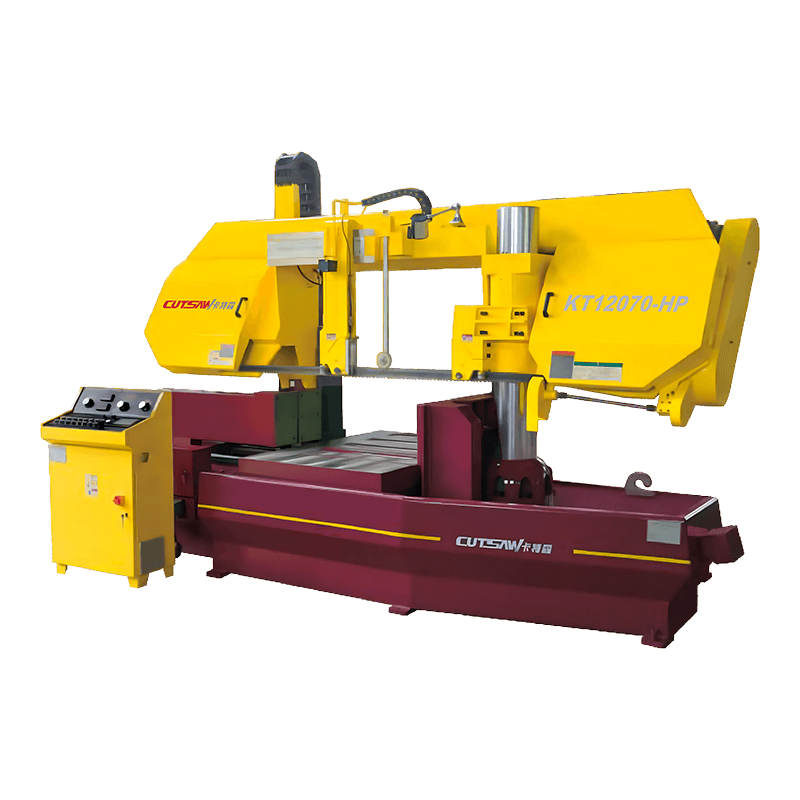
band saw machine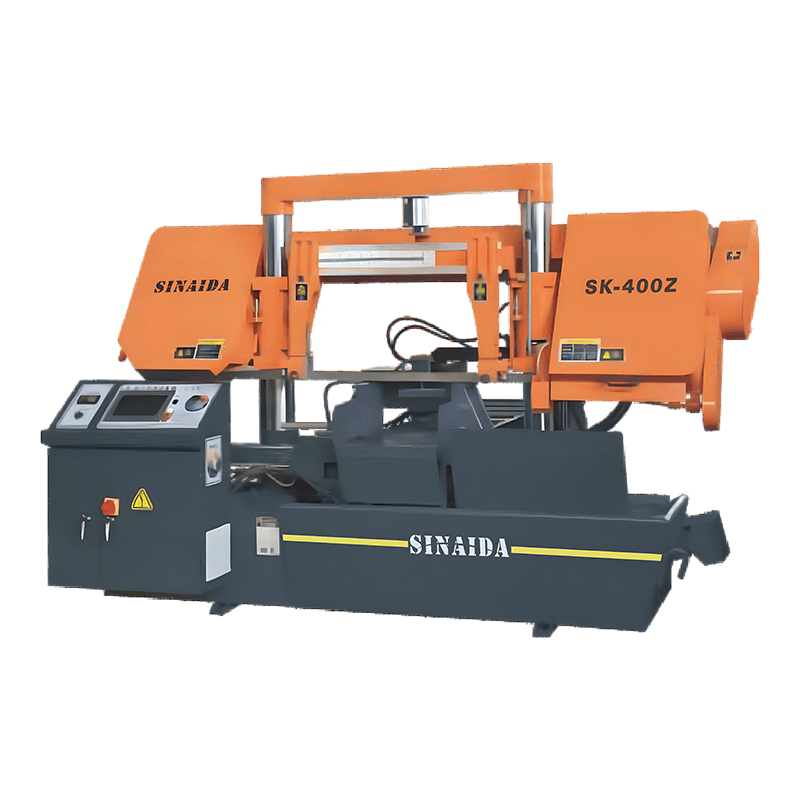
Understanding How a Band Saw Machine Works
A band saw consists of a looped blade stretched between two or three wheels, a motor that drives the wheels, a table or bed that supports the workpiece, and a tensioning system that keeps the blade taut during operation. The blade passes through a cutting zone where guides keep it aligned, preventing drift and ensuring straight or contoured cuts depending on the machine's configuration.
Key Components That Define Performance
- Blade — determines tooth pitch, cutting speed, and suitability for wood, metal, or plastic.
- Wheels — guide the blade path and maintain tension; larger wheels reduce blade fatigue.
- Table — supports the workpiece and, on some models, tilts for angled cuts.
- Guides — keep the blade stable, reducing lateral movement and improving cut accuracy.
- Motor and drive system — controls blade speed, adjusted based on material hardness.
Because these components can be configured differently, band saws are built in several distinct formats — most notably horizontal and vertical models — each suited to different production needs.
A continuous, low-friction cut with minimal material waste — that single mechanical advantage is why the band saw has never been replaced, only refined.
Horizontal Band Saw Applications in Industrial Cutting
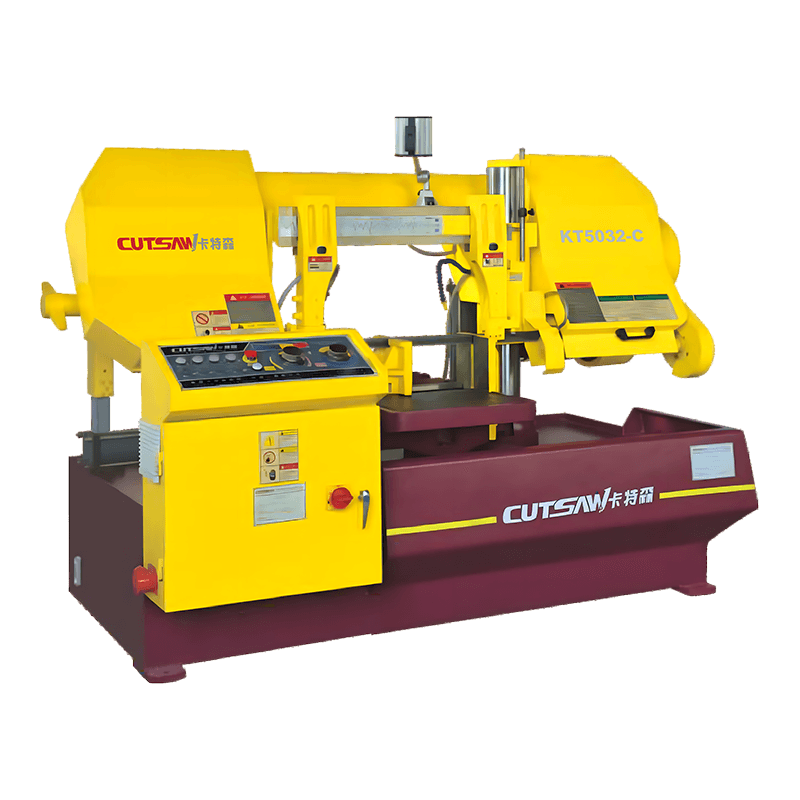
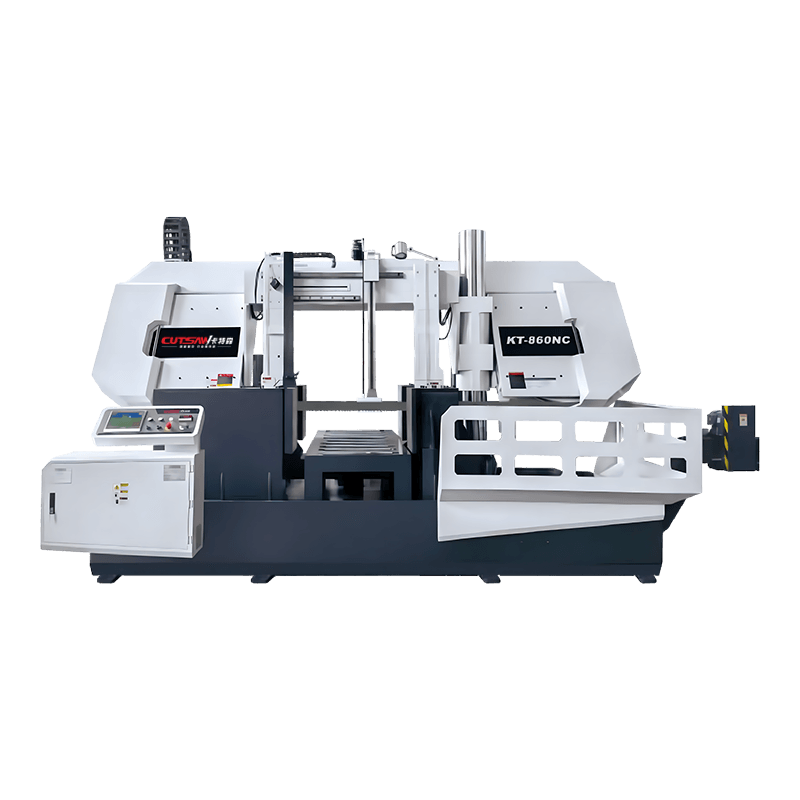
A horizontal band saw is designed primarily for cutting raw stock to length. The blade moves horizontally downward through the workpiece, which is typically clamped in a vise below. This configuration is standard in metal fabrication and machine shops because it allows heavy bars, tubes, and structural sections to be cut cleanly without manual repositioning.
Common uses of a horizontal band saw include:
- Sizing steel bars, angles, and channels for downstream machining operations.
- Cutting pipe and tubing to fixed lengths for plumbing or structural fabrication.
- Slicing billets in preparation for forging or casting processes.
- High-volume production cutting where repeatable, straight cuts are essential.
Industrial horizontal band saws are often equipped with automatic feed systems, allowing operators to program cut length and quantity. This automation can improve throughput by 30 to 50 percent compared to manual cutting methods, particularly in shops running repetitive batch orders. Coolant delivery systems are also standard on these machines, reducing blade wear and preventing heat distortion in metal stock.
Automatic feed systems on horizontal band saws let operators program both cut length and batch quantity, freeing staff for other tasks during long production runs.
Metal Vertical Band Saw Use Cases
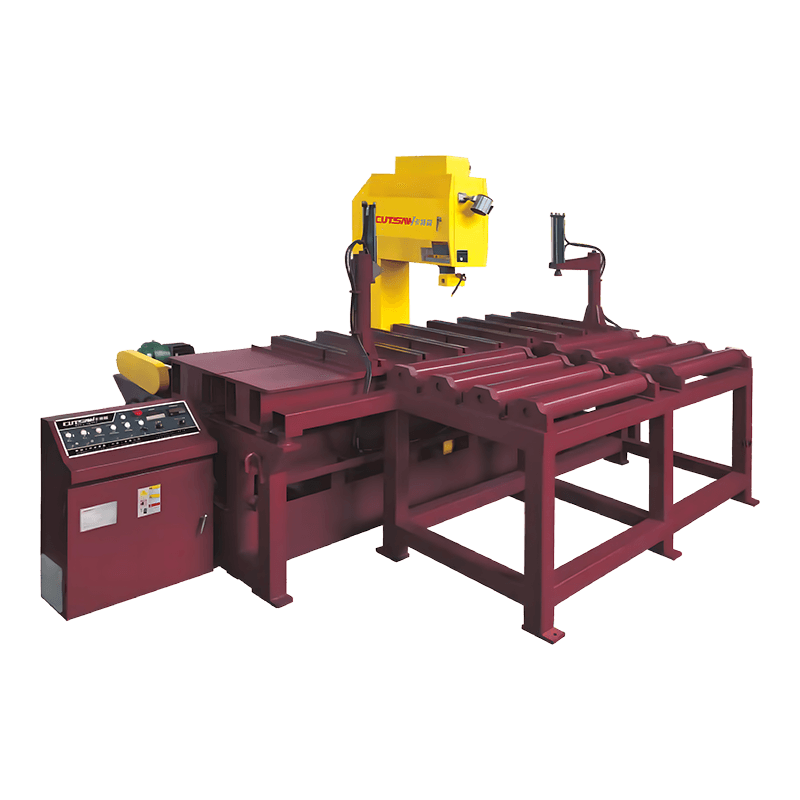
While horizontal machines excel at straight, repetitive cuts, a metal vertical band saw is built for contour cutting, intricate shaping, and detailed fabrication work. In this configuration, the blade moves vertically while the workpiece is fed manually or with a powered table, giving the operator direct control over cutting direction.
This type of machine is favored in tool and die shops, sheet metal fabrication, and prototype development, where cuts often follow curves, angles, or custom patterns that a fixed horizontal blade path cannot achieve. A metal vertical band saw also allows for internal cutting: by drilling a starter hole and threading the blade through it, operators can cut shapes entirely within the boundaries of a metal sheet without an edge entry point.
Typical Applications
- Cutting custom brackets, gaskets, and templates from sheet steel or aluminum.
- Producing curved or irregular profiles for machinery components.
- Trimming excess material from cast or forged parts.
- Fabricating one-off or low-volume metal parts where CNC laser cutting isn't cost-effective.
Woodworking Applications of Band Saw Machines
In woodworking, band saws serve a different but equally important set of purposes. Their thin blade kerf — often less than half the width of a standard circular saw blade — means less material is wasted with every cut, which matters significantly when working with expensive hardwoods.
Woodworkers rely on band saws for:
- Resawing — splitting a thick board into thinner slices for veneer or bookmatched panels.
- Cutting curves and organic shapes for furniture legs, decorative trim, or musical instruments.
- Ripping rough lumber to width before planing and jointing.
- Cutting joinery components such as tenons and dovetails with tighter tolerances than a hand saw allows.
A quality resaw cut can reclaim up to two additional boards from a single thick plank that would otherwise require purchasing separate stock, making the band saw a cost-saving tool in furniture and cabinetry production.
Band Saws in Specialized Industries
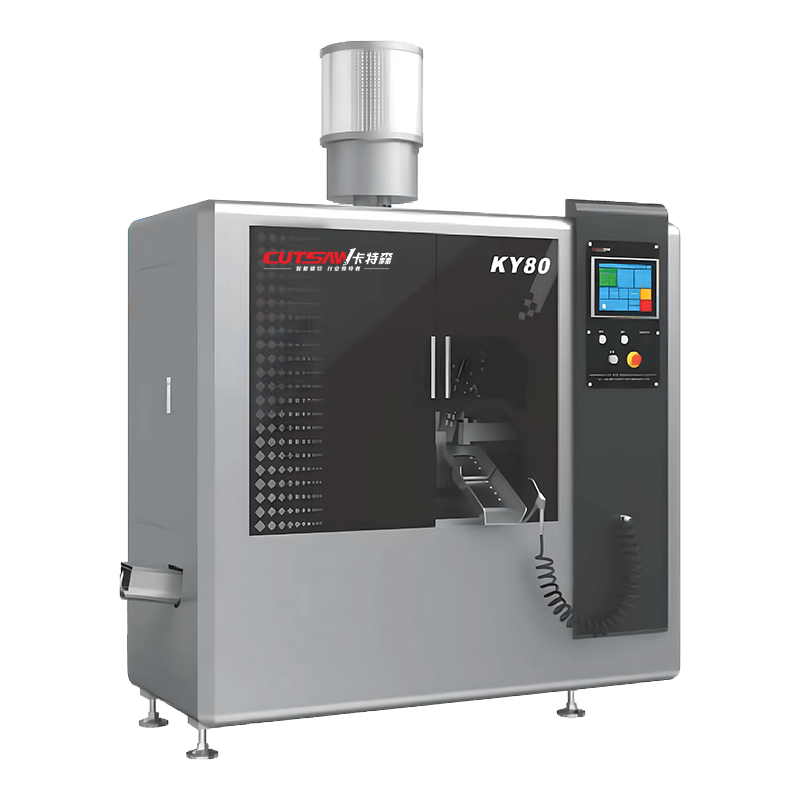
Beyond metalworking and woodworking, band saw machines play a critical role in food processing, particularly in meat and poultry plants. Specialized stainless steel band saws cut through bone and frozen meat cleanly, which is difficult to achieve with blade types designed for wood or metal. These machines are built with washdown-rated housings and food-safe components to meet sanitation standards.
Foam, rubber, and plastic manufacturers also use band saws to trim molded parts, cut insulation blocks to size, or shape composite materials for packaging and construction applications. The versatility of the blade-and-wheel design means the same basic mechanism, with the right blade selection, adapts to nearly any material that needs a clean, continuous cut.
Comparing Band Saw Configurations by Use Case
Selecting the right configuration depends heavily on the material, cut type, and production volume involved. The table below summarizes how different band saw types align with common industrial and workshop needs.
| Band Saw Type | Primary Cut Style | Best Suited Material | Common Setting |
|---|---|---|---|
| Horizontal Band Saw | Straight cross-cuts | Bar stock, pipe, tubing | Metal fabrication shop |
| Metal Vertical Band Saw | Contour and internal cuts | Sheet metal, plate | Tool and die shop |
| Wood Vertical Band Saw | Curves, resawing | Softwood, hardwood | Furniture and cabinet shop |
| Portable Band Saw | On-site straight cuts | Pipe, rebar, conduit | Construction, field repair |
Choosing the Right Cutting Band Saw Machine
Selecting an appropriate cutting band saw machine starts with identifying the material being processed and the volume of work expected. A shop cutting mild steel bar stock in high volumes benefits most from an automatic horizontal band saw with programmable feed rates. A fabricator producing custom brackets or prototypes will get more value from a metal vertical band saw with tilting table and variable speed control.
Factors to Evaluate Before Purchasing
- Throat depth and table size, which determine the maximum workpiece width the saw can accommodate.
- Blade speed range, since metal cutting generally requires slower speeds than wood or plastic.
- Motor horsepower, which affects how thick or dense a material the saw can cut without stalling.
- Available automation features, such as programmable feed and automatic vise clamping for repetitive work.
- Blade width options, since narrower blades allow tighter curves while wider blades hold straighter lines.
Matching these specifications to actual production needs prevents both underpowered equipment that struggles with dense materials and oversized machines that waste shop floor space and capital.
Safety Practices and Maintenance for Long-Term Performance
Regardless of configuration, band saws require consistent maintenance to operate safely and accurately. Blade tension should be checked before each shift, since a loose blade increases the risk of wandering cuts and premature blade breakage. Guides and bearings should be inspected periodically, as worn guides are one of the most common causes of inaccurate cuts.
Operators should always keep hands clear of the blade path, use push sticks or clamps for small workpieces, and wear appropriate eye and hearing protection at all times.
On metal-cutting machines, coolant systems should be checked regularly to prevent overheating, which can cause blades to lose temper and dull rapidly. Following a structured maintenance schedule can extend blade life by 20 to 40 percent, reducing both downtime and replacement costs over the life of the machine.
Never attempt to clear jammed material or adjust blade guides while the machine is powered on — always disengage the motor fully before reaching near the cutting zone.
Ultimately, whether the application involves heavy industrial stock removal or delicate contour work, the band saw machine remains one of the most adaptable cutting tools available. Its ability to switch between straight, curved, and internal cuts — across wood, metal, plastic, and food products — is what continues to make it a core piece of equipment in workshops and manufacturing facilities worldwide.
In Summary
From the raw stock discipline of the horizontal band saw to the sculptural precision of the metal vertical band saw, this single mechanical principle — a continuous, low-friction blade — has quietly underpinned metalworking, woodworking, and food processing for over a century. Choosing the right configuration, maintaining it properly, and respecting its safety demands are what turn a simple loop of steel into one of the most trusted tools on any production floor.