English
 русский
 简体中文
简体中文


Machining & Fabrication — Editorial Guide
What Is a Band Sawing Machine, and How Does It Differ From a Circular Saw?
A band sawing machine is a power-driven cutting tool that uses a continuous, toothed metal blade looped around two or more wheels to slice through metal, wood, plastic, or composite stock. Unlike a circular saw, which relies on a rigid rotating disc, a bandsaw cutting machine feeds a flexible steel band through the material in a single, continuous loop, allowing for longer, cooler, and more controlled cuts.
What Is a Band Sawing Machine?
The core difference between a band saw and a circular saw comes down to blade geometry and heat distribution: a band saw's thin, elongated blade spreads cutting force over a longer path and more teeth, which reduces friction-generated heat and lets it handle thicker or harder stock with less blade wear.
In practical terms, if you need clean, straight cuts on solid bar stock, structural beams, or thick hardwood, a band saw is typically the better choice. If you need fast, repetitive cuts on thin sheet material or need to make angled crosscuts quickly, a circular saw often wins. The rest of this article breaks down exactly why, using real specifications, use cases, and comparison data.
How a Band Sawing Machine Works
A band sawing machine consists of a continuous blade loop, two or three drive wheels, a blade guide system, and a motor that drives the wheel rotation. The blade travels in one direction around the wheels at a set speed, and the workpiece is either fed into the blade (in a horizontal band saw) or pushed along a table into the blade (in a vertical band saw). Because the blade is thin and long, only a small section of teeth contacts the material at any moment, which keeps the cutting action smooth and reduces the kerf (the width of material removed by the cut).
Blade tension is a critical part of this system. Most industrial band saws maintain tension between 15,000 and 30,000 psi depending on blade width and material, ensuring the blade tracks straight and resists deflection under load. Blade speed, usually measured in surface feet per minute (SFM), typically ranges from 50 SFM for hard alloy steels up to 500 SFM or more for aluminum and wood. This adjustability is one of the defining advantages of band sawing machines over fixed-speed circular saws.
Key Components
- Blade wheels — drive and guide the continuous band
- Blade guides — keep the blade aligned during the cut
- Tensioning mechanism — controls blade tightness and tracking
- Feed system — manual, hydraulic, or gravity-fed material advancement
- Coolant delivery — reduces heat and extends blade life
Band Saw vs. Circular Saw: The Core Differences
The most common question buyers ask is whether a band saw or a circular saw fits their shop better. Both machines cut material, but they differ substantially in blade design, cutting speed, kerf loss, noise level, and ideal use cases. The table below summarizes the practical distinctions.
| Feature | Band Sawing Machine | Circular Saw |
|---|---|---|
| Blade type | Continuous flexible band | Rigid rotating disc |
| Kerf loss | Low (0.9–1.3 mm typical) | Higher (2–3.5 mm typical) |
| Heat generation | Lower, spread across blade length | Higher, concentrated at disc edge |
| Cut thickness capacity | Excellent for thick, solid stock | Better for thin sheet and quick crosscuts |
| Cutting speed on thin material | Moderate | Fast |
| Noise level | Quieter | Louder |
| Blade cost per unit | Higher upfront, longer service life | Lower upfront, shorter service life |
Because a band saw loses less material to the cut, a shop processing high volumes of bar stock can save meaningfully on raw material over a year. For example, cutting 1,000 pieces of 100 mm round steel bar with a band saw kerf of 1.0 mm versus a circular saw kerf of 3.0 mm results in roughly 2 meters of saved material per 1,000 cuts — a direct cost benefit that compounds at scale.
The band saw's advantages — lower kerf loss, reduced heat, longer blade life, and the ability to cut thicker or curved profiles — make it the standard choice for metal fabrication, tool making, and heavy-duty cutting operations.
Horizontal vs. Vertical Band Saw: Choosing the Right Configuration
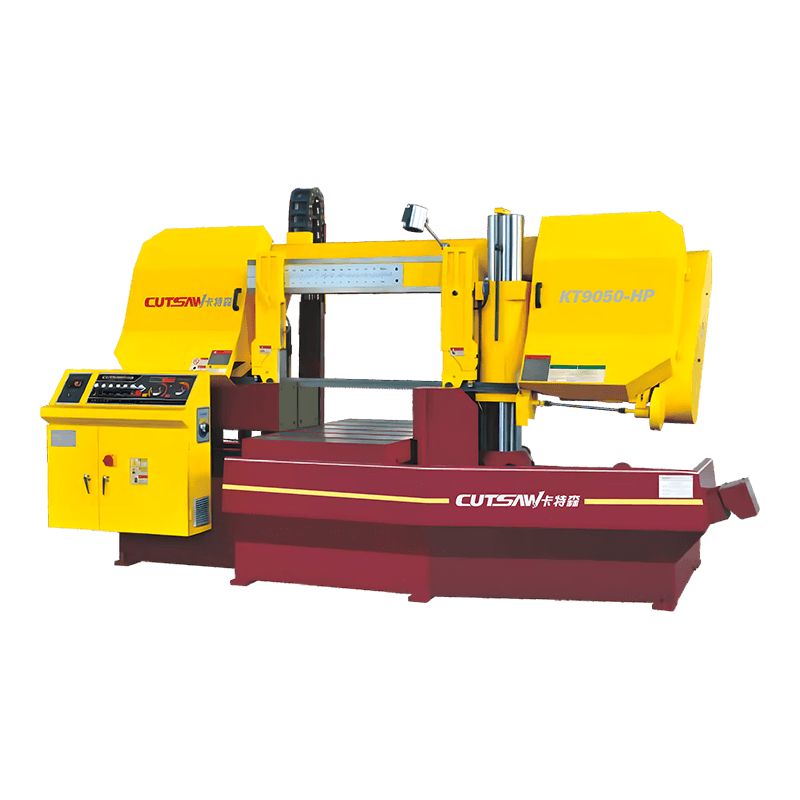
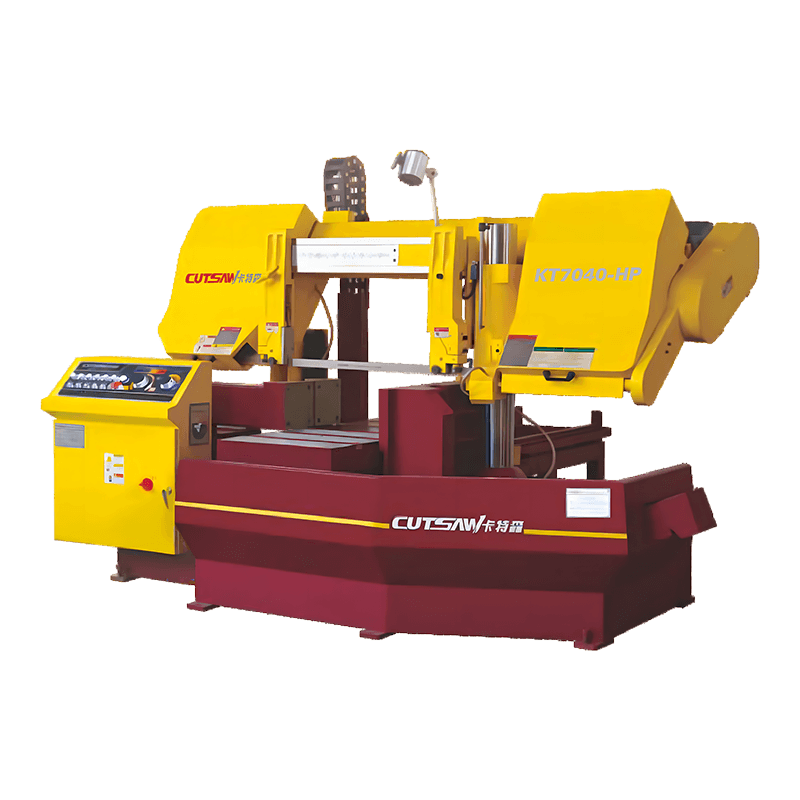
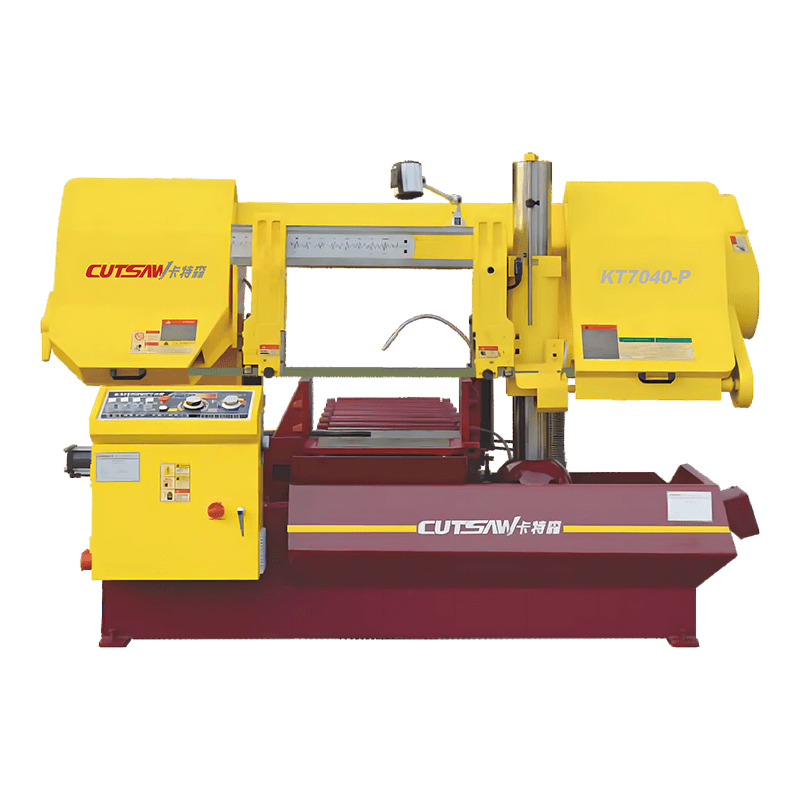
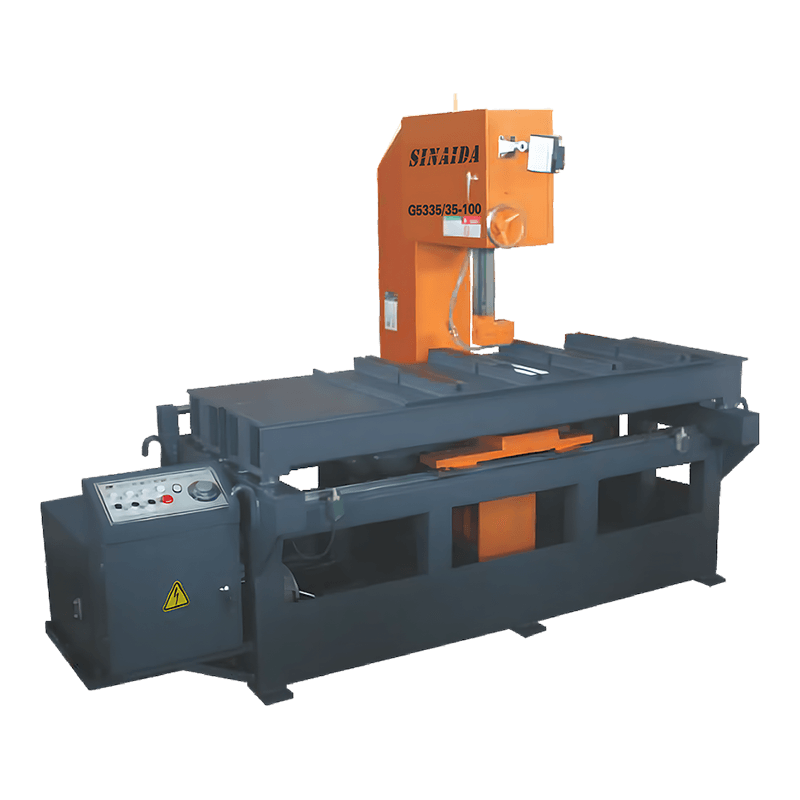
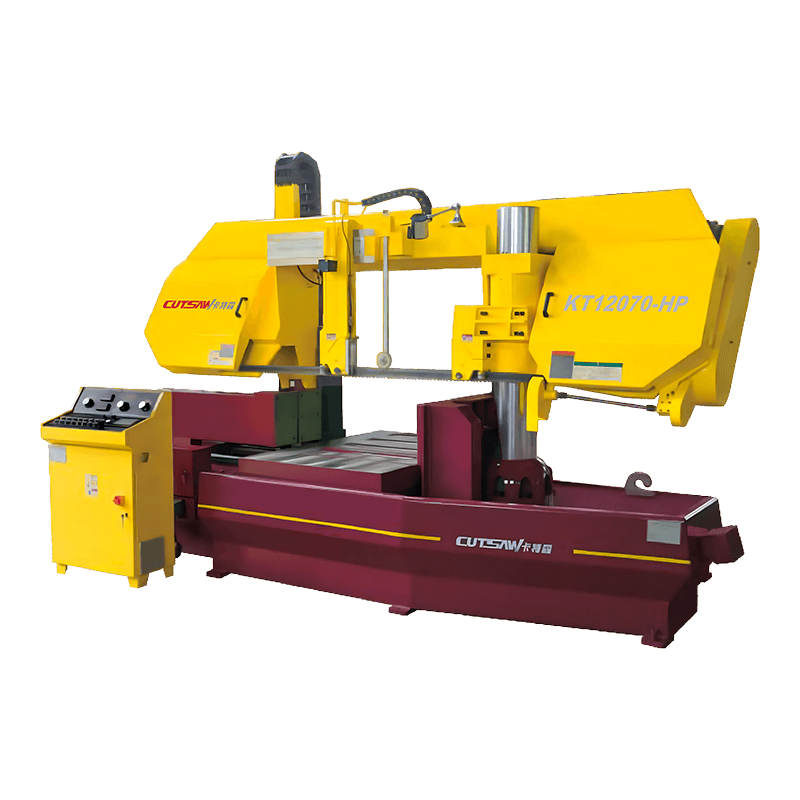
Band sawing machines come in two primary configurations: horizontal and vertical. A horizontal band saw lowers the blade down onto stationary stock, making it ideal for cutting bar stock, pipe, and structural sections to length. A vertical band saw, by contrast, holds the blade in a fixed vertical position while the operator feeds the workpiece across a table by hand or with a guided fixture. This configuration is especially suited to contour cutting, curved cuts, and intricate shapes in sheet metal, plate, or wood.
band sawing machine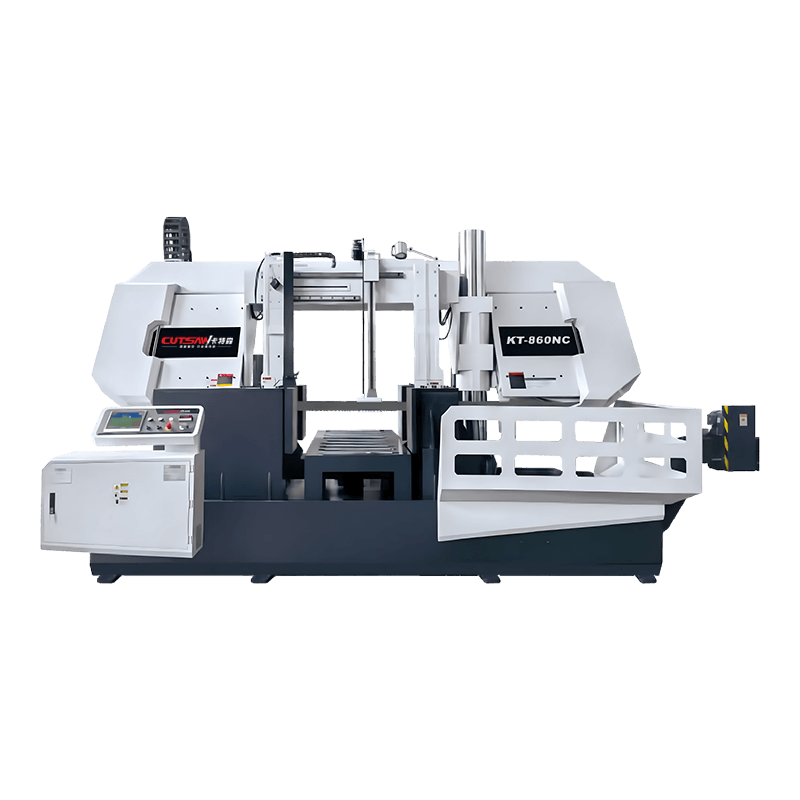
A vertical band saw typically offers a throat depth (the distance from the blade to the frame) ranging from 300 mm to over 900 mm on industrial models, which determines the maximum width of material that can be cut. Because the operator can rotate the workpiece freely against the blade, vertical machines are the preferred choice for fabrication shops producing custom brackets, dies, templates, or artistic metalwork.
When to Choose a Horizontal Band Saw
Horizontal machines excel at repetitive, straight cross-cutting of stock to fixed lengths — bar, tube, angle, and structural beam. Production shops cutting hundreds of identical lengths per shift generally rely on horizontal band saws with automatic feed and clamping systems.
When to Choose a Vertical Band Saw
Vertical machines are the right fit when cuts require freehand guidance, curves, notches, or intricate patterns. Metal fabrication, pattern-making, and woodworking shops rely on a vertical band saw when the geometry of the cut cannot be achieved with a fixed-feed machine.
Blade Selection: What Actually Determines Cut Quality
The blade is the single most influential factor in how well a band sawing machine performs. Two variables matter most: tooth pitch (teeth per inch, or TPI) and tooth set pattern. Coarser blades (2–4 TPI) suit thick, soft materials and clear chips quickly, while finer blades (10–14 TPI) suit thin-walled tube and hard alloys where a smoother finish is required.
| Material Thickness | Recommended TPI | Typical Application |
|---|---|---|
| Under 6 mm | 10–14 | Thin tube, sheet metal |
| 6–50 mm | 6–10 | Solid bar, structural profile |
| Over 50 mm | 2–4 | Large billets, heavy plate |
Info
A common rule of thumb is to keep at least three teeth in contact with the material at all times.
Fewer teeth in contact causes tooth breakage and rough cuts, while too many teeth clog with chips and generate excess heat. Blade material also matters: bi-metal blades combine a flexible carbon-steel body with hardened high-speed-steel teeth, offering a strong balance of durability and cost for general-purpose bandsaw cutting machine work, while carbide-tipped blades handle abrasive or very hard alloys at higher cost.
Advantages of Band Sawing Machines Over Circular Saws
Several practical advantages explain why band saws dominate metal-cutting operations in industrial settings, even though circular saws remain common in woodworking and light fabrication.
- Lower material waste due to thinner kerf width
- Reduced heat buildup, which preserves material properties near the cut edge
- Ability to cut thicker cross-sections in a single pass
- Longer blade life, often 3 to 5 times longer than circular saw blades in comparable metal-cutting duty
- Lower noise and vibration during operation
- Better suited to contour and curved cutting when configured as a vertical band saw
Success
Because a band saw loses less material to the cut, a shop processing high volumes of bar stock can save meaningfully on raw material over a year.
Circular saws still hold an edge in raw cutting speed for thin materials and are simpler to operate for quick, straight crosscuts in wood or light-gauge metal. The right choice depends on the balance between speed, material thickness, and finish requirements in your specific operation.
Typical Applications by Industry
Band sawing machines serve a wide range of industries, each relying on different configurations and blade specifications.
| Industry | Common Machine Type | Typical Use Case |
|---|---|---|
| Metal fabrication | Horizontal band saw | Cutting bar and tube stock to length |
| Tool and die making | Vertical band saw | Contour cutting dies and templates |
| Woodworking | Vertical band saw | Curved cuts, resawing lumber |
| Meat and food processing | Vertical band saw | Portioning frozen or fresh product |
| Aerospace and heavy industry | Horizontal band saw | Precision cutting of high-alloy billets |
Maintenance Considerations for Long Service Life
Because a band sawing machine relies on precise blade tracking and tension, routine maintenance directly affects cutting accuracy and blade lifespan. Coolant concentration should also be checked periodically — a typical water-soluble coolant mix runs between 5% and 8% concentration, and running it too diluted accelerates blade wear while too concentrated a mix can leave residue on the workpiece.
Danger
Blade guides should be inspected regularly for wear, since worn guides allow the blade to wander, producing angled or bowed cuts.
Warning
Blade tension should be verified at the start of each shift, since a loose blade causes wandering cuts while an over-tensioned blade increases wheel bearing wear and raises the risk of blade breakage.
Most manufacturers recommend a full blade guide and bearing inspection every 200 to 300 operating hours, alongside a check of drive belt tension and table alignment on vertical models.
Final Takeaway: Matching the Machine to the Job
A band sawing machine is best understood as a precision cutting tool built around a continuous flexible blade, distinguishing it from the rigid-disc design of a circular saw. The band saw's advantages — lower kerf loss, reduced heat, longer blade life, and the ability to cut thicker or curved profiles — make it the standard choice for metal fabrication, tool making, and heavy-duty cutting operations. Circular saws remain valuable for fast, straight cuts in thinner material where speed outweighs precision.
When selecting between a horizontal configuration for straight, repetitive cuts and a vertical band saw for contour and freehand work, the deciding factor is almost always the shape of the cut required rather than the material itself. Matching blade pitch, tension, and speed to the specific material and thickness will determine whether a bandsaw cutting machine delivers clean, cost-effective results or falls short of production expectations.