English
 русский
 简体中文
简体中文


Industrial Manufacturing — Field Notes
Where the Blade Meets the Business
Across six very different industries, one deceptively simple machine keeps showing up — cutting cost, cutting waste, and cutting time. This is the story of why the band saw never went out of style.
Metalworking and Machine Shops Are the Largest Users of Band Sawing Machines
The short answer is that metal fabrication shops, woodworking manufacturers, construction firms, aerospace suppliers, food processing plants, and recycling centers are the industries that rely most heavily on band sawing machines. Among all of these, metalworking and general machine shops represent the single largest user base. A bandsaw cutting machine is prized in these environments because it produces a continuous, narrow kerf that wastes less raw material than a circular saw blade, while generating less heat during the cut. This matters enormously when shops are slicing through solid bar stock, structural tubing, or forged billets that can cost hundreds of dollars per length.
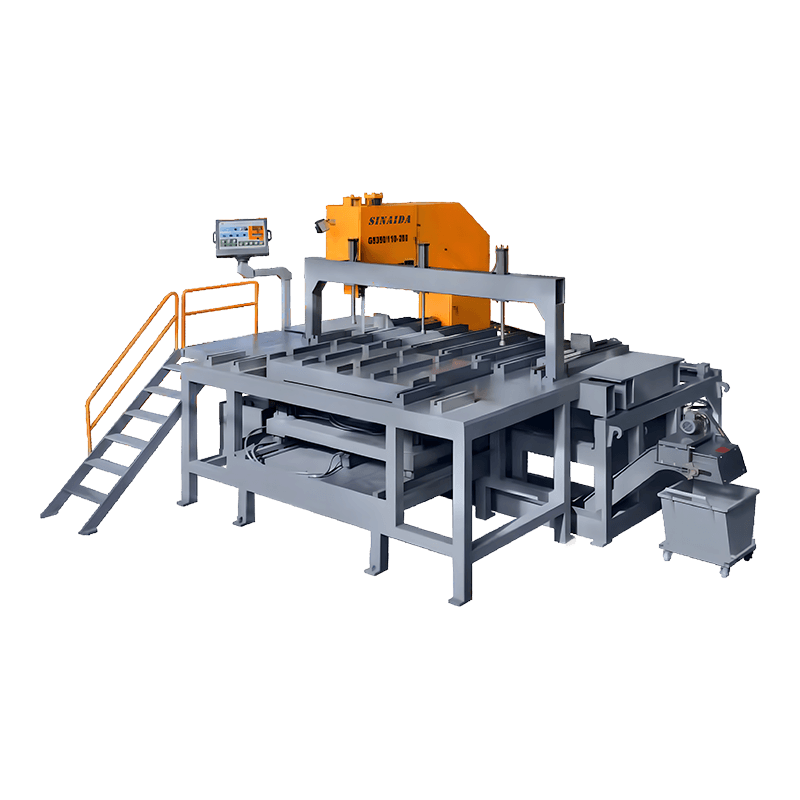
In a typical metal fabrication facility, band saws handle the first step of nearly every job: cutting raw stock down to size before it moves to milling, turning, or welding stations. Because the blade moves in one continuous direction rather than oscillating, it can maintain consistent tooth engagement across tough alloys such as stainless steel, tool steel, and titanium. This is why many shops keep at least one horizontal band saw for straight cross-cutting and a vertical band saw for contour work, notching, and slotting on the same production floor.
Narrow-kerf cutting isn't a marginal detail — on high-cost alloys, saved material can offset a meaningful share of a shop's annual tooling budget.
Woodworking and Furniture Manufacturing
Woodworking is arguably the industry most associated with band saws in the public imagination, and for good reason. Furniture manufacturers, cabinet makers, and millwork shops depend on band saws for resawing thick boards into thinner veneers, cutting curved chair components, and shaping decorative trim. A vertical band saw is the standard configuration in nearly every woodworking shop because its upright blade orientation allows the operator to guide stock freely by hand, following curved layout lines that would be impossible on a table saw.
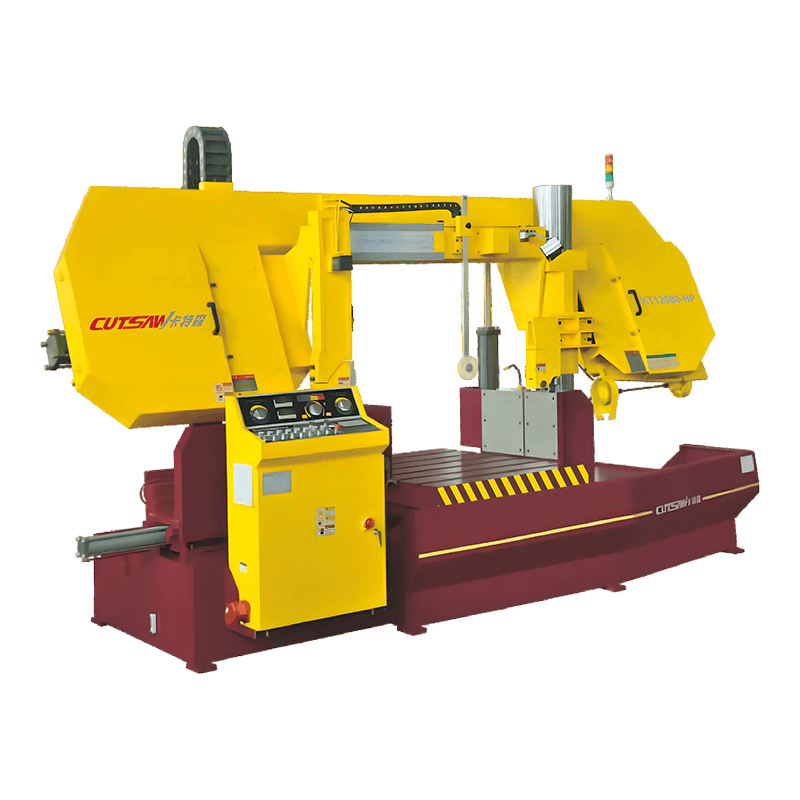
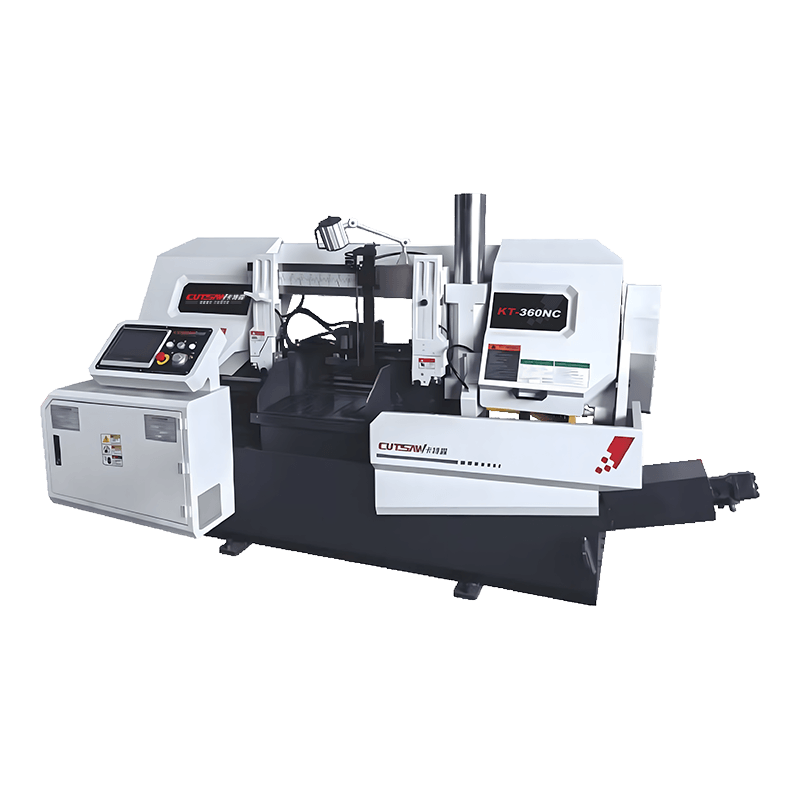
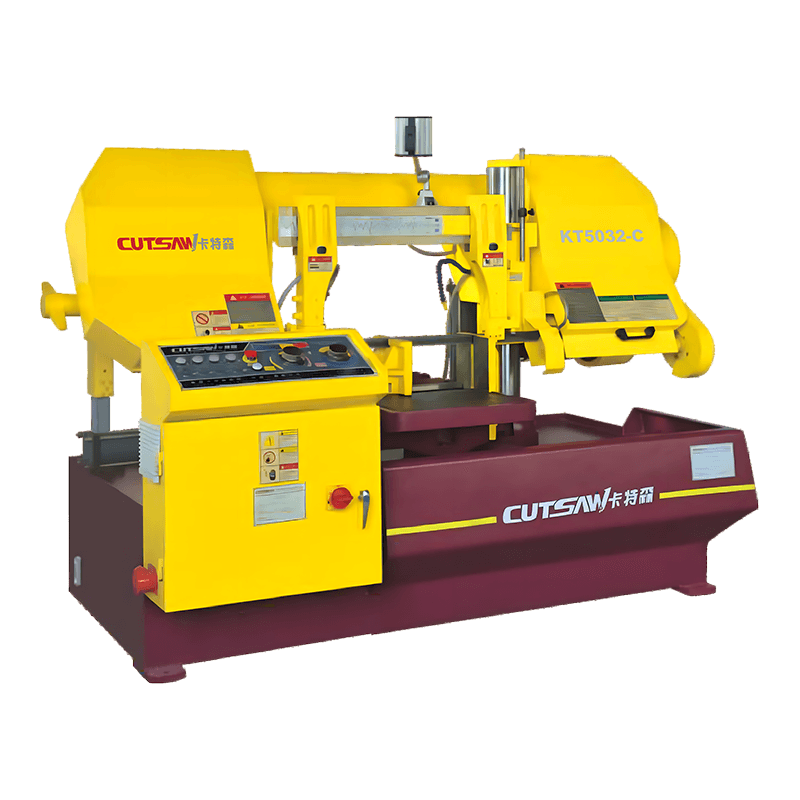
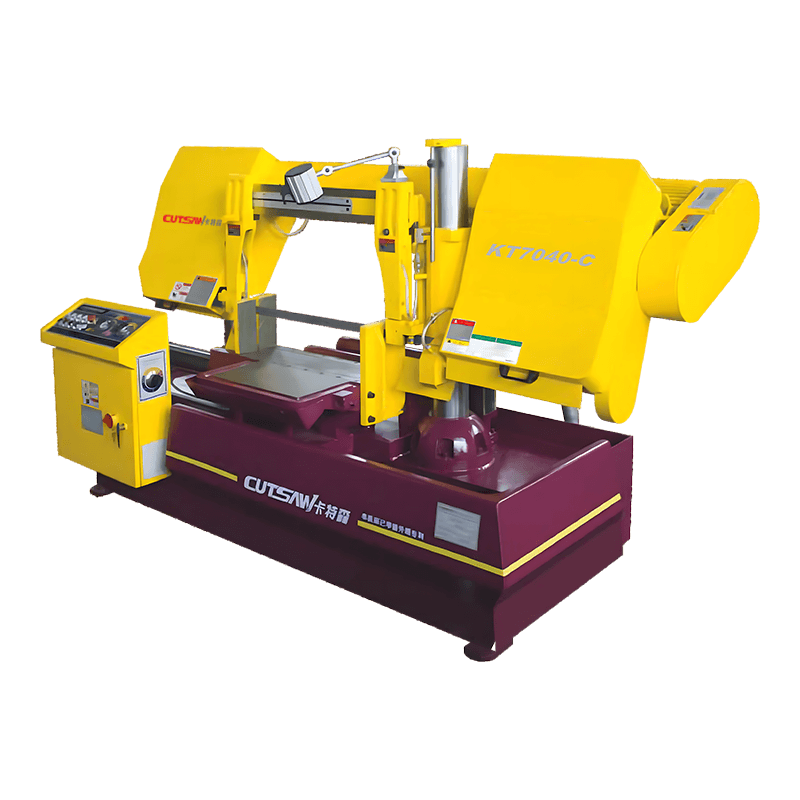
bandsaw cutting machine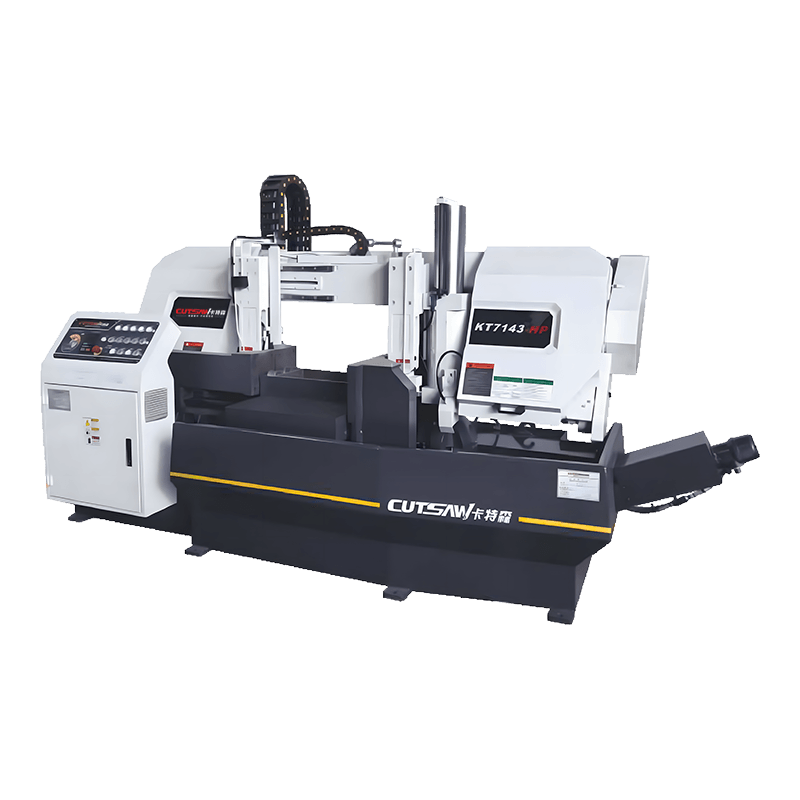
Common Woodworking Applications
- Resawing logs or boards into thinner planks for veneer or drawer sides
- Cutting curved profiles for chair legs, rockers, and decorative brackets
- Producing intricate scrollwork and joinery components such as dovetails
- Cutting green or wet timber that would bind and burn a circular blade
Because wood fibers vary in density and moisture content, a bandsaw cutting machine equipped with variable-speed control gives woodworkers the flexibility to slow the blade for hardwoods like maple and oak while speeding it up for softer species such as pine or basswood. This adaptability is one reason band saws remain irreplaceable even as CNC routers have taken over some repetitive cutting tasks.
Construction and Structural Steel Fabrication
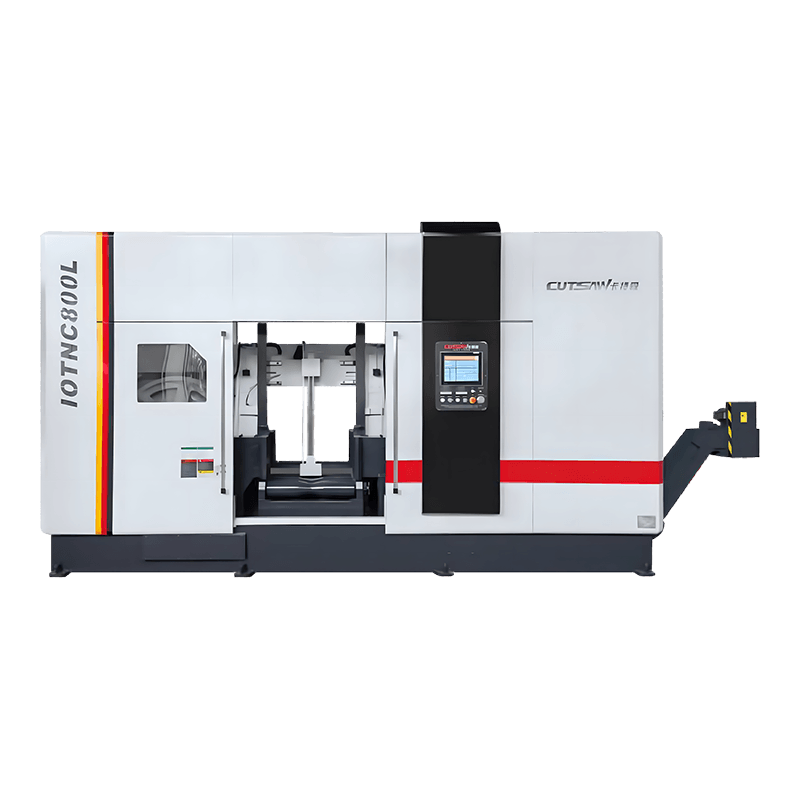
Structural steel fabricators use band saws to cut I-beams, channel, angle iron, and heavy plate to precise lengths before welding or bolting assemblies together for buildings, bridges, and industrial platforms. In this setting, accuracy is critical: a beam cut even a few millimeters short can compromise an entire connection detail. Horizontal band saws dominate this niche because they can automatically feed and clamp long lengths of stock, cutting repeatable batches with minimal operator intervention.
Construction crews increasingly favor band sawing on active sites — quieter, cooler, and without the shower of sparks that abrasive cutoff wheels leave behind.
Construction equipment rental yards and on-site fabrication trailers also carry portable band saws so crews can trim rebar, conduit, or scaffolding tubing without transporting material back to a central shop. The relatively low noise and reduced sparking of band sawing, compared with abrasive cutoff wheels, makes it a safer choice on active job sites where flammable materials or other trades may be working nearby.
Aerospace and Automotive Manufacturing
Aerospace and automotive suppliers cut some of the toughest materials in industry, including titanium alloys, Inconel, and hardened tool steel used for dies and molds. These sectors rely on precision band saws with carbide or bi-metal blades capable of holding tolerance across thousands of repeat cuts. Because aerospace components often begin as expensive forged or extruded billets, minimizing kerf loss with a narrow band blade can save a supplier thousands of dollars per production run compared with wider-kerf cutting methods.
Automotive tooling departments use a vertical band saw extensively when building stamping dies and injection molds, since these often require intricate internal cutouts and contoured profiles that a straight-line saw cannot achieve. Die makers frequently combine band sawing with subsequent grinding and EDM operations, using the saw purely for rough shaping before finer finishing steps.
Meat Processing and Food Industry Applications
Outside of heavy industry, band saws play a surprisingly essential role in food processing. Meat packing plants and butcher shops use specialized stainless-steel band saws to portion frozen and fresh meat, cut through bone, and produce uniform cuts for retail packaging. These machines are built with food-grade housings, washdown-rated motors, and blade guards designed for constant sanitation, distinguishing them clearly from industrial metal or wood-cutting models.
Blade speed in meat-cutting applications must stay within a controlled range — excessive friction can partially cook the meat surface, affecting both appearance and shelf life.
A commercial meat-cutting bandsaw cutting machine typically runs at a specific blade speed range to prevent this outcome. Regulatory agencies in many countries mandate strict cleaning protocols for these machines, and manufacturers respond with tool-free blade removal systems that speed up daily sanitation without compromising cutting accuracy.
Recycling, Scrap Metal, and Demolition Industries
Scrap yards and recycling centers use heavy-duty band saws to reduce large metal structures, pipe, and mixed scrap into manageable sizes suitable for shipping to smelters or further processing. Compared with plasma or oxy-fuel torch cutting, band sawing produces no toxic fumes and leaves a clean edge that is easier to sort and grade by alloy type. This is particularly valuable when cutting mixed non-ferrous scrap such as copper, brass, and aluminum, where fume-free cutting protects both worker health and material purity.
Because band sawing generates minimal heat, salvaged steel retains more of its original temper — a real benefit when material is destined for reuse rather than melting down.
Demolition contractors sometimes deploy portable band saws to section steel beams and rebar-reinforced concrete forms salvaged from building teardown projects, allowing the material to be loaded onto standard flatbed trucks.
Comparing Band Saw Use Across Industries
The table below summarizes the primary applications, typical saw configuration, and material focus across the industries discussed so readers can quickly compare where each type of band saw fits best.
| Industry | Typical Saw Type | Primary Material | Main Use Case |
|---|---|---|---|
| Metalworking | Horizontal / Vertical | Steel, alloys | Stock cutting, contouring |
| Woodworking | Vertical | Hardwood, softwood | Resawing, curved cuts |
| Construction | Horizontal, portable | Structural steel, rebar | Beam and bar cutting |
| Aerospace / Automotive | Vertical, precision | Titanium, tool steel | Die and mold shaping |
| Food Processing | Vertical, washdown-rated | Frozen and fresh meat | Portioning, bone cutting |
| Recycling | Heavy-duty horizontal | Mixed scrap metal | Sizing for shipment |
Why Band Saws Remain the Preferred Cutting Method Across Sectors
Across every industry discussed, a few consistent advantages explain why the bandsaw cutting machine has persisted as an industrial staple for well over a century. First, the continuous blade motion generates significantly less heat than reciprocating or abrasive cutting methods, which protects both the material's metallurgical properties and the blade's service life. Second, the narrow kerf of a band blade, often measured in fractions of a millimeter, reduces material waste in a way that becomes financially significant at high production volumes. Third, band saws are mechanically simpler than many alternative cutting technologies, which keeps maintenance costs low and uptime high even in demanding 24-hour production environments.
Key Factors Driving Industry Adoption
- Lower material waste due to narrow blade kerf
- Reduced heat generation, preserving material integrity
- Versatility across metal, wood, and food-grade applications
- Ability to perform both straight and contour cuts on the same machine
- Lower operating noise and fume output compared with torch or grinding methods
Improper blade tension or worn guides remain a leading cause of cutting inaccuracy and blade failure — routine inspection matters as much as the machine's specifications.
Looking ahead, many manufacturers across these industries are integrating automated feed systems, laser-guided cutting lines, and remote monitoring sensors into traditional band saw frames. This modernization does not replace the fundamental band sawing principle; instead, it enhances the precision and throughput of a technology that has already proven itself indispensable in metalworking, woodworking, construction, aerospace, food processing, and recycling operations worldwide.
In Summary
For any business evaluating its cutting equipment needs, understanding which industry-specific configuration — whether a rugged horizontal saw for structural steel or a vertical band saw for detailed contour work — aligns with its material and precision requirements is the first step toward maximizing both efficiency and cost savings. The band saw's staying power isn't nostalgia; it's arithmetic, measured one narrow kerf at a time.