English
 русский
 简体中文
简体中文


Metal Sawing Equipment
Miter Band Sawing Machine: How to Choose Angle Accuracy That Holds Up in Production
Swivel heads, rotary tables and double-column frames all cut a miter. They do not all hold the same angle after five hundred pieces.
If your 45-degree cuts start drifting after the first few dozen pieces, the machine architecture is usually to blame, not the operator. A miter band sawing machine holds its angle only when three things agree: the mechanism that sets the angle, the blade guides that support the blade closest to the cut, and the vise that keeps the workpiece from turning as the blade loads up. When any one of those three gives way, the angle opens or closes a fraction of a degree per cut, and a batch of parts becomes scrap.
On paper, most machines look nearly identical — same cutting capacity, same motor power, same blade size. The differences that decide whether a 45-degree cut stays at 45 degrees are structural, and they show up in the first hours of a real production run. That is the conclusion this article works from. What follows explains where angle error comes from, which configuration suits which work, and which numbers on a datasheet deserve a second look.
Where Miter Accuracy Actually Comes From
Angle error has three sources, and they fail in different ways. Knowing which one is failing tells you whether you need a setup change or a different machine.
The angle-setting mechanism
A machine that pivots the head on a base casting relies on a mechanical stop or a stamped scale, and every clamp-and-release cycle adds a little wear. A machine that rotates the table on a servo axis returns to the same position because the control closes the loop. The first approach is quick and inexpensive; the second is repeatable. For a shop that sets an angle once a day these are nearly equivalent. For a shop that changes angle twenty times a shift, they are not.
The blade guide arm
The closer the movable guide arm sits to the vise, the shorter the unsupported span of blade and the straighter the cut. On a miter cut the guide arm usually has to be pushed back to clear the workpiece at an angle, which is exactly when blade deflection increases. A machine whose guide arm cannot travel close to the vise will deliver a wider angle tolerance than its datasheet suggests.
The vise
A workpiece clamped on only one side of the cut line can rotate as the blade enters, especially with tube and thin-wall profile. Double vises that clamp both sides of the cut line hold the material rigidly. When a miter is off by a consistent amount on every piece, the vise is the first place to look.
- How close the movable guide arm can be positioned to the vise jaws.
- Whether the angle is set against a scale, a positive stop, or a programmed servo position.
- How much backlash appears when the swivel is unlocked and re-locked ten times in a row.
- Whether the vise clamps both sides of the cut line or only one.
- Whether the saw bed is a single casting or a welded fabrication.
Four Configurations That Cut a Miter
Angle cutting is offered in four broadly different layouts. Their capacities overlap, but the work they do best does not.
| Configuration | How the angle is set | Typical miter range | Best suited to |
|---|---|---|---|
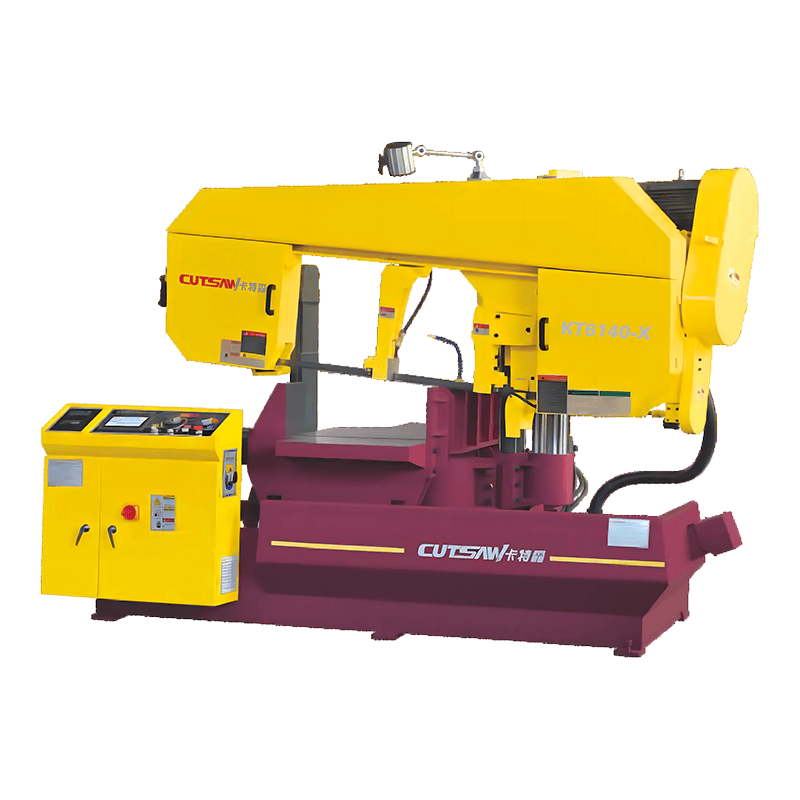
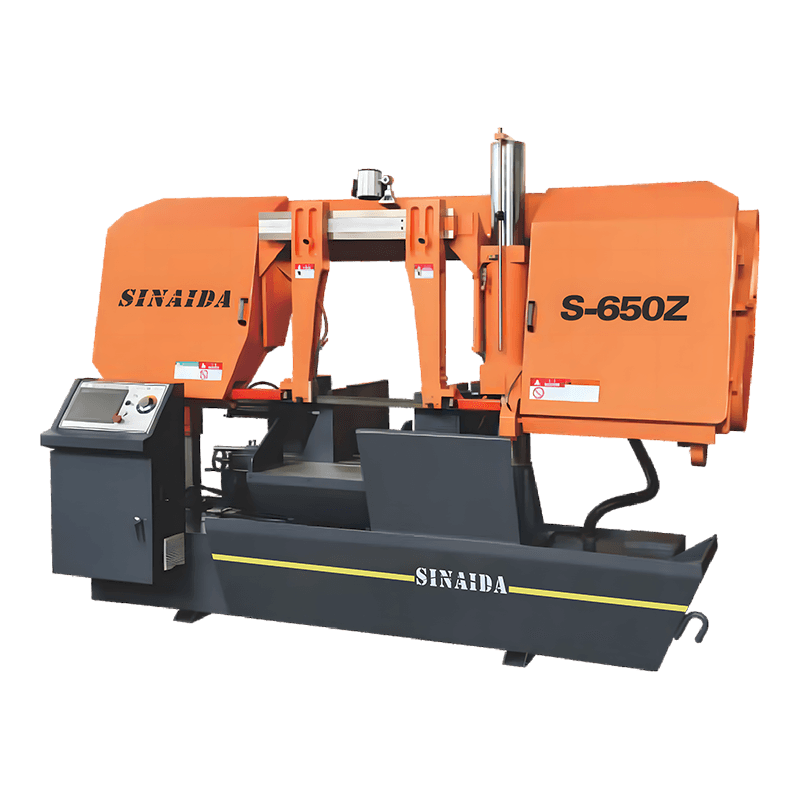
| Pivot-head horizontal band saw | Head swivels on a base pivot, set by scale or stop | 0 to 45 degrees, one side | Small to medium bar and tube, mixed job-shop batches |
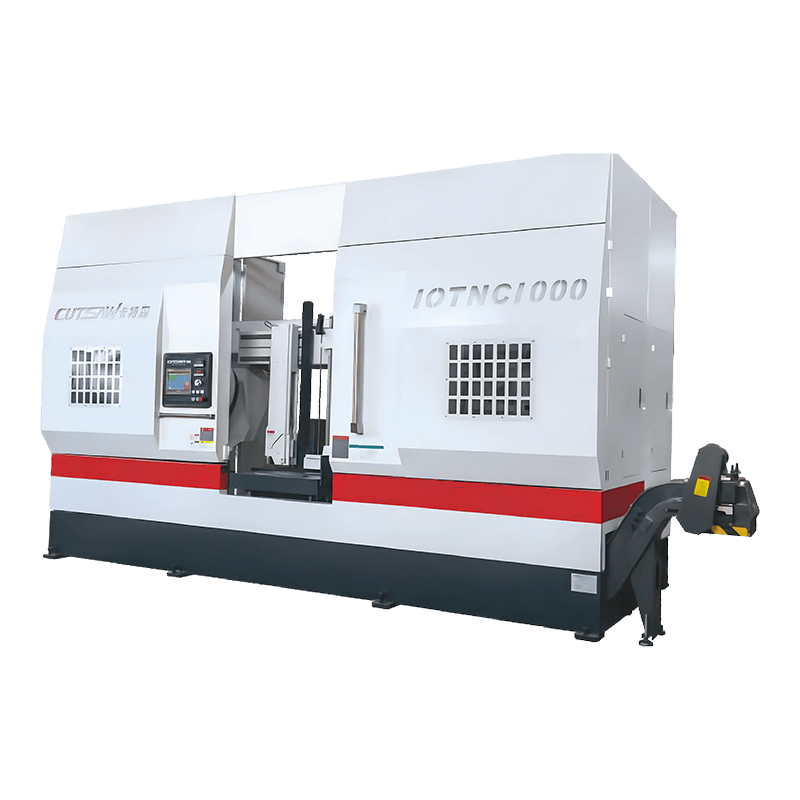
| Rotary-table NC band saw | Table rotates on a servo axis, angle held in the programme | 0 to 60 degrees, both sides | Tube, profile and bundle work with repeating angles |
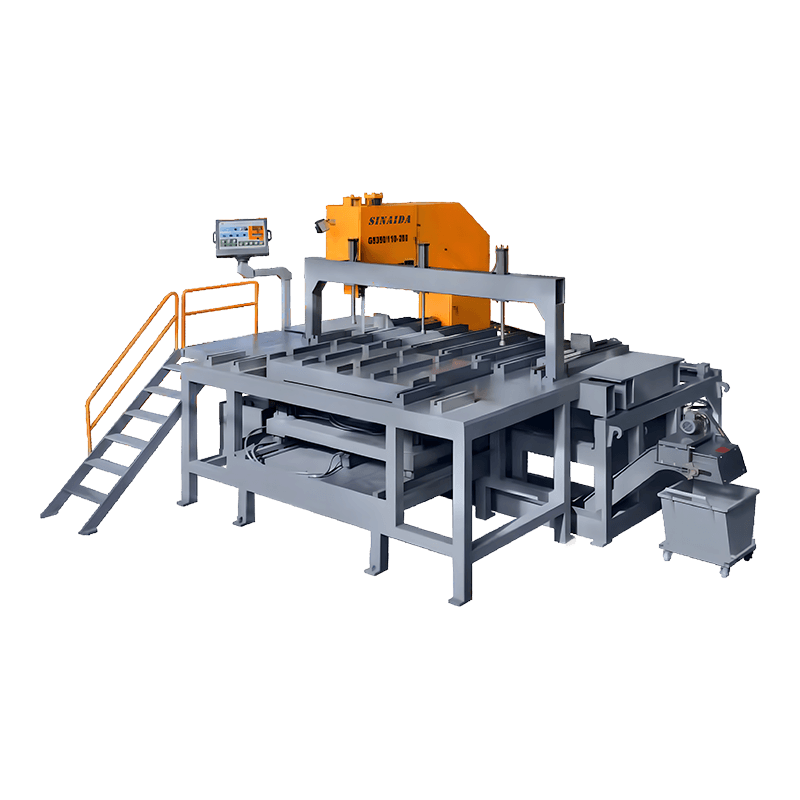
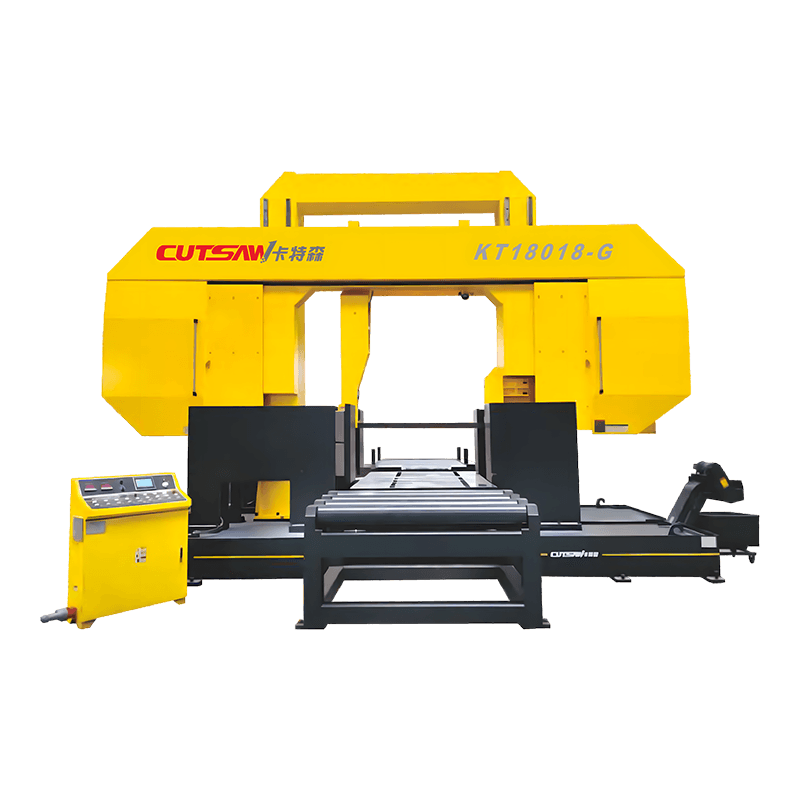
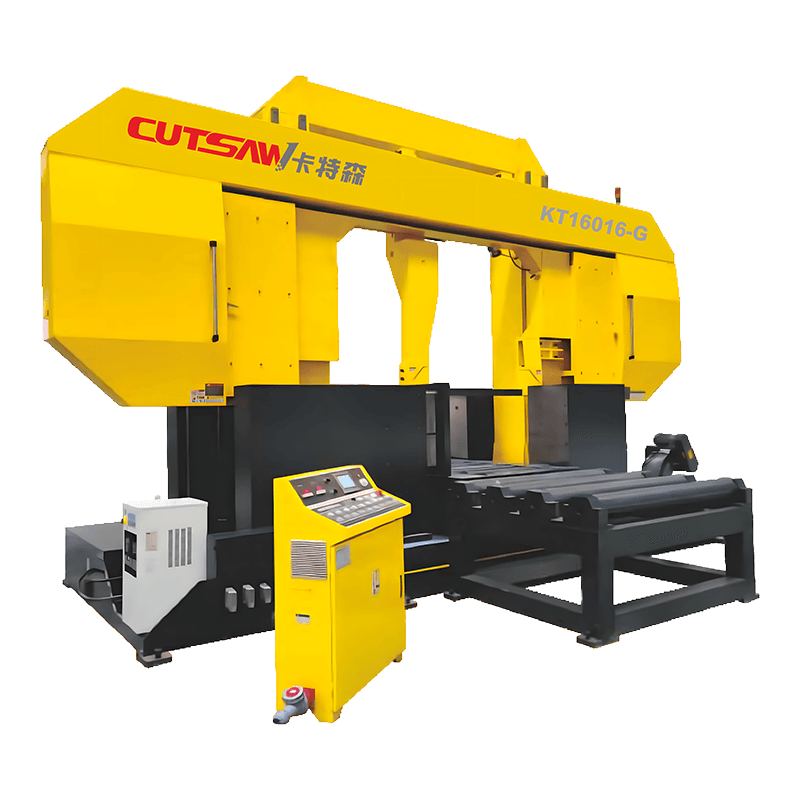
| Double-column mitering band saw | Frame or bed swivels with heavy column support | 0 to 45 degrees | Large sections, structural steel, thick-wall pipe |
| Carbide circular saw with angle setting | Head tilts or table rotates, toothed blade instead of a band | 0 to 45 degrees | Thin-wall tube and high-volume, burr-sensitive work |
Matching the Machine to Your Workpiece and Volume
Bar and tube at moderate volume
A pivot-head automatic band saw handles most general fabrication work. The head swings to the angle, a hydraulic or pneumatic vise closes on the material, and the operator loads, presses start and repeats. Where the workload is bar, pipe and small profile with a handful of angle changes per shift, this is the least expensive way to take labour out of the cut. The advantages are a small footprint, fast angle changes and easy operator training. The trade-off is that long profiles need outfeed support, because the material stays in one orientation.
Repeated angles on tube and profile
When the same angle repeats fifty times a shift, setting it by hand stops being acceptable. A rotary table machine stores the angle in the control, rotates the table on a servo axis and returns to the same position every cycle. Programmable angles also make opposite-side miters practical, so one machine can produce both ends of a frame member without turning the workpiece. On this type of machine the angle is a stored number rather than an operator judgement, which is what makes batch consistency achievable.
Large sections and structural steel
Above a few hundred millimetres of section width, frame rigidity stops being optional and becomes the whole argument. A mitering machine built on a double-column frame resists the twisting force that a miter cut puts on the blade, and the heavier bed keeps the workpiece square while the clamp closes. These machines cost more, take up more floor space and reward that investment with the ability to cut heavy structural sections at an angle without a second operation.
Specifications Worth Verifying Before You Sign
A miter band sawing machine is bought for the angle it holds, so the specification conversation should begin at 45 degrees rather than 90.
- Cutting capacity at 90 degrees and at 45 degrees. The angled figure is always smaller, and on some models it is dramatically smaller. Buy against the number you will actually run.
- Miter range and direction. A machine that reaches 45 degrees to one side only is cheaper; one that reaches 60 degrees both ways rarely needs a second setup.
- Blade size and speed range. A wider blade tracks straighter under load but demands more from the motor and the guide bearings.
- Feed control. Hydraulic feed with a pressure setting suits mixed material; servo feed with programmable cutting pressure suits repeat production.
- Vise arrangement and clamp force. Double vises, and jaws that reposition for a short remnant, save both material and setup time.
- Table height and floor footprint. Long profiles need infeed and outfeed support, and a machine that fits the aisle is worth more than a larger one that blocks it.
- Coolant, chip removal and the control interface. These decide how much of the operator's day is spent cutting rather than clearing.
Setup and Blade Habits That Protect the Last Half Degree
Even a rigid machine will drift if the blade is neglected. Tension, guide bearing clearance and coolant concentration all change the way a blade enters the material. A new blade should be broken in — the first fifty cuts at reduced feed and reduced speed let the teeth settle without micro-chipping. A blade that has run hundreds of square metres at 90 degrees has a worn tooth set on one side; move it straight to a miter cut and it will pull.
On angle work, the blade tells the truth about the machine. If the cut opens at the bottom of the section, look at the guides. If it opens at the top, look at the vise.
Guide bearings deserve a weekly check on any machine that cuts angles daily, because miter work loads the guides unevenly and wear appears on one side first. A five-minute inspection at the start of a shift is cheaper than remachining a batch.
Customization, Certification and Delivery Questions
Standard models cover most angle-cutting work, but oversized sections and unusual lengths push a purchase toward customized territory. Ask early whether the supplier builds the frame, the bed and the control cabinet in house, because that determines how a special request is engineered and how spares arrive two years later. Certified quality management, mechanical safety certification and CE marking are the usual documentation markers for export customers, and they should be produced as copies rather than described verbally.
Angle machines in the standard range are grouped in the CUTSAW angle band sawing machine series, and the differences between frame types are explained in our guide to double column band sawing machines.
The Order to Make the Decision
Because so many machines look alike on a specification sheet, it helps to decide in a fixed order.
- Set the angle tolerance you must hold and the section size you cut most.
- Choose the configuration: pivot head, rotary table or double-column frame.
- Decide how the angle is set and how often it changes per shift.
- Match the automation level to your volume, from semi-automatic to programmed cycles.
- Check footprint, infeed and outfeed support, and the running cost of blades and coolant.
- Only then compare suppliers and prices, using the same test material for every machine.
A miter band sawing machine that matches the work holds its angle for years. One bought on headline capacity alone keeps producing scrap in the corner of the shop, and no amount of operator skill will correct geometry that was never rigid enough to begin with.