English
 русский
 简体中文
简体中文


Metal Sawing Automation — A Field Guide
When a circular saw stops depending on an operator's hands, cutting changes from a manual task into a repeatable process. This is what matters when you evaluate an automatic circular sawing machine, and where many buyers overpay or underspec.
Walk to the end of any bar-cutting line, and you will see the same scene. The blade drops, the operator unclamps, pushes the finished part aside, measures the next one, pulls the bar forward, clamps again. Over an eight-hour shift, those handling gaps consume more hours than the blade ever spends in the cut.
The fix is usually not a faster blade. It is a machine that closes the gap between cuts. An automatic circular sawing machine takes over bar feeding, clamping, length positioning, cutting, and part discharge within a repeating cycle — and that sequence, not the blade speed, is what changes the economics of everything downstream.
What an Automatic Circular Sawing Machine Actually Does
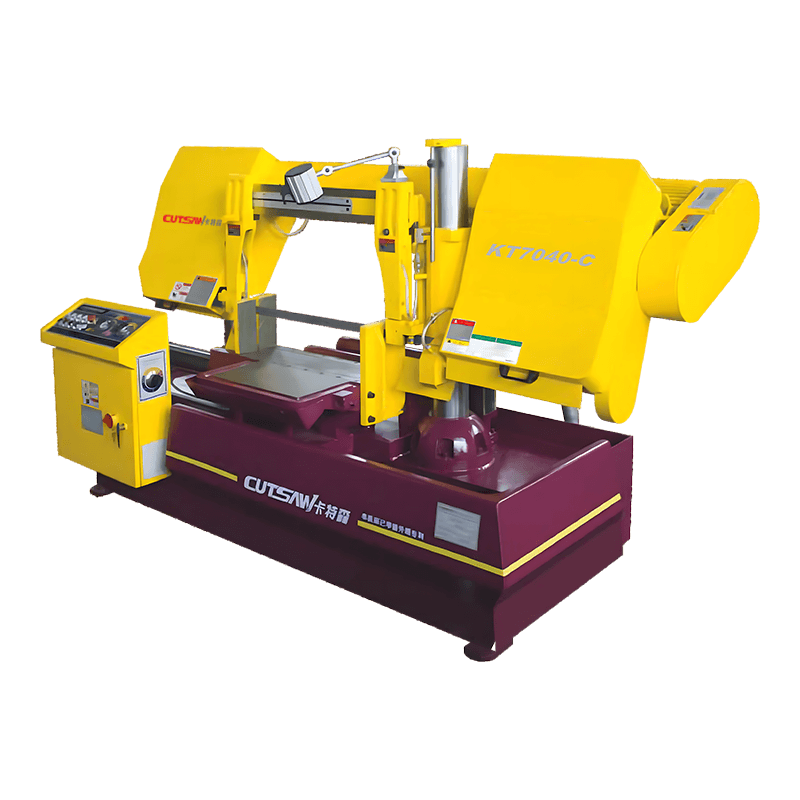
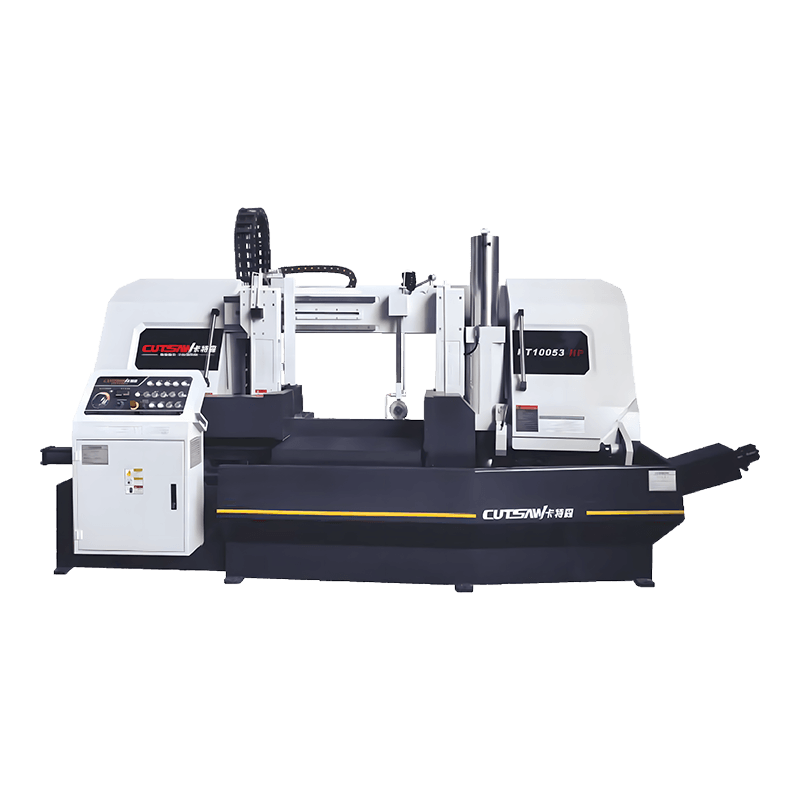
An automatic circular sawing machine is a self-contained cutting cell built around a rotating disc blade that cuts downward through the workpiece. The automatic part refers to the complete material-handling loop: a servo bar feeder advances the stock after each part is completed, clamps hold the bar on both sides of the blade, a controller positions the part at the programmed length, and the saw head cycles through the cut, return, and chip removal sequence without an operator in between.
That distinction matters more than any horsepower figure. A semi-automatic saw still depends on the operator to position the material before every cut, which brings measurement variation back into the cycle. A fully automatic machine removes that variation, which is why it belongs in a discussion about process control rather than simple tooling.
What Changes When the Machine Runs Itself
The most immediate change is cycle consistency. Manual sawing has variability built in, because measuring and clamping change slightly with every cycle. With servo feed and a fixed sequence, the machine repeats the same motions, and part lengths stay stable part after part.
The practical results deserve attention before you compare quotes:
- Length tolerance: a correctly tuned automatic circular saw holds ±0.1 to ±0.3 mm on bar stock, where manual positioning drifts toward ±1 mm or worse.
- Cut squareness: controlled downfeed and rigid clamping prevent the blade from deflecting sideways, so the cut face stays perpendicular to the bar axis.
- Blade life: consistent feed pressure and automatic mist lubrication distribute wear evenly, which means more cuts between regrinds.
- Labor productivity: one operator can supervise several machines, because the job shifts from executing cuts to managing results.
- Unattended windows: with a long bar magazine, the machine can finish the batch after the shift ends.
The blade was rarely the bottleneck. The wait between cuts was.
Key Components and What to Scrutinize
An automatic machine is only as good as its weakest component. These are the parts that determine real-world performance:
| Component | Function | Why it matters |
|---|---|---|
| Saw blade | Cutting tool, usually carbide-tipped | Determines cut quality, speed, and cost per part |
| Spindle drive | Rotates the blade at constant speed | Direct drive holds speed stability; geared drives suit heavy cutting |
| Servo bar feeder | Advances stock to programmed length | Feeding accuracy directly controls length tolerance |
| Clamping vises | Hold the bar on both sides of the blade | Prevent vibration and keep cuts square |
| PLC / controller | Executes the cutting cycle | Reliability and programming ease determine daily usability |
| Coolant and chip conveyor | Cool the blade and remove swarf | Affect blade life, surface quality, and cleaning downtime |
Machine Configurations: Matching the Cycle to the Job
Automatic circular sawing machines come in recognizable configurations, and the differences affect both productivity and price.
| Configuration | Best suited for | Trade-off |
|---|---|---|
| Manual or semi-automatic | Short runs, mixed batches, maintenance parts | Lowest cost, but cycle consistency depends on the operator |
| Fully automatic with bar feeder | Repeat batches of bar and tube in medium-to-high volume | Higher investment, fastest payback when utilization is high |
| High-speed carbide circular saw | Solid round bar and heavy tube where speed and finish matter | Requires stable clamping and disciplined chip control |
| CNC angle or miter saw | Angled cuts, frames, and welded assemblies | Extra axis complexity is only worth it when angles are a real requirement |
Sizing the Machine to Your Material, Not to the Brochure
Capacity is always the first specification, but the practical question is which materials you actually cut. Solid bar behaves differently from tube, and stainless steel asks more from the blade than mild steel. A machine sized for a rare 200 mm billet will cut 40 mm bars slower and waste material on every kerf; a machine sized too small forces extra passes or secondary processing.
For small-to-mid-range solid bar and tube, machines in the 80 to 120 mm capacity class usually deliver the best balance of cycle time, blade cost, and material loss.
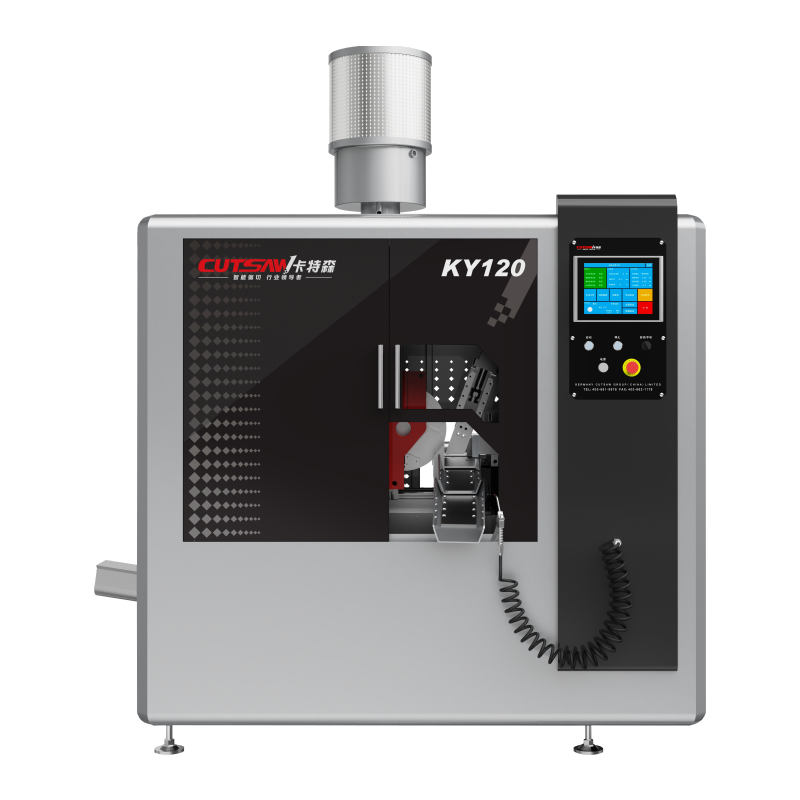 KY120 Circular Saw for Precision Cutting of Pipe and RodThis 80-120 mm capacity machine suits small-to-mid-range solid bar and tube. Its TCT and HSS blade options and three-point clamping handle round bar, tube, and stainless steel with stable feeding and reduced setup.View Product →
Material type matters just as much as diameter. Round bar, tube, and stainless steel share similar feeding needs but ask for different blade grades and cutting parameters. A machine set up for those three materials avoids the trial-and-error that typically eats the first weeks of production.
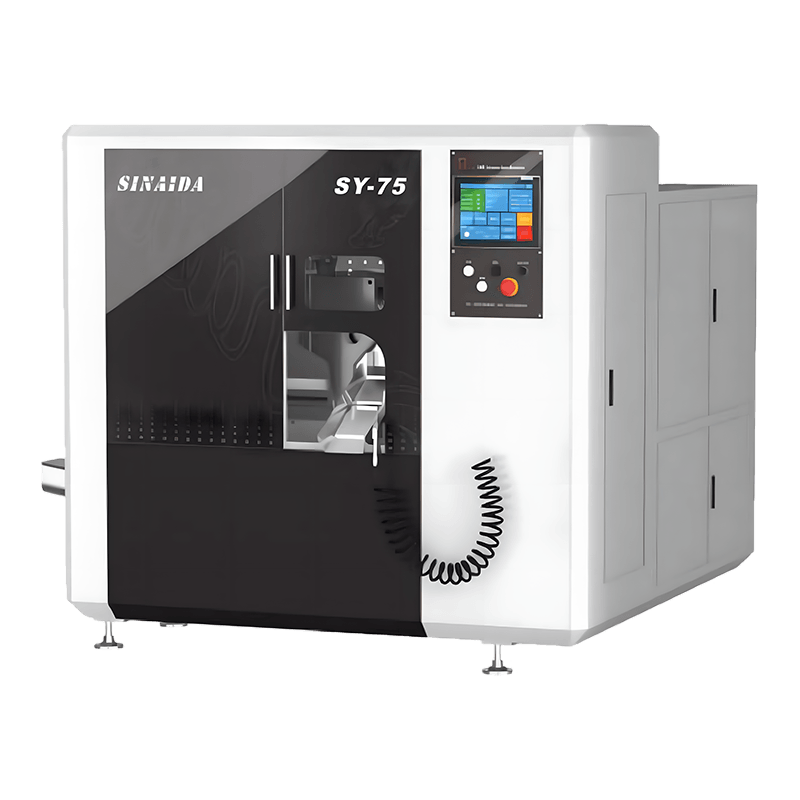 SY75 Circular Saw for Round Steel and Stainless TubesBuilt for larger solid bars and heavy profiles, this machine features HSS blades that withstand high-strength stainless steel. It delivers burr-free cuts with stable clamping, meeting demanding large-diameter tasks.View Product →
At the upper end of the common range — large solid bars and heavy profiles — the machine needs a larger blade, a heavier spindle, and more rigid clamping. Base that decision on the largest realistic workpiece, not the occasional one-off job quoted to win an order.
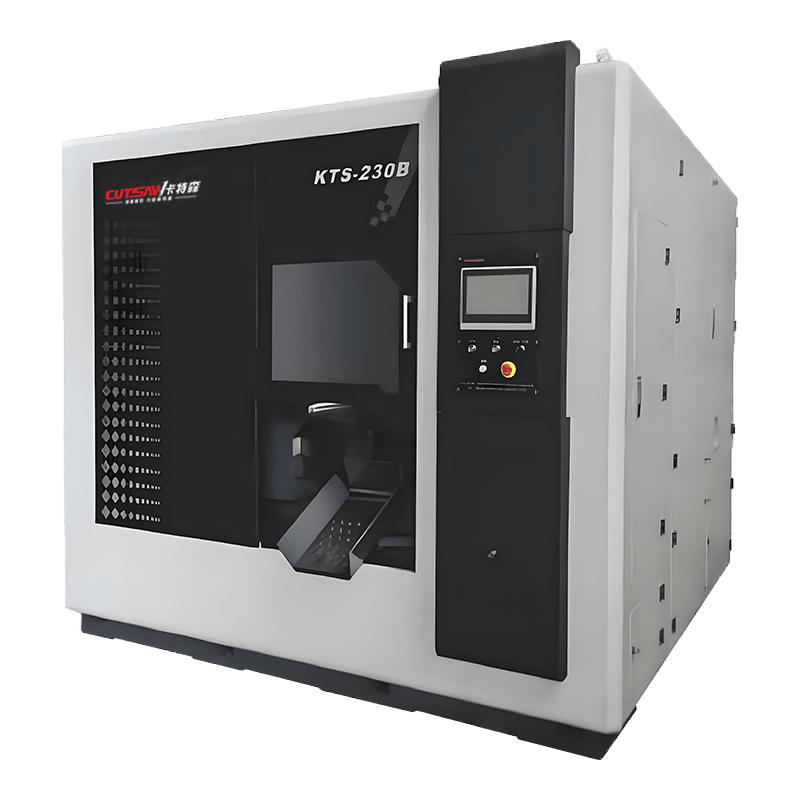 KY230 High-Speed Metal Circular Saw with Dual Blade SupportThis high-speed circular saw combines TCT and HSS blades in a cast body with three-point clamping. Its precise spindle gearbox and one-click operation support automated lines where operating details decide real cost savings.View Product →
What Usually Gets Underestimated in the Buying Decision
Machine price gets most of the attention, but operating details decide whether automation actually pays.
Coolant and chip management. A fully automatic machine produces chips continuously. If the coolant and chip conveyor are undersized, the machine stops every few hours for manual cleaning, which cancels out the automation benefit.
Kerf loss. A larger blade removes more material. Oversizing blade diameter “for future jobs” increases material loss on every cut, and over the life of a contract that becomes real money.
A well-matched setup. When capacity matches the actual range of bars being cut, the machine holds length tolerance across a full magazine and produces clean, burr-light ends that reduce secondary deburring.
Safety devices are not optional. Blade guards, interlocks, and emergency stops are what separate a production machine from an unmanaged risk. Machines with CE certification carry validated safety systems; verify them the same way you check alignment.
Selection Mistakes That Show Up in the First Month
Ask any service technician where automatic saws go wrong after installation, and the same three patterns keep appearing.
- Buying on maximum diameter alone. A machine sized for one rare oversized part cuts normal production slower and wastes more material per kerf. Specify the blend of work, not the outlier.
- Ignoring bar remnants. Every bar leaves a short tail the feeder cannot clamp. Plan for remnant sorting and return, because even the most productive machine depends on clean material flow around it.
- Skipping the alignment check. Blade-to-vise alignment determines cut squareness. Verify it during commissioning; if uneven cuts appear later, check alignment before touching the blade. The practical solutions for uneven circular saw cuts are worth having on hand.
The Bottom Line
An automatic circular sawing machine earns its keep when the work is repeatable, the material range is well understood, and the supporting details — coolant, chip removal, blade selection, safety — receive the same attention as the purchase price. For a shop cutting bar, tube, or solid stock in consistent batches, automation is not about replacing operators; it is about removing the wait between cuts.
Start with the materials and diameters you cut today, confirm the length tolerance your parts actually require, and inspect the clamping, feeding, and chip-handling systems with the same rigor you apply to the spindle motor. The right machine keeps running while your team spends its hours on work that earns more per hour.