English
 русский
 简体中文
简体中文


A sawing machine is only as good as the weakest part mounted on it. Cut squareness, blade life, and cycle time are decided by how the components are designed, matched, and maintained.
Knowing the parts of a sawing machine helps you diagnose a taper cut in minutes, compare quotes on real value, and schedule maintenance before a breakdown stops production.
This guide focuses on horizontal metal-cutting band saws, the most common sawing machines in fabrication and machine shops, with notes on how CNC, double-column, and gantry configurations change the picture.
The Structural Core: Frame, Bed, and Guide Arms
The frame is the machine. On a horizontal band saw, a welded steel frame carries the saw head, blade wheels, and workpiece. Stiffness matters more than the brochure weight: a frame that flexes under load produces tapered cuts and accelerates blade fatigue.
The bed is the flat surface the material rests on, and its flatness decides how square the cut exits. The guide arms hold the blade guides as close to the cut as possible. Shorter unsupported blade length means less deflection, which is why adjustable guide arms appear on every serious machine.
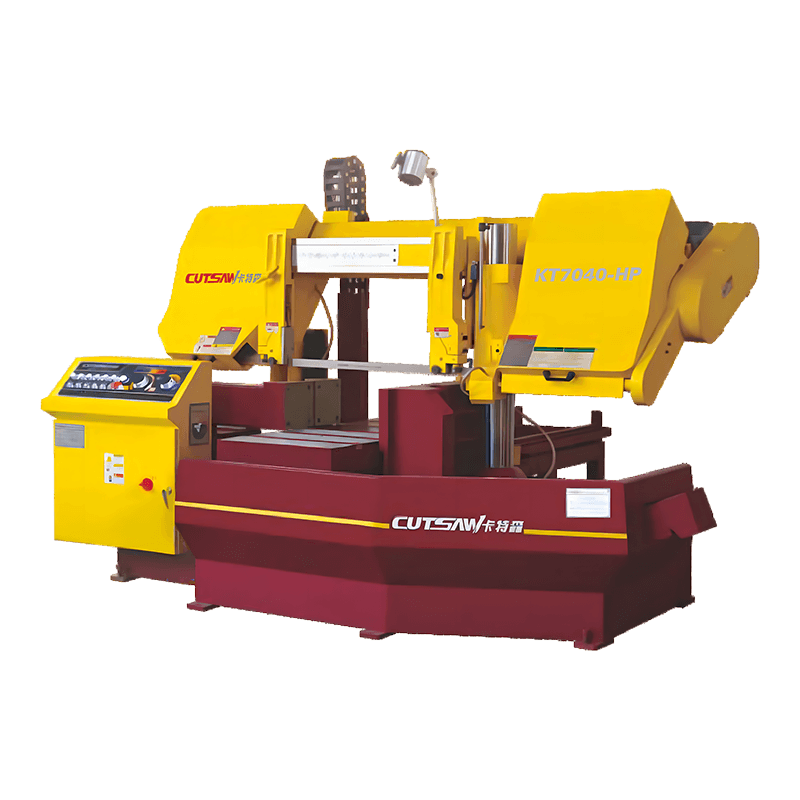
Double-column layouts deserve attention. The saw head rides on two vertical columns instead of a single pivot, so it cannot tilt as it descends and resists lateral blade forces better. For large or stacked stock, that stability means consistent cuts across a full shift. Our guide to double-column band sawing machines covers the common layouts; the short version is that if you cut heavy sections, the column structure is part of cutting accuracy.
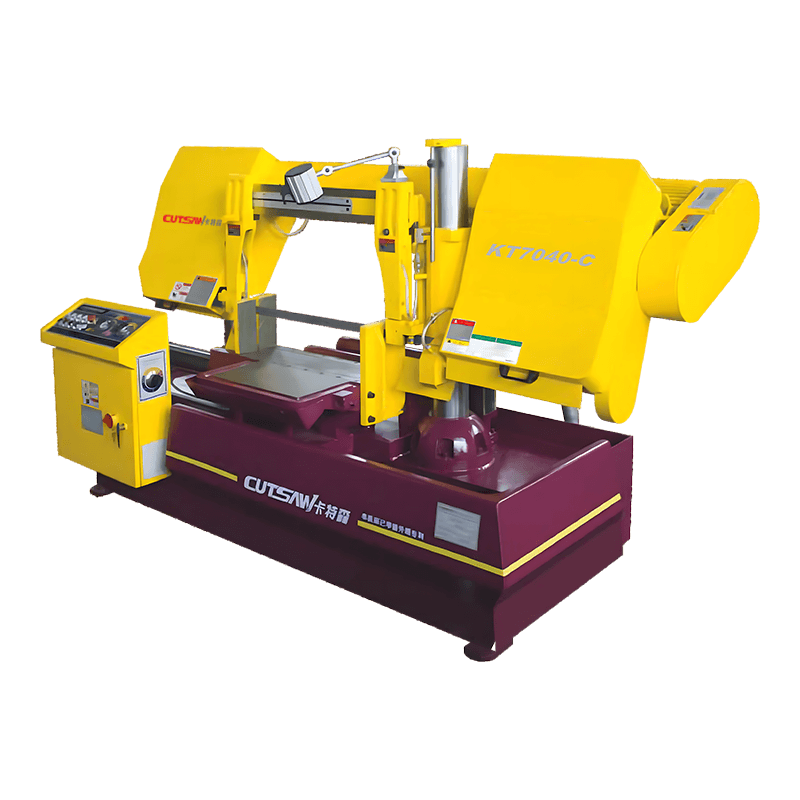 KT7040-C Double Column Horizontal Semi-Automatic Band SawThis semi-automatic metal cutting band saw uses a double-column structure, providing stable blade guidance for heavy or stacked stock, reducing vibration and improving cut accuracy over a full shift.View Product →
Blade System: Band Wheels, Tension, and Guides
The blade does the cutting; the machine decides whether that cutting is accurate. The two band wheels drive the blade loop and must be balanced and aligned with the frame. Even slight imbalance creates vibration, and vibration becomes poor surface finish and shortened blade life.
The tensioning mechanism keeps the blade rigid. Hydraulic or spring-loaded systems handle thermal expansion better than a mechanical screw, because the blade lengthens as it heats up. A blade that runs loose will wander on the wheels; an overtensioned blade can crack at the tooth gullet.
Blade guide assemblies, usually carbide inserts with roller bearings, restrain the blade above and below the cut. Worn guides turn a good blade into a wavy cut. The machine also sets the limits: wheel diameter determines blade flexibility, and the guide opening limits blade width. You cannot run wide heavy-duty blades on a machine designed for narrow ones.
The blade does the cutting. The machine decides whether that cutting is accurate.
Drive, Feed, and Speed Control
The drive train, consisting of motor, gearbox, and speed control, converts electrical energy into blade movement. Blade speed, in meters per minute, must match the material: mild structural steel cuts around 60-90 m/min, stainless steel drops to roughly 20-35 m/min, and tool steels call for even slower settings. A machine that sees multiple materials needs genuine variable speed.
Inverter-driven variable-frequency drives hold torque across the full speed range. The feed system is just as important: it controls how fast the saw head descends through the workpiece. Constant-load control reads blade engagement and adjusts the feed to keep cutting force steady. SINAIDA's KT560NC fully automatic CNC band saw uses this principle to protect the blade during bundle cutting and interrupted cuts, where fixed-feed machines tend to stall or damage teeth.
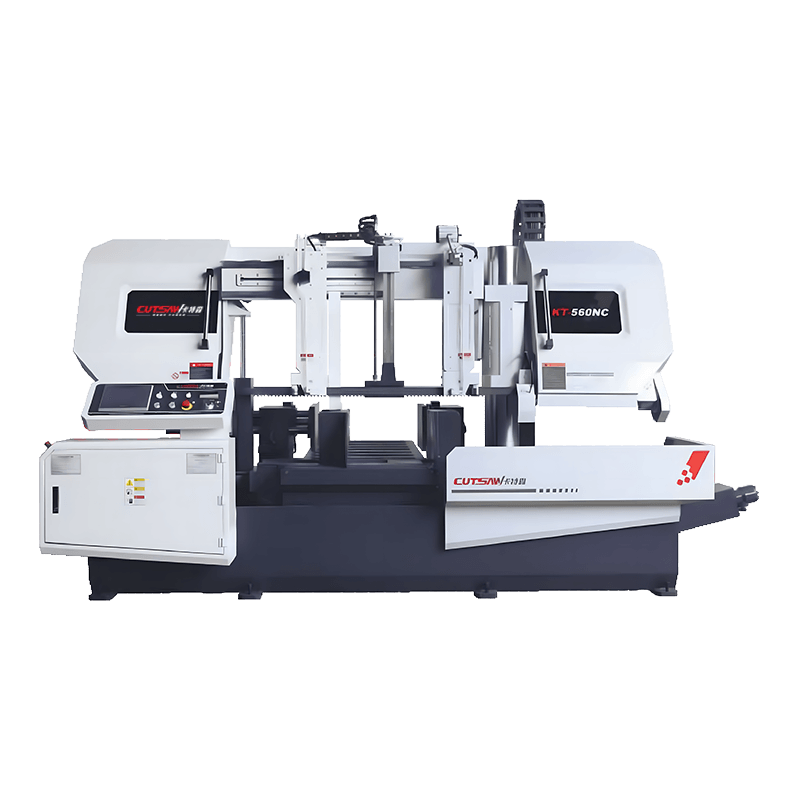 KT-560NC Fully Automatic CNC Horizontal Band SawThis CNC band saw combines inverter-driven speed control with constant-load feed to protect the blade during bundle cuts. Its automatic feeding and clamping system supports precise length tolerances for batch production.View Product →
Material Handling: Vises, Feed Carriages, and Angle Positioning
Before cutting, the machine must hold the stock still. Hydraulic vises give repeatable clamping force for batch work; manual vises suit occasional cuts but slow production down. On automatic saws, a feed carriage indexes the bar forward by a preset length after every cut; its accuracy sets your cut-length tolerance across the batch.
Angle sawing machines rotate the head or the entire machine to the target angle, and the vise must support the material in that rotated position. A misaligned vise is the classic cause of parts that measure 44.5 degrees when the dial says 45. Inspect on the shop floor with a test bar: clamp, rotate, and watch for workpiece movement.
Coolant and Chip Management
Coolant is part of the cutting system, not an accessory. The pump, nozzles, tank, and chip tray remove heat from the cut zone, lubricate the teeth, and flush chips out of the kerf. Insufficient flow is a leading cause of premature blade wear, especially with stainless and alloy steels.
On high-production machines, a chip conveyor integrated into the frame removes swarf continuously. When evaluating a saw for heavy use, check chip clearance under the bed, tank volume, and filter access.
Control System: CNC, Sensors, and Automation
This is where modern sawing machines differ most from older mechanical designs. The CNC control coordinates blade speed, feed rate, saw-head descent, and material indexing. The operator enters material type and batch size, and the machine completes the cutting cycle automatically. CNC band sawing machines have become the standard for shops that need unattended cutting and repeatable tolerances across long runs.
Sensors monitor blade position, hydraulic pressure, and coolant levels, and the control displays diagnostic fault codes instead of letting a problem turn into a breakdown. If hydraulic pressure drops mid-cycle, the machine stops and tells the operator why. That is the real difference between a machine wearing a CNC label and functioning automation.
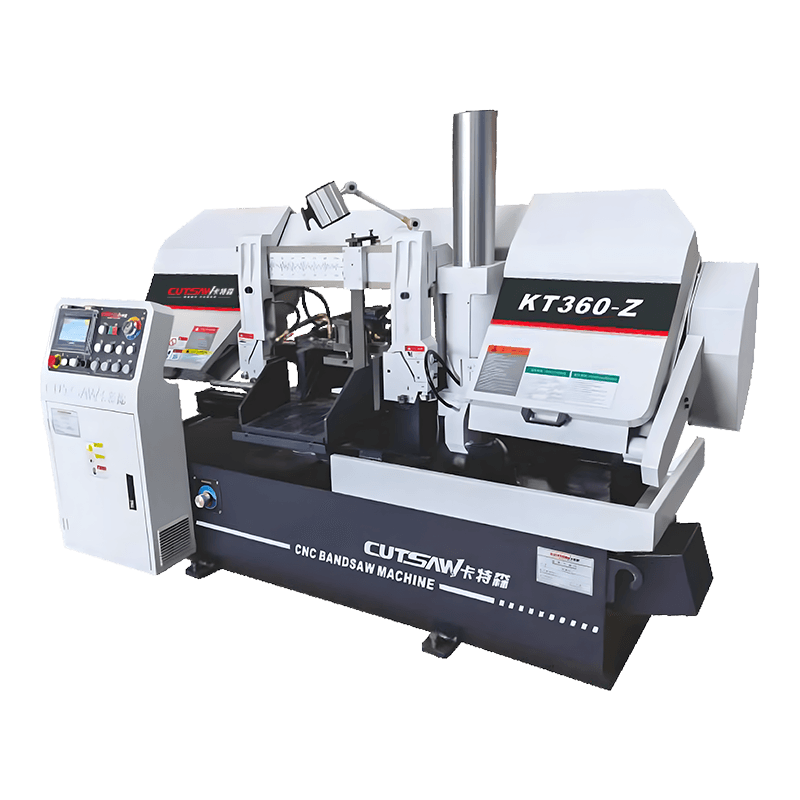 KT360-Z Horizontal CNC Band Saw with DiagnosticsThis CNC band saw monitors blade position, hydraulic pressure, and coolant levels, displaying fault codes when problems occur. Its high-strength steel frame and automatic feed system enhance both safety and cutting stability.View Product →
Safety Components and Reliability
Blade guards, limit switches, emergency stops, and hydraulic interlocks protect operators and prevent the machine from running in conditions that damage its own parts. A misadjusted limit switch, for example, can let the saw head descend past its stop and crush the blade guides. When buying used, verify that every safety device is present and connected; a bypassed switch is a strong sign that maintenance was also ignored elsewhere.
Comparing Machines by Their Parts: A Practical Checklist
When you compare sawing machines, avoid focusing only on motor power and price. Walk through the systems in this guide and check what is actually installed. Confirm that each of these areas is properly equipped:
- a frame and column structure that resists deflection under load;
- blade guides and tension components adjustable from the front of the machine;
- a drive train with genuine variable speed across the range you need;
- hydraulic vises and an indexing system that hold tolerance across a full batch;
- a coolant circuit sized for the heaviest material you plan to cut.
The table below summarizes what to verify for each system.
| System | Main parts | What to check |
|---|---|---|
| Structural core | Frame, bed, columns, guide arms | Welding quality, bed flatness, head guidance |
| Blade system | Band wheels, tension mechanism, blade guides | Wheel balance, tension type, guide condition |
| Drive and feed | Motor, gearbox, speed control, feed cylinder | Speed range, torque at low speed, feed stability |
| Material handling | Vises, feed carriage, angle positioning | Clamping repeatability, indexing accuracy |
| Coolant system | Pump, nozzles, tank, chip conveyor | Flow control, filtration, chip clearance |
| Control system | CNC controller, sensors, hydraulics | Programming options, diagnostics, spare parts |
Putting the Parts in Perspective
A sawing machine is a system of tolerances. Every component contributes a small deviation, from guide clearance and wheel alignment to vise positioning and frame deflection, and cut quality is the sum of those deviations. The best machines reduce each error source and make the remaining variables predictable and adjustable.
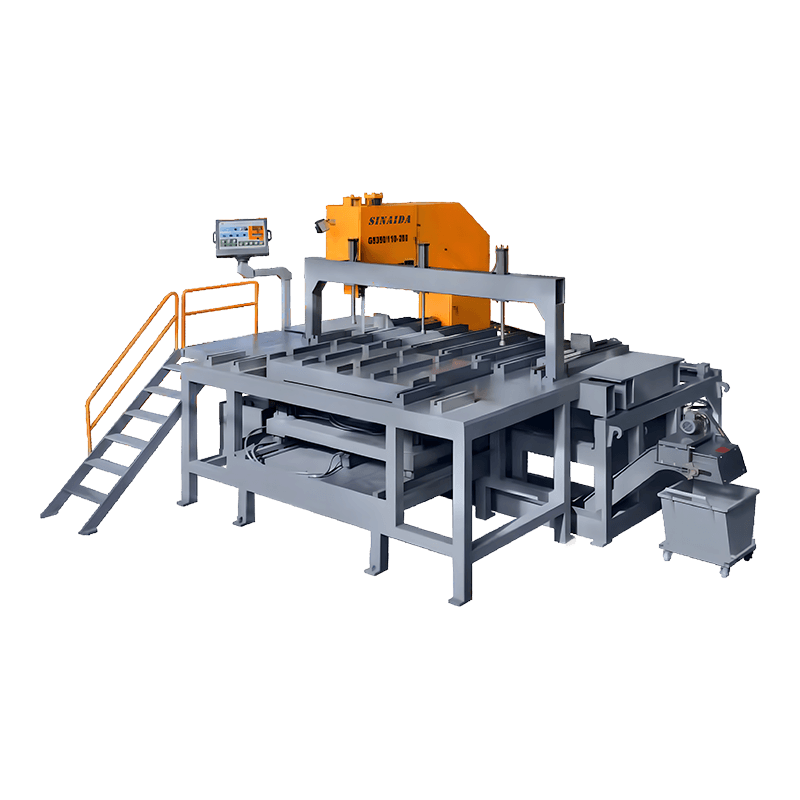
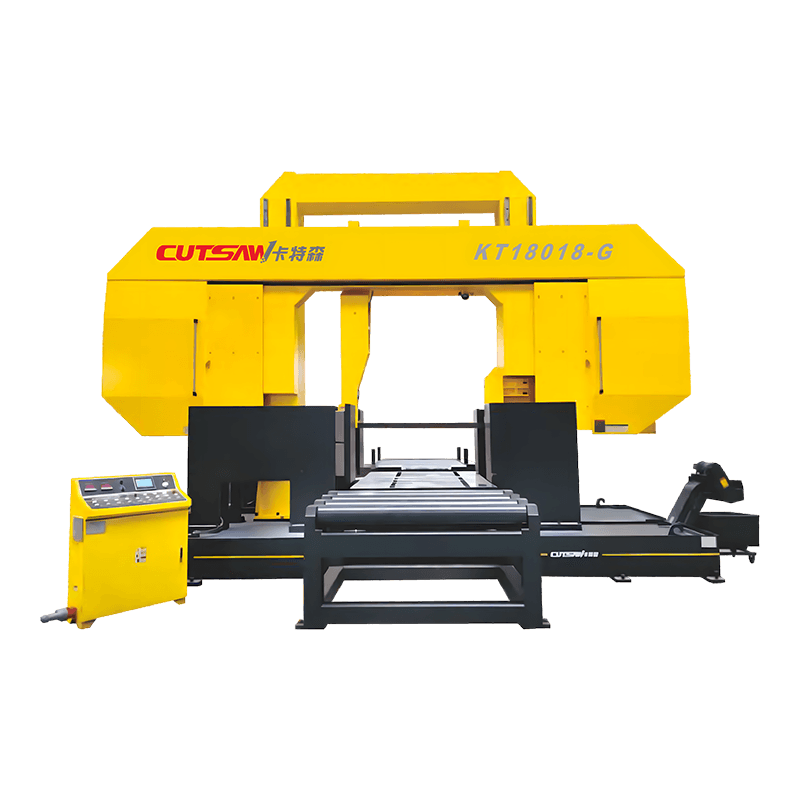
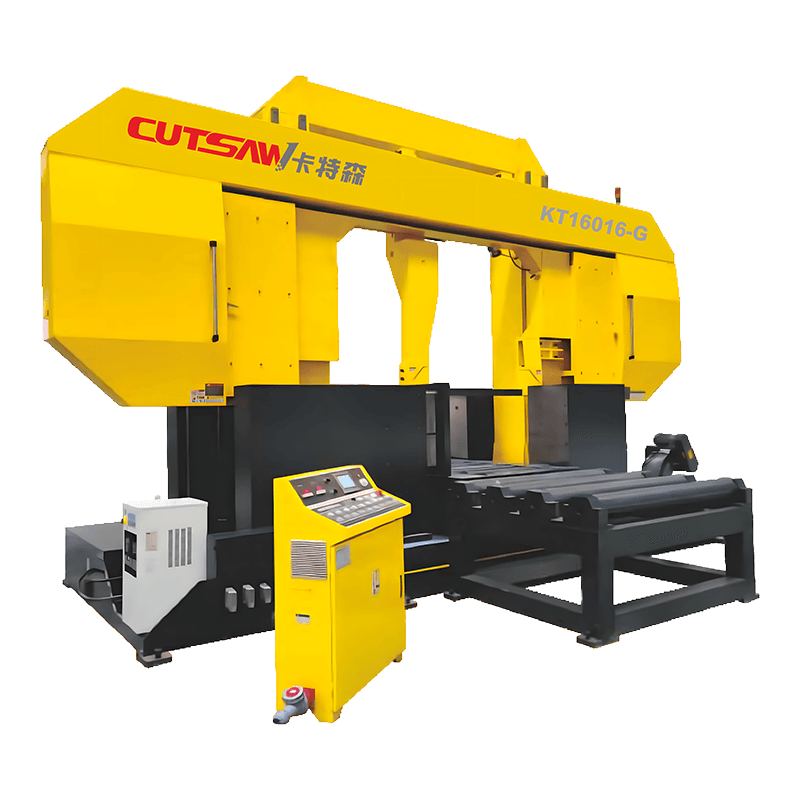
You do not need to become a machine designer to buy well. You need a supplier that controls its engineering and can explain the parts beneath the sheet metal. SINAIDA designs and produces CNC band sawing machines in its own facility, and its lineup, from semi-automatic double-column saws to constant-load CNC and custom gantry machines, is built around the components above. When the conversation moves past price and motor size to columns, guides, drives, and controls, you are talking to a builder rather than an assembler.