English
 русский
 简体中文
简体中文


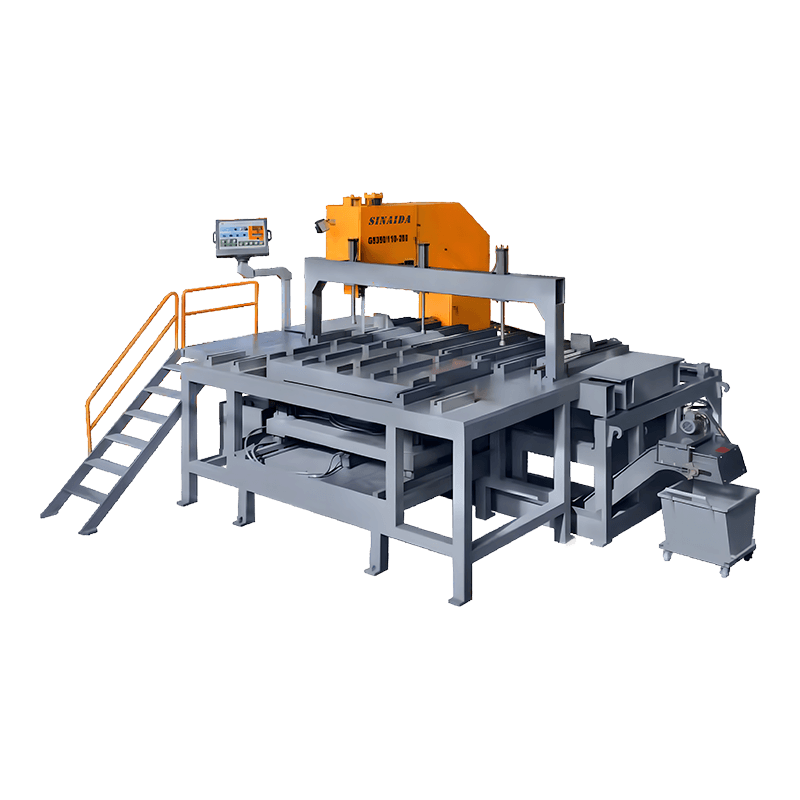
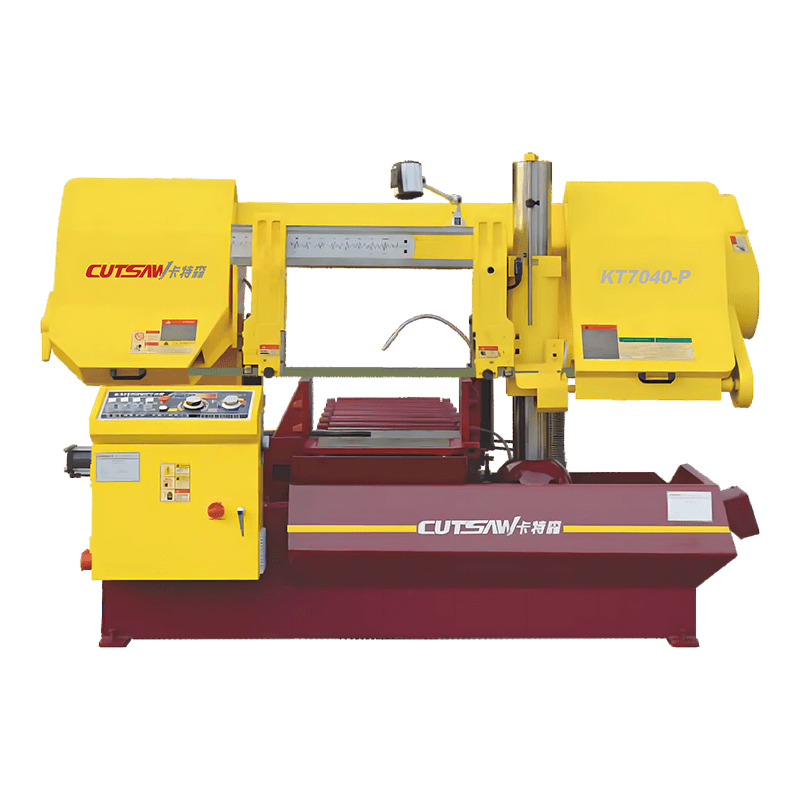
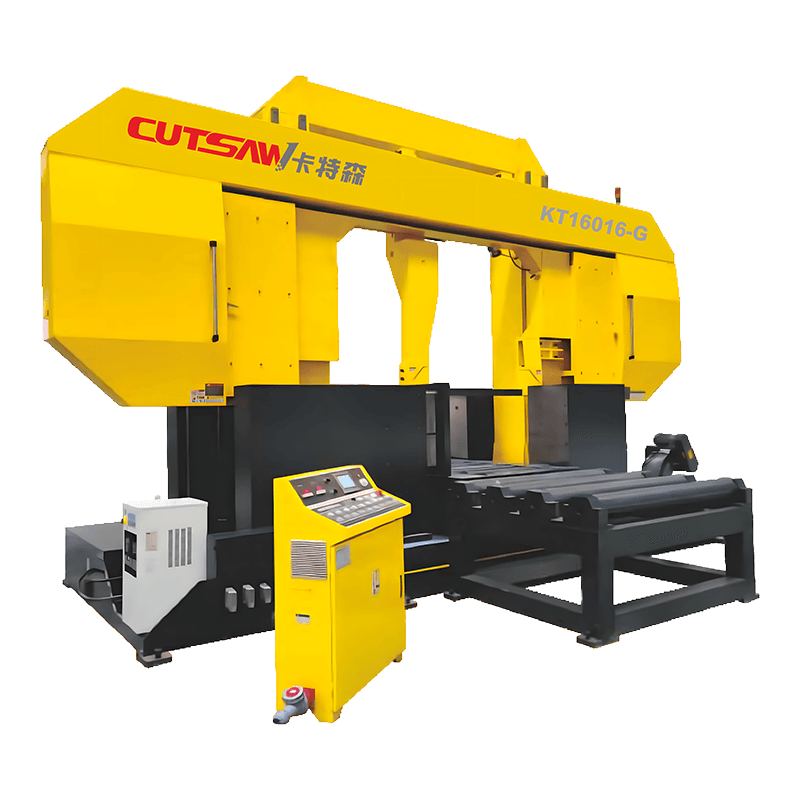
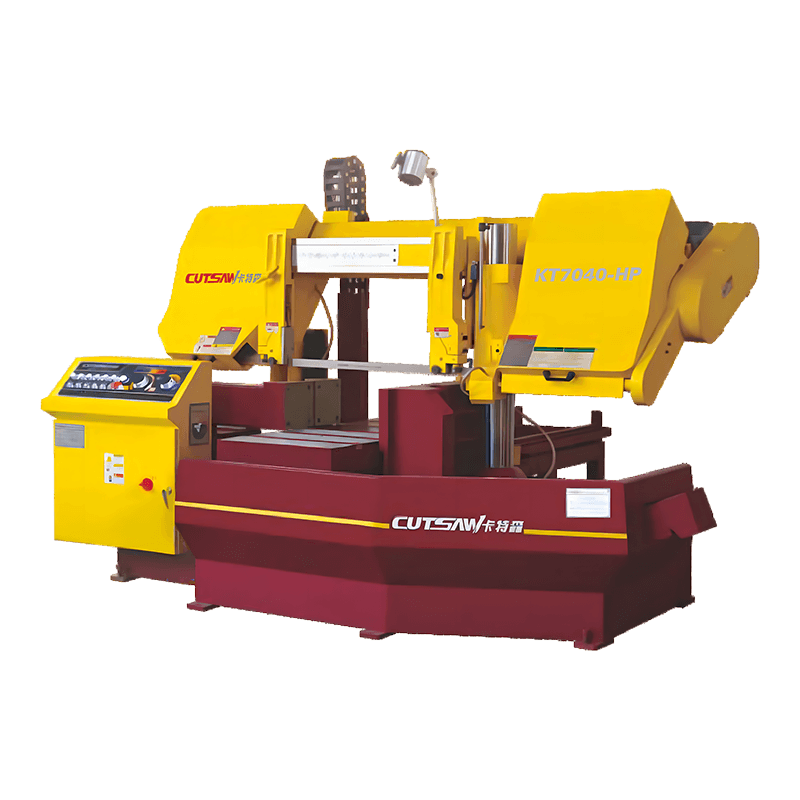
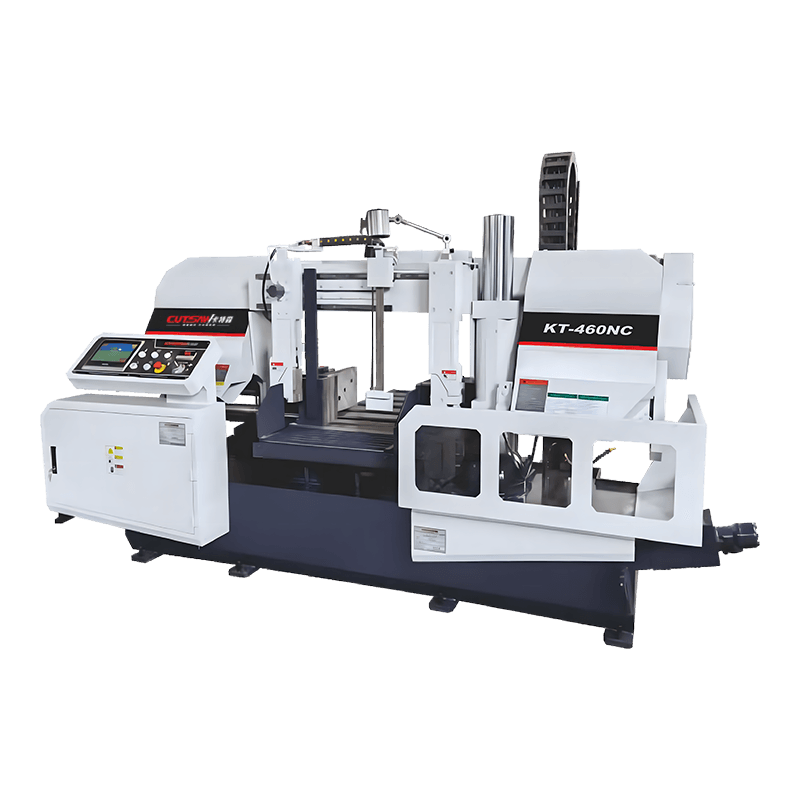
When comparing blade tension adjustment between an Angle Band Sawing Machine and a cold circular saw, the band saw offers a clear advantage in adjustability and operator control, while the cold circular saw wins on simplicity and zero-tension operation. For workshops that handle varied materials and complex angle cuts, the Angle Band Sawing Machine's tension system delivers superior adaptability — but it demands more operator knowledge to use correctly.
How Blade Tension Works on an Angle Band Sawing Machine
On an Angle Band Sawing Machine, the blade is a continuous loop stretched between two or more wheels. Proper tension is critical — too loose and the blade deflects mid-cut, causing inaccurate angles and poor surface finish; too tight and the blade fatigues rapidly, risking breakage. Most industrial Band Saw Machines use one of the following tension mechanisms:
- Manual spring-loaded tension: The operator turns a handwheel to compress a spring that pushes the upper wheel upward, stretching the blade. Common on entry-level models.
- Hydraulic auto-tension: A hydraulic cylinder maintains constant blade tension regardless of thermal expansion during cutting. Found on mid-to-high-end Precision Cutting Machines.
- Pneumatic tension systems: Air pressure maintains consistent force. These are faster to adjust and common in high-cycle production environments.
The recommended blade tension for most bi-metal blades used in Band Saw Machines falls between 25,000 and 35,000 PSI (172–241 MPa). Many modern Angle Band Sawing Machines feature a built-in tension gauge or indicator window, allowing operators to set tension accurately without additional tooling.
How Blade Tension Works on a Cold Circular Saw
A cold circular saw operates on an entirely different principle. Its blade is a rigid, hardened steel disc — typically 200mm to 600mm in diameter — that does not require tension in any traditional sense. The blade is clamped onto a spindle and held in place by torque and mechanical fastening. There is no tension adjustment process for the operator to manage.
This makes the cold circular saw extremely simple to set up. Blade changes typically take under 5 minutes with basic hand tools, and there is no risk of under- or over-tensioning. However, this rigidity comes with trade-offs: the blade cannot flex or adapt, and the machine is limited to straight or fixed-angle cuts depending on the head design.
Ease of Adjustment: A Practical Comparison
In terms of day-to-day ease, the cold circular saw is undeniably simpler. There are no tension values to monitor, no spring resistance to overcome, and no risk of blade twist during installation. For operators with minimal training, this is a significant advantage.
The Angle Band Sawing Machine requires more steps. A typical blade installation and tensioning process includes:
- Release tension on the upper wheel and open the blade guards.
- Thread the new blade loop around the upper and lower wheels and through the blade guides.
- Apply initial tension by turning the handwheel or activating the hydraulic/pneumatic system.
- Check the tension gauge — target value depends on blade width (e.g., a 27mm blade typically requires higher tension than a 13mm blade).
- Run the machine briefly at no load, then recheck tension after the blade seats on the wheels.
- Fine-tune blade tracking to ensure it runs centered on the wheels.
This process typically takes 10–20 minutes for an experienced operator. For newcomers, it may take considerably longer. That said, machines with automatic hydraulic tension — common in premium Precision Cutting Machines — reduce this to a near-automated task with minimal manual input.
Precision of Cut: Where the Angle Band Sawing Machine Pulls Ahead
When tension is correctly set, the Angle Band Sawing Machine delivers consistent, repeatable cuts across a wide range of angles — typically 0° to 60° on both axes — with angular tolerances as tight as ±0.1° on high-end CNC models. This level of precision is particularly valuable for structural steel fabrication, frame manufacturing, and aerospace components where miter angles must be exact.
Incorrect tension directly degrades this precision. Studies in manufacturing environments have shown that an under-tensioned band saw blade can produce lateral deflection of 0.5mm to 2mm on a 100mm-deep cut — a margin that would be unacceptable in precision applications. This is why tension management is not optional; it is foundational to the machine's performance as a precision cutting tool.
The cold circular saw, by contrast, achieves its precision through rigidity rather than tension calibration. Its cutting tolerance on straight cuts is typically ±0.05mm to ±0.1mm, making it highly precise — but only within its fixed operating range. It cannot replicate the angular versatility of an Angle Band Sawing Machine.
Head-to-Head Comparison Table
| Feature | Angle Band Sawing Machine | Cold Circular Saw |
|---|---|---|
| Blade tension required | Yes (25,000–35,000 PSI) | No |
| Tension adjustment ease | Moderate (10–20 min setup) | Very easy (<5 min) |
| Tension auto-management | Available (hydraulic/pneumatic) | Not applicable |
| Angular cutting range | 0°–60° (bi-directional) | Fixed or limited range |
| Straight cut tolerance | ±0.1° | ±0.05mm–±0.1mm |
| Risk of blade deflection | Yes (if under-tensioned) | None |
| Operator skill required | Medium to high | Low |
Impact of Tension on Blade Life and Operating Cost
Blade tension also directly affects running costs. On an Angle Band Sawing Machine, consistently correct tension can extend blade life by 30–50% compared to improper tension settings, according to data from major blade manufacturers such as Lenox and Starrett. A bi-metal band saw blade for industrial use typically costs $30–$150 USD depending on length and tooth configuration — making tension discipline a meaningful cost control measure.
Cold circular saw blades — particularly TCT (tungsten carbide tipped) versions — cost $80–$400 USD each, but last significantly longer per unit (often 3–10x more cuts per blade) with no tension-related wear factor. Since there is no tension to mismanage, blade failure on a cold saw is almost always due to incorrect feed rate, coolant failure, or cutting outside the blade's rated material range.
Which Machine Is Right for Your Application?
The right choice depends on your production requirements:
- Choose an Angle Band Sawing Machine if your work involves frequent angle changes, large cross-section materials, or varied metal types. The tension system, while requiring attention, gives you the flexibility and cutting depth that cold saws cannot match. It is the preferred choice among operators of industrial Band Saw Machines for structural fabrication.
- Choose a cold circular saw if you primarily cut solid bar stock, tubes, or profiles at fixed angles with high volume and minimal setup changes. The zero-tension operation eliminates a variable, reduces training requirements, and delivers excellent surface finish on ferrous metals.
In facilities that require both capabilities, it is common to operate both machine types side by side — using the Angle Band Sawing Machine as a versatile Precision Cutting Machine for complex or large workpieces, and the cold circular saw for high-speed repetitive cuts on standard profiles.
Final Verdict
The Angle Band Sawing Machine is more complex to tension but rewards that effort with greater angular flexibility and material versatility. The cold circular saw eliminates tension management entirely, offering simplicity and speed for straight or fixed-angle cuts. For users who need both ease and precision across diverse cutting tasks, investing in an Angle Band Sawing Machine with an automatic hydraulic tension system represents the best balance — combining the adaptability of Band Saw Machines with the operational consistency expected of Precision Cutting Machines.