English
 русский
 简体中文
简体中文


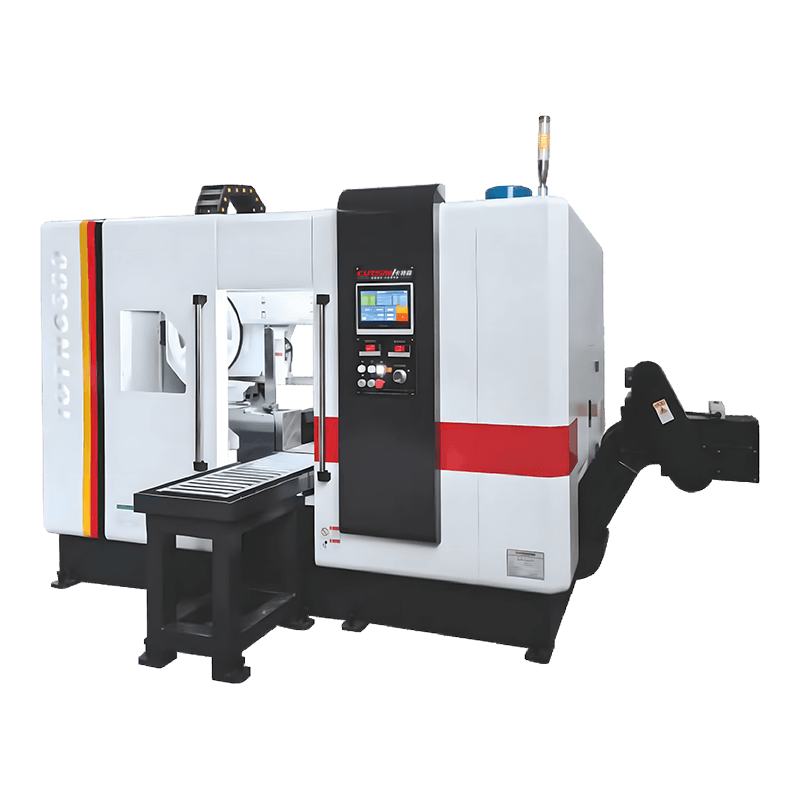
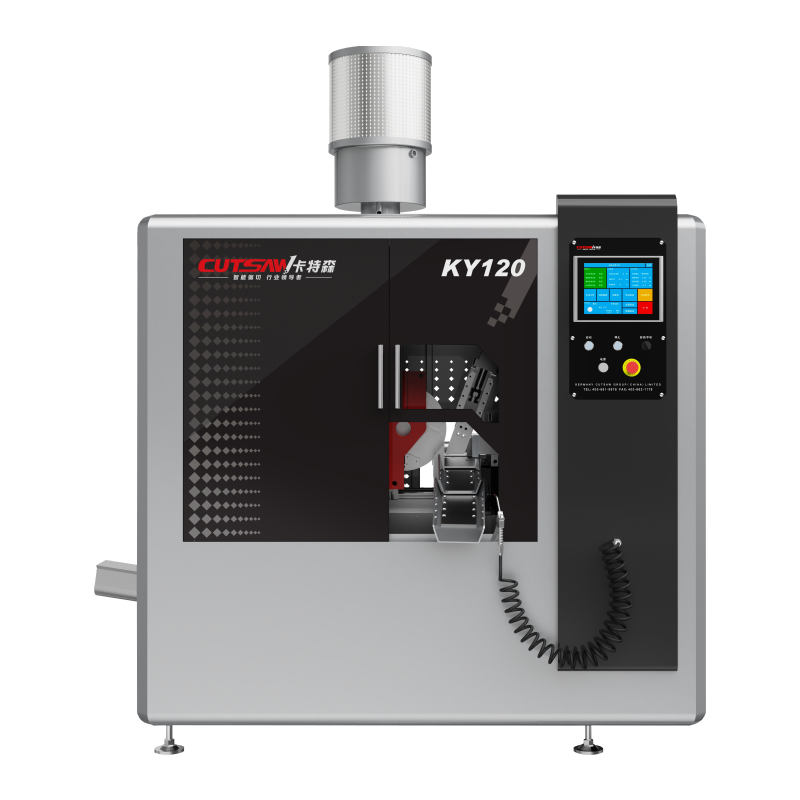
The High-Speed Metal Circular Sawing Machine handles burr formation primarily through a combination of optimized cutting parameters, precision blade geometry, rigid workpiece clamping, and — in advanced models — integrated chip and burr management systems. When properly configured, a modern High-Speed Metal Circular Sawing Machine can produce cuts with burr heights as low as 0.02–0.05 mm, significantly reducing or even eliminating the need for secondary deburring operations. Understanding how each factor contributes to burr control is essential for any production environment aiming for efficiency and part quality.
What Causes Burr Formation in Metal Circular Sawing?
Before addressing solutions, it is important to understand the root causes. Burrs are unwanted raised edges or ridges of material that form at the exit point of a cut. In a High-Speed Metal Circular Sawing Machine, burr formation is influenced by several interacting variables:
- Excessive or insufficient cutting speed relative to the material being cut
- Worn or incorrect blade tooth geometry
- Inadequate workpiece clamping, leading to vibration and material deformation
- Poor chip evacuation causing re-cutting of removed material
- Thermal softening of the workpiece at the cut zone
For example, cutting stainless steel at too low a surface speed — below 25 m/min for HSS blades — causes the material to work-harden at the cut edge, dramatically increasing burr size and tool wear. Conversely, cutting aluminum at excessively high speeds without lubrication can cause material smearing rather than clean shearing, also producing significant burrs.
Role of Blade Selection in Burr Reduction
The blade is the single most critical component in managing burr formation on a High-Speed Metal Circular Sawing Machine. The tooth pitch, tooth geometry, and blade material all directly affect cut-edge quality.
Tooth Pitch and Count
A finer tooth pitch means more teeth are in contact with the workpiece at any given moment, distributing cutting forces more evenly and producing smaller, more uniform chips. For thin-walled tubes or profiles, a blade with at least 3–5 teeth in simultaneous contact with the material is recommended to prevent tooth snagging and burr tearing. For solid bar stock above 50 mm diameter, a coarser pitch improves chip clearance and reduces heat buildup.
Blade Material: TCT vs. HSS
Tungsten Carbide Tipped (TCT) blades used in the High-Speed Metal Circular Sawing Machine maintain sharper cutting edges for longer than HSS blades, which means the shearing action remains clean over extended production runs. A sharp TCT blade cutting mild steel at the correct surface speed of 180–250 m/min will generate burrs consistently under 0.05 mm, whereas a worn HSS blade under the same conditions may produce burrs exceeding 0.3 mm.
| Blade Type | Recommended Surface Speed | Typical Burr Height (New Blade) | Best Suited For |
|---|---|---|---|
| TCT (Carbide) | 180–250 m/min | 0.02–0.05 mm | Steel, stainless, aluminum |
| HSS (High-Speed Steel) | 25–80 m/min | 0.05–0.15 mm | Mild steel, general purpose |
| Cermet | 200–300 m/min | 0.02–0.04 mm | Stainless, high-alloy steel |
Cutting Speed and Feed Rate Optimization
The High-Speed Metal Circular Sawing Machine earns its "high-speed" designation by operating at surface cutting speeds far above conventional band saws or hack saws. However, speed alone does not eliminate burrs — the relationship between spindle RPM, blade diameter, and feed rate must be carefully balanced.
The optimal feed rate for burr minimization is one that maintains a consistent chip load per tooth. For a 350 mm diameter TCT blade cutting 40 mm round steel bar, a typical chip load of 0.04–0.08 mm per tooth is recommended. Too light a feed causes rubbing rather than cutting, generating heat and smeared burrs. Too heavy a feed causes tearing, producing large, ragged burrs at the exit edge.
Many modern High-Speed Metal Circular Sawing Machines incorporate CNC or PLC-controlled adaptive feed systems that automatically adjust the feed rate based on real-time cutting resistance, maintaining the ideal chip load throughout the cut and consistently delivering near-burr-free results.
Workpiece Clamping and Vibration Control
One of the most overlooked contributors to burr formation in a High-Speed Metal Circular Sawing Machine is workpiece movement during the cut. Even micro-vibrations of 0.1 mm amplitude at the cut zone can cause the blade teeth to intermittently lose contact with the material, resulting in tearing rather than shearing at the exit edge.
High-quality machines address this through:
- Dual-jaw hydraulic clamping positioned both upstream and downstream of the blade, minimizing the unsupported span of the workpiece
- Anti-vibration blade guide inserts located within 2–5 mm of the cutting zone
- Rigid cast-iron or welded steel machine bases that dampen structural vibration transmitted from the spindle motor
- Pneumatic or hydraulic clamping pressures adjustable to suit thin-walled profiles without causing deformation
Coolant and Lubrication Systems
Thermal management plays a direct role in burr formation. When the cut zone temperature rises above the material's tempering threshold — approximately 300°C for mild steel — the metal becomes locally softened and ductile, causing it to deform plastically at the cut edge rather than shearing cleanly. This thermal burr is often larger and harder to remove than a mechanically induced burr.
The High-Speed Metal Circular Sawing Machine typically employs one of the following cooling strategies:
- Flood coolant systems — delivering 10–20 L/min of water-soluble cutting fluid directly to both sides of the blade, suitable for steel and stainless cutting
- Minimum Quantity Lubrication (MQL) — delivering a fine mist of 5–50 mL/hour of neat cutting oil directly to the blade teeth, effective for aluminum and non-ferrous metals
- Dry cutting with air blast — used for specific materials like cast iron where coolant may cause thermal shock, relying on pressurized air at 4–6 bar to evacuate chips and cool the blade
Integrated Chip and Burr Management Features
Advanced High-Speed Metal Circular Sawing Machine models go beyond passive burr reduction and incorporate active chip and burr management systems directly into the machine architecture.
Chip Conveyor and Evacuation
Efficient chip evacuation prevents secondary cutting — where loose chips re-enter the cut zone and are re-cut by the blade, dragging across the freshly cut surface and creating secondary burrs. Integrated chip conveyors and coolant filtration systems in high-end machines remove chips continuously during production, maintaining a clean cutting environment.
Brushing and Deburring Stations
Some High-Speed Metal Circular Sawing Machine configurations include an in-line rotary wire brush or abrasive deburring station immediately after the cutting zone. As the cut part exits the saw, the brush automatically removes residual micro-burrs from both cut faces without any operator intervention. This is particularly valuable in fully automated production lines cutting structural steel sections, where manual deburring would otherwise create a production bottleneck.
Material-Specific Burr Control Strategies
Different metals respond differently to circular sawing, and the High-Speed Metal Circular Sawing Machine must be configured accordingly to minimize burrs for each material type.
- Mild Steel: Use TCT blades at 180–220 m/min surface speed with flood coolant. Burr heights below 0.05 mm are achievable.
- Stainless Steel (304/316): Use cermet or fine-grain carbide blades at 100–160 m/min. Higher speed risks work hardening and large exit burrs. MQL or flood coolant is essential.
- Aluminum Alloys: Use high-positive rake angle TCT blades at 400–800 m/min with MQL. Without lubrication, aluminum welds to the blade teeth, producing smeared burrs.
- Structural Steel Profiles (H-beam, angle iron): Variable wall thickness demands adaptive feed control to maintain consistent chip load and prevent large burrs at geometry transitions.
When Secondary Deburring Is Still Required
Even with optimal configuration, there are scenarios where the High-Speed Metal Circular Sawing Machine alone cannot fully eliminate burrs. Parts with complex cross-sections, very thin walls below 1.5 mm, or materials with particularly high ductility — such as pure copper or low-carbon deep-drawing steels — may still require secondary deburring.
In such cases, the machine's role shifts to minimizing burr size and consistency so that downstream deburring is fast, predictable, and automated. A consistent burr height of 0.05 mm across all parts is far easier to handle with an automated brush or tumbling system than irregular burrs ranging from 0.05 to 0.5 mm caused by inconsistent cutting conditions.
In conclusion, the High-Speed Metal Circular Sawing Machine manages burr formation as a holistic system — through intelligent blade selection, speed and feed optimization, rigid clamping, effective thermal management, and, in advanced configurations, integrated deburring technology. Operators who understand and actively manage each of these variables can achieve production-grade cut quality that meets tight dimensional specifications with minimal post-processing.