English
 русский
 简体中文
简体中文


Machining & Fabrication — Field Guide
Two machines share a name and a blade concept, yet almost nothing about how they cut. Before you commit floor space or budget to either one, it helps to understand exactly where the line between them falls — and why that line matters more than most spec sheets suggest.
The core difference between a vertical band saw and a horizontal band saw lies in blade orientation and cutting motion: a vertical band saw holds the blade in a fixed upright position and moves the workpiece into the blade, making it ideal for curved, contour, and freehand cuts, while a horizontal band saw keeps the workpiece stationary and lowers a moving blade downward, making it the standard choice for straight cross-cuts on long bar stock, tubing, and structural metal.
If your work involves shaping, scrolling, or intricate patterns, a vertical machine is the right tool. If your work involves cutting metal stock to length repeatedly and accurately, a horizontal machine is the better investment.
Both machines fall under the broader category of a saw band machine — but they are engineered for fundamentally different tasks, and the wrong choice quietly costs a shop in wasted capacity for years.
How Vertical Band Saws Work
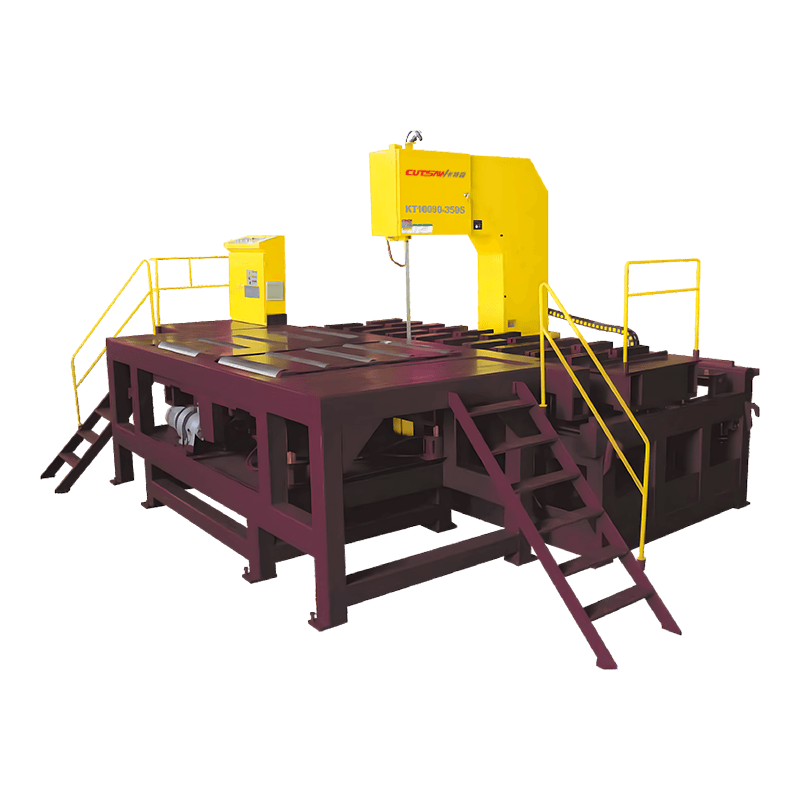
A vertical band saw uses a continuous blade loop that runs between two or three wheels mounted on a vertical plane. The operator guides the material by hand or with a fence across a flat table, feeding it into the moving blade. Because the blade travels in a fixed vertical line, the workpiece itself does the maneuvering, which allows for tight radius cuts, intricate patterns, and freehand shaping that would be impossible on a horizontal machine.
Typical Applications
Vertical machines are common in woodworking shops, metal fabrication shops that need contour cutting, and prototyping environments. A metal band saw Machine configured in vertical orientation is often used for cutting curves in sheet metal, trimming castings, or producing custom brackets where a straight cut alone will not suffice.
- Cutting irregular shapes and curves in plate or sheet stock
- Contour cutting for dies, templates, and tooling
- Freehand trimming of castings and weldments
- Slotting and internal cutouts using a starter hole
How Horizontal Band Saws Work
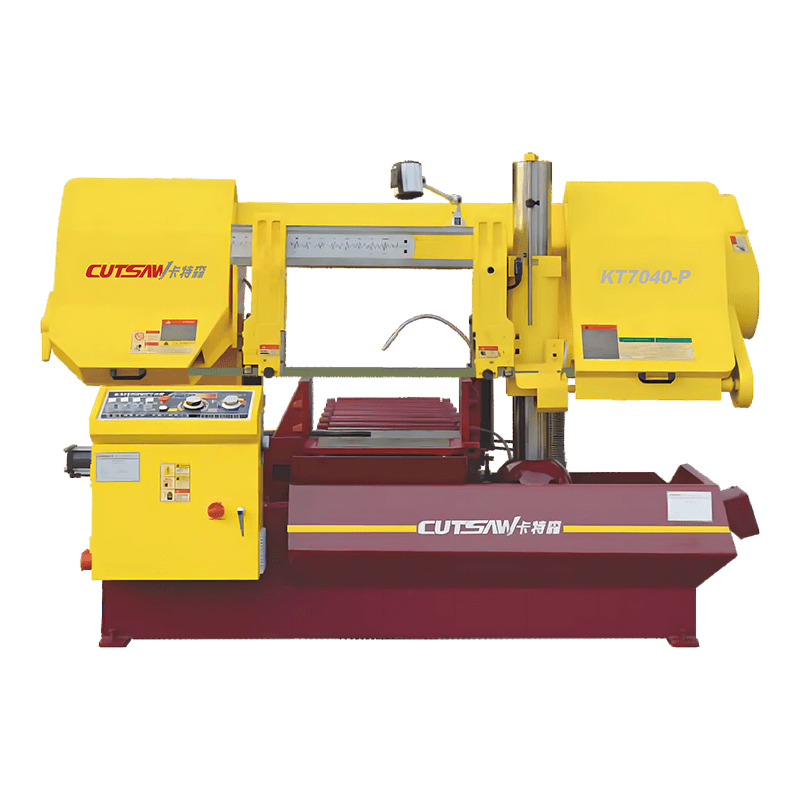
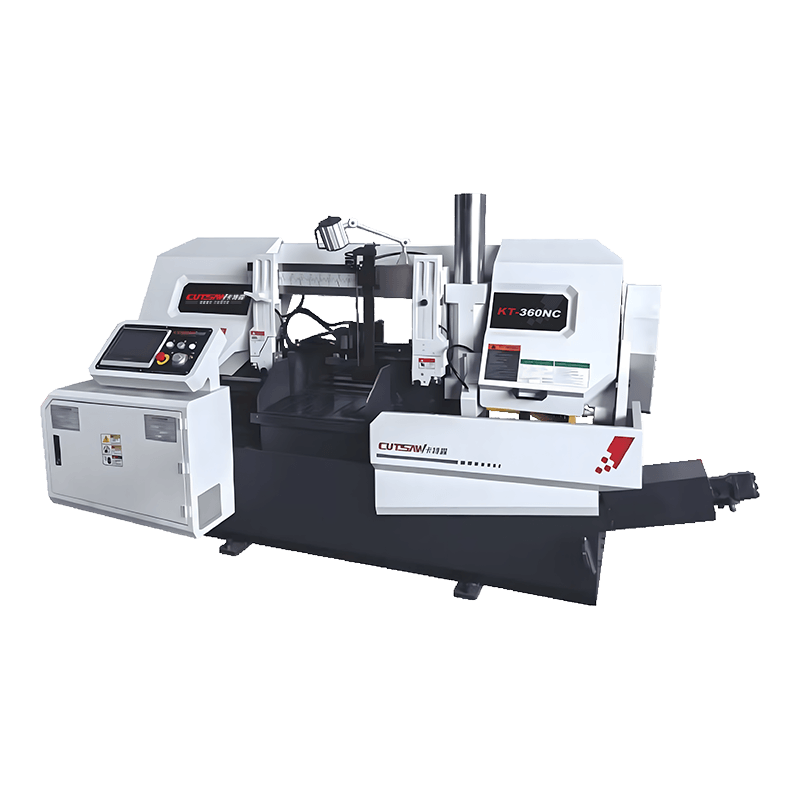
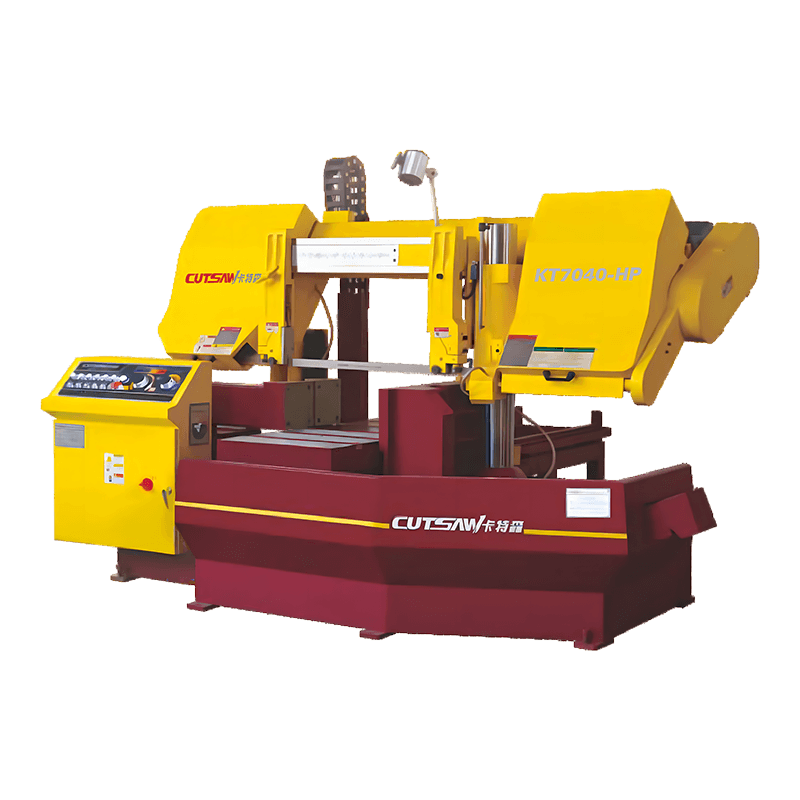
A horizontal band saw operates in the opposite manner. The material is clamped securely in a vise, and the blade head — mounted horizontally — pivots downward or travels along a linear guide to cut through the stock. Because the workpiece does not move during the cut, horizontal machines are far better suited to repetitive, high-accuracy cutting of long or heavy material, such as steel bar, pipe, angle iron, and structural beams.
Typical Applications
Horizontal saws dominate metal-cutting environments where volume and repeatability matter more than shape complexity. A horizontal saw band machine is frequently found in structural steel fabrication, machine shops cutting billet for CNC work, and metal service centers processing bar stock to customer-specified lengths.
- Cutting solid bar stock, tube, and pipe to length
- High-volume production cutting with automated indexing
- Cutting structural beams and heavy angle iron
- Mitered cuts using tilt-frame horizontal models
Side-by-Side Comparison
The table below summarizes the practical differences a buyer should weigh when choosing between the two configurations of a metal band saw Machine.
| Feature | Vertical Band Saw | Horizontal Band Saw |
| Blade Orientation | Fixed vertical loop | Moving horizontal head |
| Cut Type | Curved, contour, freehand | Straight cross-cuts |
| Material Handling | Operator moves workpiece | Workpiece stays clamped |
| Best Stock Type | Sheet, plate, castings | Bar, tube, structural beam |
| Production Volume | Low to medium | Medium to high |
| Automation Level | Mostly manual | Often semi- or fully automatic |
Cutting Accuracy and Tolerance
Horizontal band saws generally hold tighter length tolerances on straight cuts because the material is clamped and the blade travels along a fixed guide path. Many industrial horizontal machines can hold a squareness tolerance within 0.002 inches per inch of cut, which is essential when parts move directly into CNC machining without secondary facing operations. Vertical band saws, by contrast, rely on operator skill and are not designed to hold this level of squareness on straight cuts — their strength is geometric flexibility, not repeatable tolerance on flat faces.
A shop cutting hundreds of identical bar segments per day will lean on a horizontal saw band machine with an automatic vise and index feed, while a shop producing one-off contoured parts will rely on the freehand control a vertical saw provides.
Material Size and Capacity Considerations
Capacity is another point of divergence. Vertical band saws are typically limited by table size and the distance between the blade and the machine's throat, which restricts the width of material that can be maneuvered. Horizontal machines are usually rated by round or rectangular capacity, with common industrial models handling round stock from 1 inch up to 20 inches in diameter, depending on the frame size and motor power.
Choosing Based on Stock Dimensions
If your operation regularly processes long bar stock, structural tube, or heavy billet, a horizontal machine's clamping capacity and blade tensioning system are built specifically for that load. If your operation processes flat sheet or plate that needs to be shaped into a finished silhouette, a vertical machine's open throat and table travel are the more practical fit.
Blade Selection and Maintenance Differences
Blade choice also differs between the two machine types. Vertical band saws commonly use narrower blades — often between 1/8 inch and 3/4 inch wide — because narrower blades allow tighter turning radii for contour work. Horizontal machines typically use wider blades, from around 3/4 inch up to 2 inches, since straight cutting benefits from a stiffer, more stable blade that resists deflection under heavier feed pressure.
Blade material also plays a role. Bi-metal blades remain the most common choice for general-purpose horizontal cutting because they resist the flexing and heat generated during continuous straight cuts on a metal band saw Machine. Carbide-tipped blades are increasingly used on horizontal saws cutting hardened alloys or stainless steel, where standard bi-metal blades wear out quickly.
Running a narrow, flexible blade meant for contour work on a horizontal frame under heavy feed pressure will cause premature blade wander and a shortened blade life — match the blade width to the machine's intended cutting style.
Maintenance Frequency
Horizontal saws that run continuously in production environments require more frequent blade guide and coolant system maintenance because of the sustained cutting load. Vertical saws, used more intermittently for custom work, tend to need less frequent blade changes but require careful attention to table alignment and blade tracking to maintain cut accuracy on curves.
band saw Machine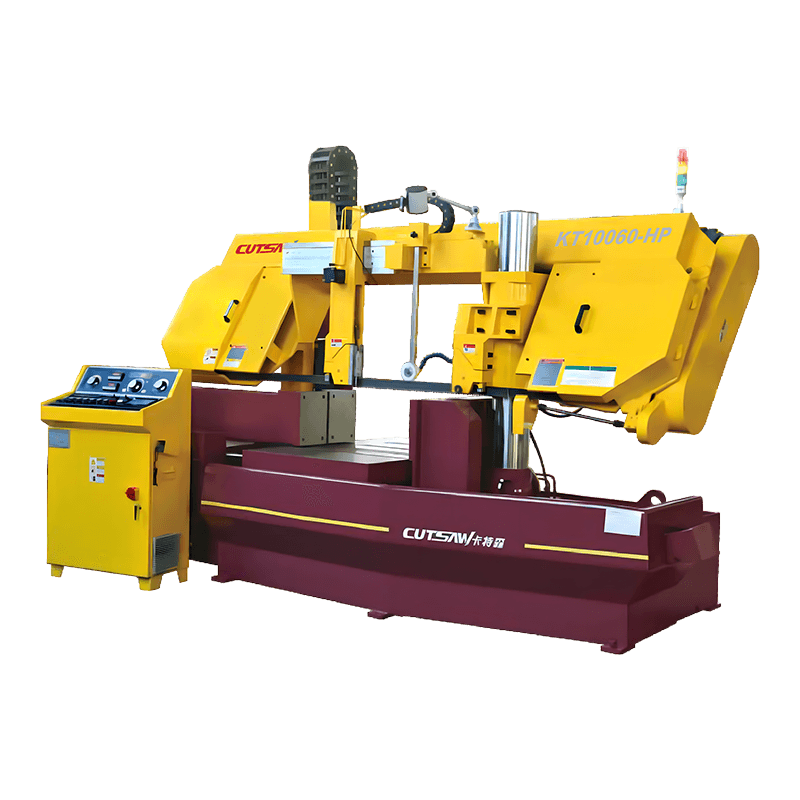
Cost and Space Requirements
Vertical band saws generally occupy a smaller footprint and are available at a lower entry price point, making them accessible for small shops, schools, and workshops with limited floor space. Horizontal saws, particularly automatic models with hydraulic clamping and indexing, require a larger footprint and a higher upfront investment, but they deliver a significantly lower per-part labor cost in high-volume settings because the machine handles feeding and clamping without constant operator attention.
A useful way to frame the decision is return on labor: a manual vertical saw requires an operator's full attention for every cut, while a semi-automatic or fully automatic horizontal saw can run multiple cutting cycles with minimal supervision, freeing staff for other tasks.
Shops that correctly match saw type to workload typically see the fastest payback period — the machine is doing the kind of work it was actually engineered to do.
Which Machine Should You Choose?
The right choice depends entirely on the shape of the parts you cut and the volume at which you cut them. Use the following guidance as a quick decision framework.
- Choose a vertical band saw if your primary work involves curves, templates, contours, or one-off custom shapes.
- Choose a horizontal band saw if your primary work involves cutting bar, tube, pipe, or structural stock to length repeatedly.
- Consider a combination band saw only if your shop has low volume in both categories and cannot justify two dedicated machines.
- Evaluate automation needs — high daily cutting volume favors an automatic horizontal saw band machine to reduce labor costs.
- Factor in floor space and budget, since vertical saws are generally more affordable and compact for smaller operations.
Buying purely on price without matching the machine to your actual cutting geometry is the most common and most expensive mistake shops make when specifying a new saw.