English
 русский
 简体中文
简体中文


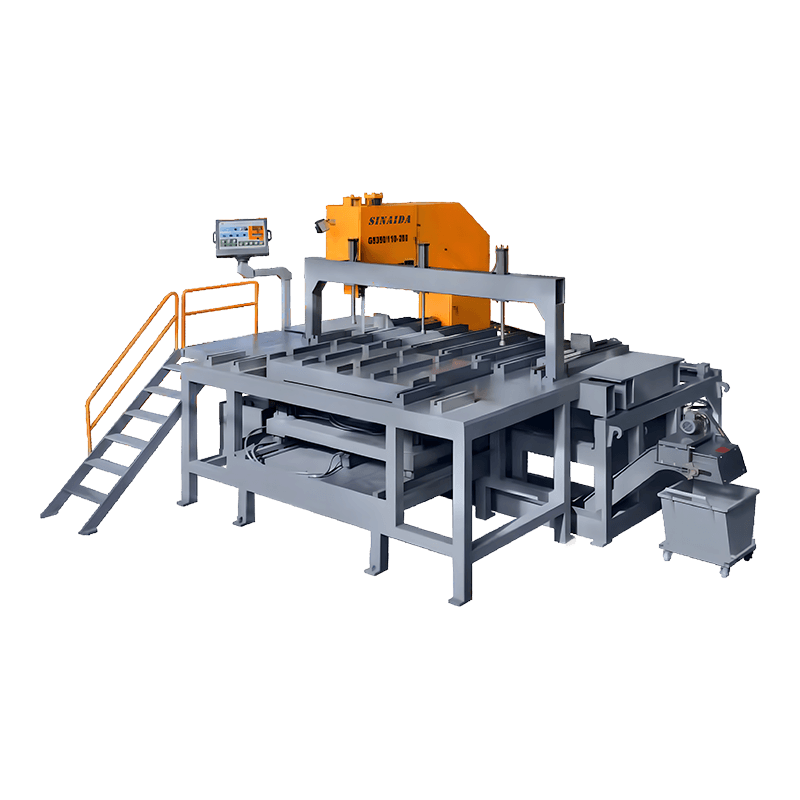
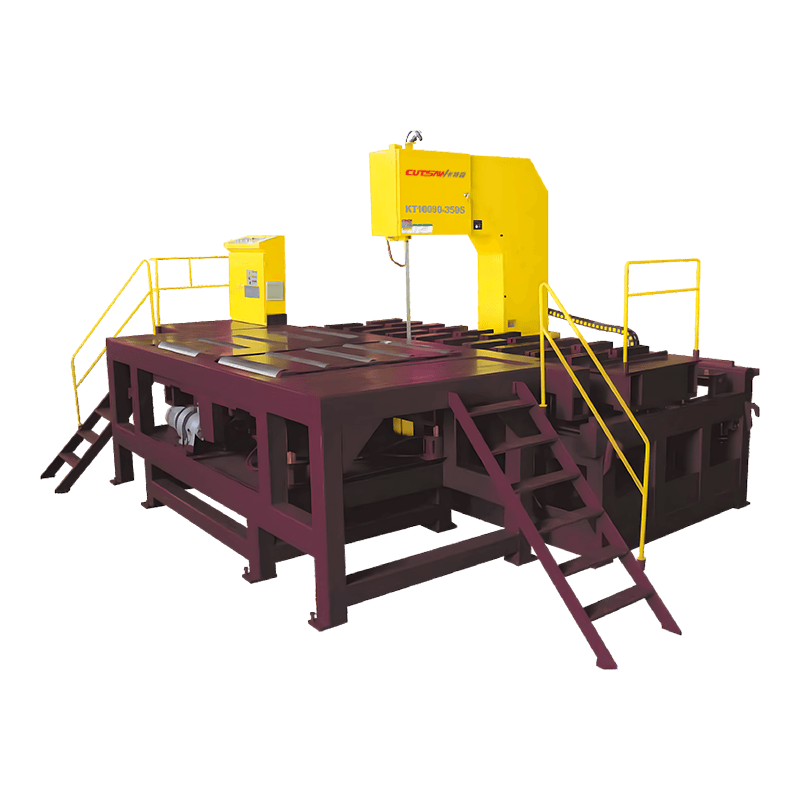
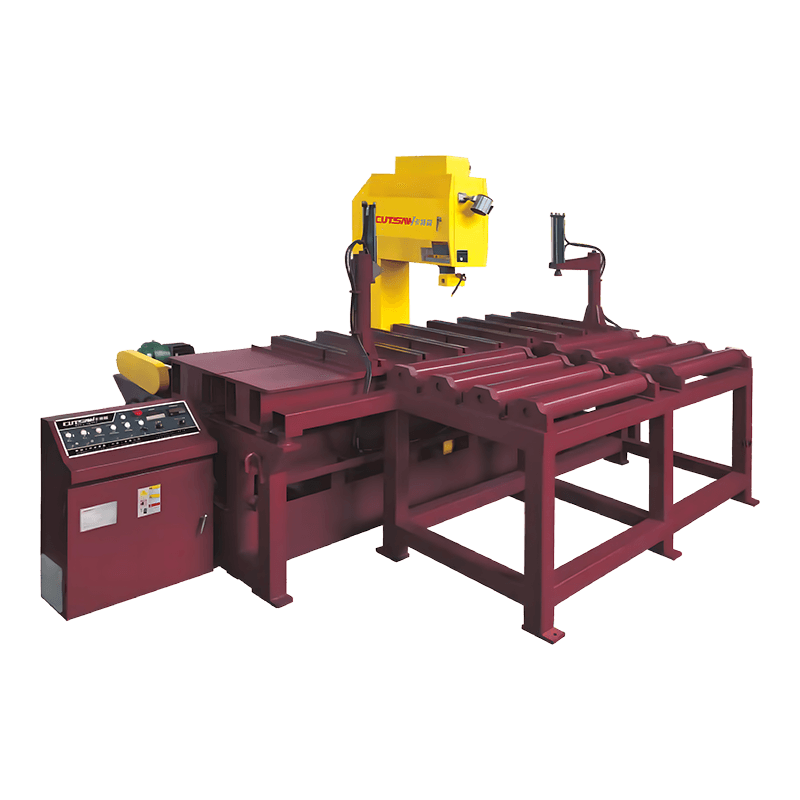
The Vertical Band Sawing Machine is moderately suitable for precision contour cutting, but it is generally less precise than automated CNC cutting systems. In practical industrial use, it excels in flexibility and manual control for medium-accuracy contour work, while CNC systems dominate when ultra-high precision and repeatability are required. For users prioritizing cost efficiency and versatility over micron-level accuracy, the Vertical Band Sawing Machine remains a strong choice. However, for tight tolerance contour profiles (±0.02 mm or better), CNC systems are clearly superior.
Precision and Contour Cutting Capability
In contour cutting operations, the Vertical Band Sawing Machine typically achieves a tolerance range of around ±0.1 mm to ±0.5 mm depending on blade quality, operator skill, and material type. This makes it suitable for general engineering components, mold roughing, and structural parts. However, it is not designed for intricate geometries requiring tight radii or micro-level detail.
Compared to a metal cutting band saw machine configured for straight or semi-automatic operations, the vertical configuration provides better manual maneuverability for curves and freeform shapes. Still, blade drift and operator feed rate variations can reduce repeatability during complex contouring tasks.
Key Limitations in Precision Cutting
- Blade flexibility causes deviation during tight radius cutting
- Manual feed control introduces variability
- Lower vibration control compared to CNC-guided systems
Comparison with CNC Automated Cutting Systems
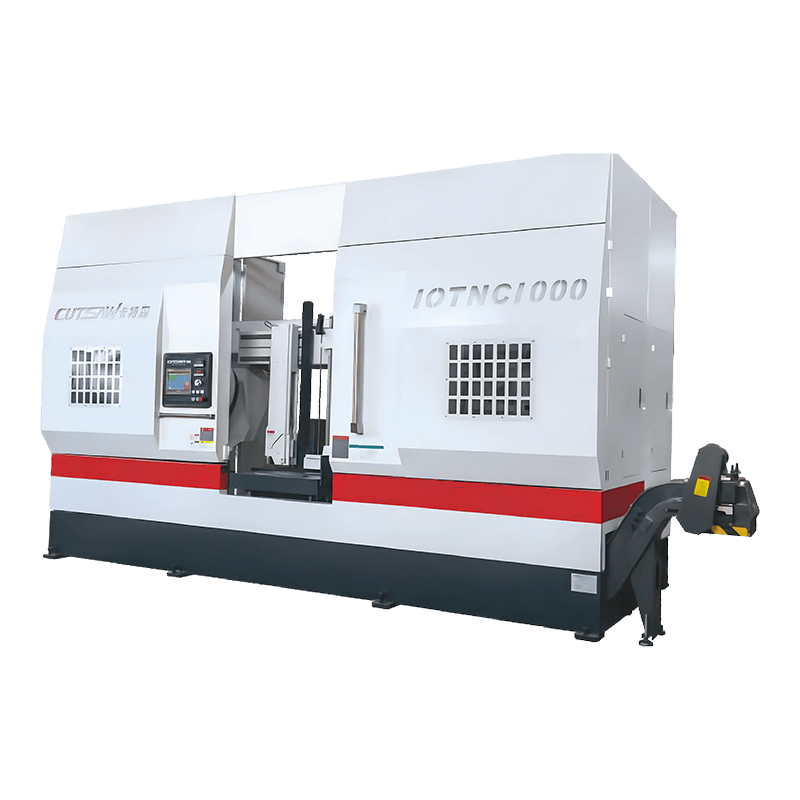
CNC cutting systems are engineered for automated precision, typically achieving tolerances as tight as ±0.01 mm. In contrast, the Vertical Band Sawing Machine relies heavily on operator input, making it more variable in performance. While CNC systems use programmed tool paths and servo-controlled axes, band sawing machines depend on blade tracking and manual guidance.
| Feature | Vertical Band Sawing Machine | CNC Cutting System |
|---|---|---|
| Cutting Accuracy | ±0.1 to ±0.5 mm | ±0.01 to ±0.02 mm |
| Automation Level | Manual / Semi-manual | Fully automated |
| Contour Complexity | Moderate | High to extremely complex |
| Cost | Low to medium | High |
While CNC systems outperform in precision, the Vertical Band Sawing Machine remains more accessible for workshops that do not require high-volume automated contour production.
Material Handling and Application Scenarios
The Vertical Band Sawing Machine is widely used in metalworking shops, especially for cutting steel plates, aluminum blocks, and composite materials. It is particularly effective in prototype development and low-to-medium batch production where flexibility is more important than automation.
A metal cutting band saw machine in vertical configuration performs well when operators need to adjust cutting paths frequently. However, in high-volume production environments, CNC systems or an automatic saw machine setup becomes more efficient due to reduced labor dependency.
Typical Applications
- Prototype shaping and model development
- Structural steel fabrication
- Tooling and mold rough cutting
- Small batch customized part production
Efficiency, Automation, and Integration Potential
Modern production environments increasingly integrate semi-automated systems. The Vertical Band Sawing Machine can be paired with feeding mechanisms to improve consistency. However, its automation potential remains limited compared to CNC platforms.
When combined with an automatic saw machine configuration, productivity can increase by approximately 25%–40% in repetitive cutting tasks. Despite this improvement, contour cutting still relies on operator guidance, limiting full automation potential.
Cost, Maintenance, and Operational Factors
One of the strongest advantages of the Vertical Band Sawing Machine is its cost efficiency. Initial investment is significantly lower than CNC systems, often by a factor of 3 to 8 times depending on configuration. Maintenance is also relatively simple, involving blade replacement, guide alignment, and lubrication.
However, manual operation increases labor costs over time. Blade wear can also be higher when cutting dense materials due to inconsistent feed pressure.
Practical Selection Guidelines
Selecting between a Vertical Band Sawing Machine and CNC systems depends on production requirements. If the goal is flexible contour cutting with moderate precision, the vertical saw is appropriate. If repeatability, automation, and ultra-high precision are required, CNC is the superior choice.
In many workshops, a hybrid approach is used: a metal cutting band saw machine handles rough contouring, while CNC systems perform final finishing. This combination balances cost and performance effectively.