English
 русский
 简体中文
简体中文


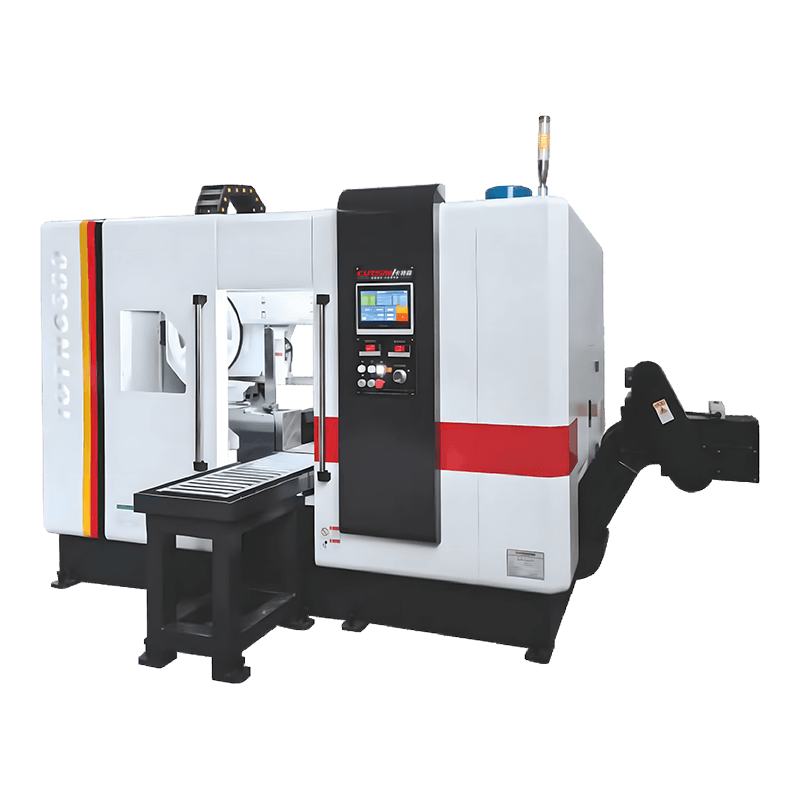
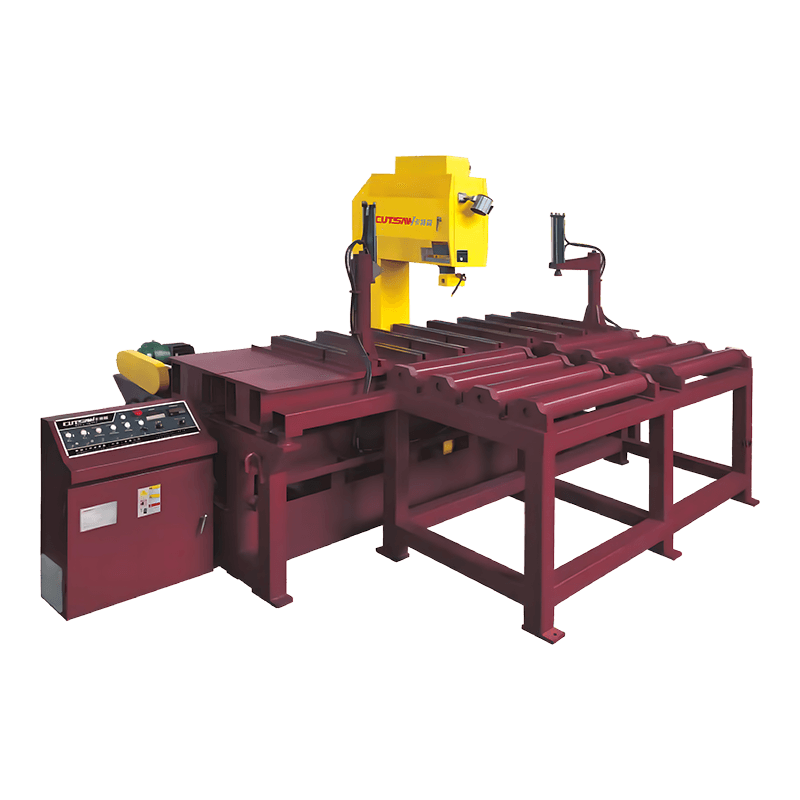
The Vertical Sawing Machine generally provides higher flexibility and better precision control for detailed cutting operations, while a horizontal sawing machine typically delivers greater material stability and consistency when processing large, heavy workpieces. In terms of cutting accuracy, the vertical configuration allows operators to manually guide or semi-automatically control the cutting path, which is advantageous for complex shapes. However, the horizontal system reduces vibration and material movement, making it more stable for straight and repetitive cuts. In practical industrial use, the choice depends on whether the priority is precision shaping or stable mass production.
Cutting Accuracy Differences in Real Applications
Cutting accuracy is one of the most important factors when comparing the Vertical Sawing Machine and horizontal systems. A vertical machine allows operators to visually track the cutting line, which improves adaptability for irregular shapes. In precision machining environments, tolerances of ±0.2 mm to ±0.5 mm can often be achieved depending on blade type and operator skill. This makes it suitable for prototyping and customized fabrication.
By contrast, a horizontal sawing machine operates with a fixed feed direction and clamping system, which minimizes human intervention. This structural rigidity allows it to maintain consistent tolerances around ±0.1 mm to ±0.3 mm in industrial production lines. While this appears more precise on paper, it is limited to straight or predefined cuts. An upright band saw, often considered a subtype of vertical systems, provides a middle ground by improving blade guidance stability while maintaining cutting flexibility.
In summary, vertical systems excel in adaptive accuracy, while horizontal systems excel in repeatable precision under controlled conditions.
Material Stability and Workpiece Control
Material stability refers to how securely a workpiece is held and how little it vibrates during cutting. The horizontal sawing machine has a clear advantage here because the material is clamped horizontally and supported along its entire length. This reduces deflection, especially when cutting heavy steel blocks or long bars.
In contrast, the Vertical Sawing Machine relies more on operator positioning and table support. While modern systems include hydraulic or mechanical clamps, the exposure of the cutting surface means that vibration is slightly higher compared to enclosed horizontal systems. For softer materials like aluminum, plastic, or composite sheets, this difference is minimal. However, for dense alloys exceeding 300 HB hardness, horizontal machines maintain better stability and reduce blade drift.
The stability difference also influences surface finish quality. Horizontal systems typically achieve smoother finishes with fewer secondary operations required.
Structural Design and Operational Mechanics
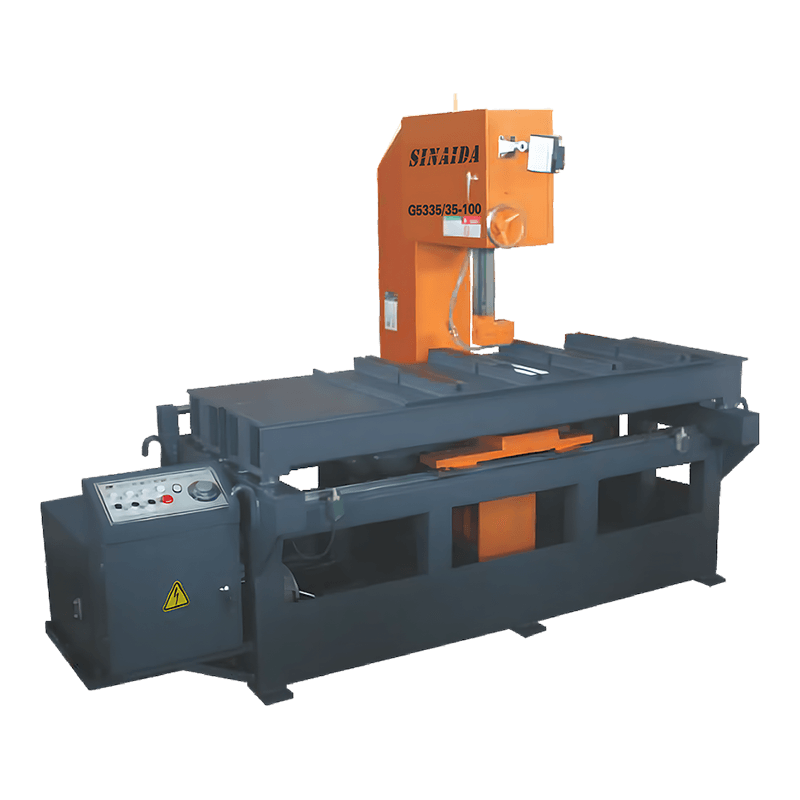
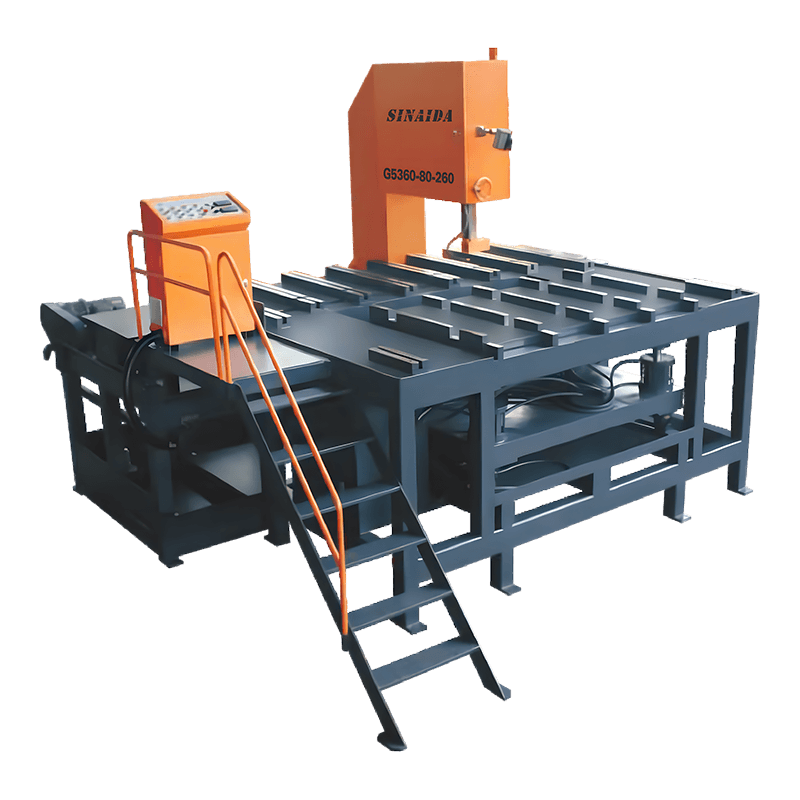
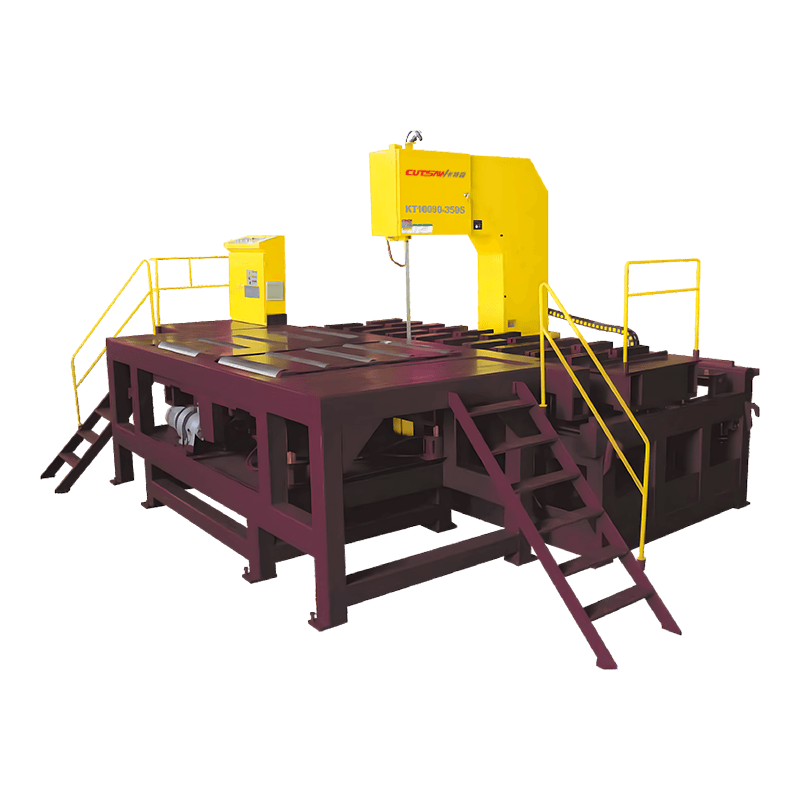
The structural design of each machine directly affects its performance characteristics. A Vertical Sawing Machine positions the blade in a vertical loop or straight downward cutting motion, allowing operators to manipulate the material freely across the table surface. This makes it highly adaptable for contour cutting and irregular geometries.
On the other hand, horizontal systems are designed for controlled feed motion, where the blade descends onto a fixed workpiece. This reduces variability but limits flexibility. The upright band saw configuration improves upon traditional vertical systems by increasing blade tension control and reducing lateral deflection, which enhances both accuracy and tool life.
Blade Behavior and Tension Control
Blade tension plays a critical role in both systems. Vertical machines typically operate with moderate tension levels, suitable for variable cutting paths. Horizontal machines maintain higher tension levels, ensuring straighter cuts and reduced blade wandering. This difference explains why horizontal machines are preferred in high-volume structural steel processing.
Industrial Application Scenarios
The selection between a Vertical Sawing Machine and a horizontal system depends heavily on application requirements. Vertical systems are widely used in toolrooms, fabrication workshops, and maintenance facilities where custom shapes and repair work are common.
Horizontal machines dominate in mass production environments such as automotive component manufacturing and structural steel processing. Their ability to process long bars and thick billets with minimal deviation makes them ideal for repetitive tasks.
- Vertical systems: best for prototypes, molds, and irregular cutting paths
- Horizontal systems: best for batch production and straight cutting operations
- Upright band saw units: hybrid flexibility for medium-duty precision work
Performance Comparison Table
| Feature | Vertical Sawing Machine | Horizontal Sawing Machine |
|---|---|---|
| Cutting Accuracy | ±0.2–0.5 mm (flexible precision) | ±0.1–0.3 mm (high repeatability) |
| Material Stability | Moderate, operator-dependent | High, fully clamped system |
| Flexibility | High for complex shapes | Low, optimized for straight cuts |
| Production Type | Low to medium volume | Medium to high volume |
Operational Efficiency and User Considerations
From an operational standpoint, the Vertical Sawing Machine offers faster setup times and greater accessibility for one-off jobs. Operators can quickly adjust cutting paths without extensive reconfiguration. However, this flexibility requires higher skill levels to maintain consistent accuracy.
Horizontal machines, while slower to configure, reduce operator dependency and improve consistency across shifts. This makes them more suitable for automated production environments. Maintenance requirements also differ: vertical systems require more frequent blade alignment checks, while horizontal systems require periodic hydraulic and clamping system inspections.
Ultimately, choosing between these systems depends on whether the priority is adaptability or production consistency. In many modern workshops, both systems are used together to maximize efficiency across different job types.