English
 русский
 简体中文


A 300 mm solid steel bar can look routine until a horizontal band saw with the wrong blade pitch stalls halfway through the cut. The operator blames the blade, the buyer blames the machine, and the real issue is usually a mismatch between sawing machine type, material, cut length and production rhythm. The useful conclusion: choose the cutting motion first, then the structure, then the control level. Price comes last, because a cheap saw that cannot hold angle or feed reliably becomes expensive on the second shift.
The three cutting motions behind every sawing machine
Most sawing machines fall into three families: band saws, circular saws and hacksaws or reciprocating saws. Band saws use a continuous loop blade; circular saws use a toothed disc; hacksaws use a back-and-forth stroke. That difference drives capacity, finish, burr, blade cost and operator attention. Band saws are flexible in solid bar, tube, profiles and bundles. Circular saws are associated with speed and clean cuts on smaller sections, but blade cost and setup discipline matter. Hacksaws are slower and usually suit low-volume or maintenance work.
The machine type sets the cutting motion; the blade, clamping and control system decide whether that motion becomes a repeatable production process.
Practical note: A sawing machine is not selected by the largest dimension in a brochure alone. Check the material, the section shape, the bundle or single-piece loading method and the tolerance you need on the finished part.
Band sawing machines: the broadest family
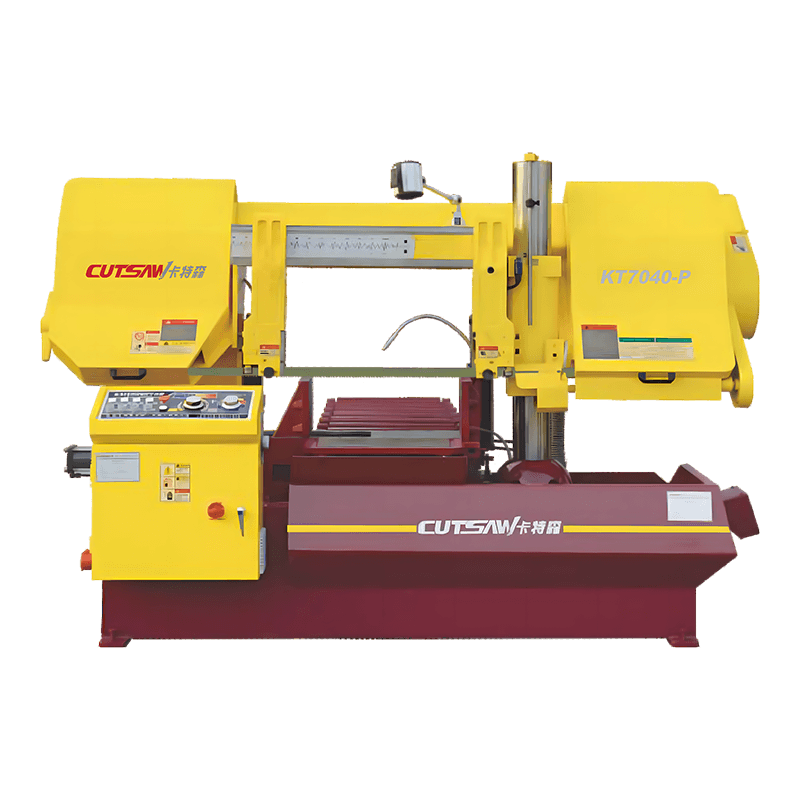
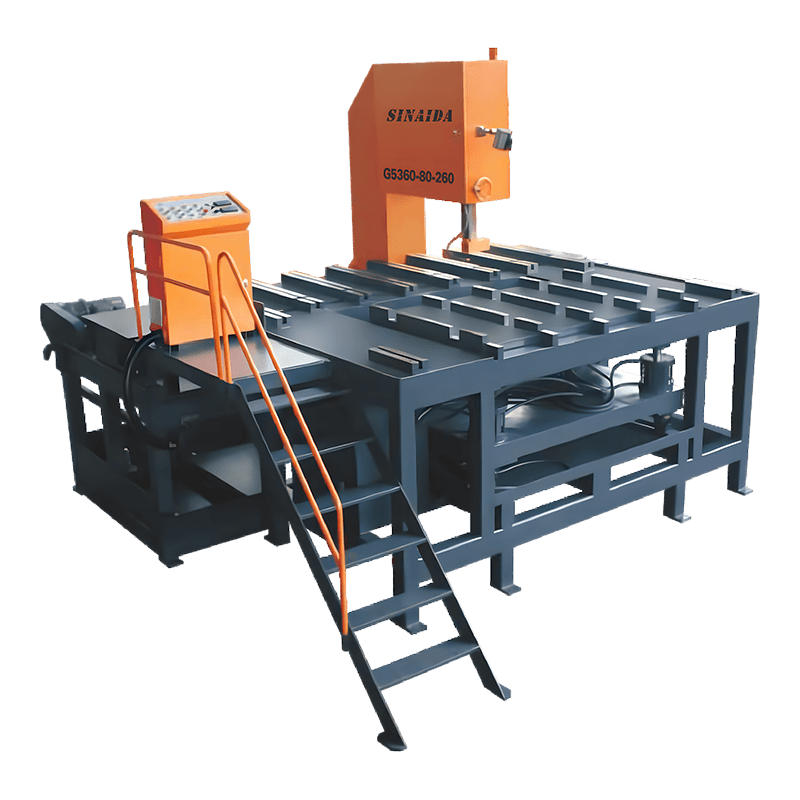
Band sawing machines are usually the first choice for general metal cutting because they cover a wide range of sections and automate without excessive complexity. Horizontal band saws lower the blade frame through the work and suit bar, tube and profiles. Vertical band saws keep the blade vertical for contouring, toolroom work and awkward shapes. Angle band saws swivel the head or vice for miter cuts; the buying question is repeatability, not just whether the machine reaches 45 degrees.
Double-column, gantry and scissors designs
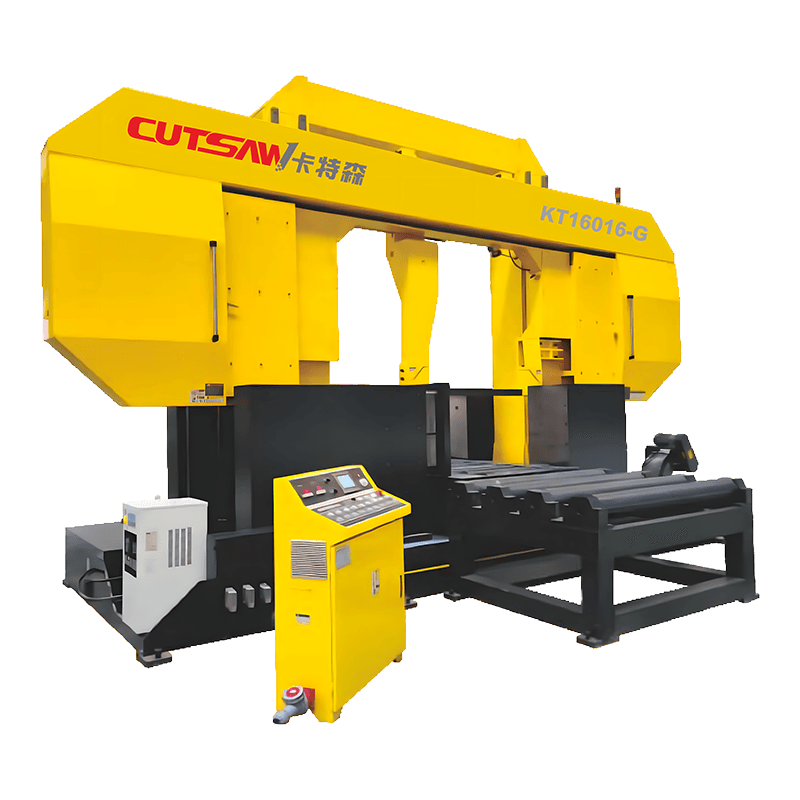
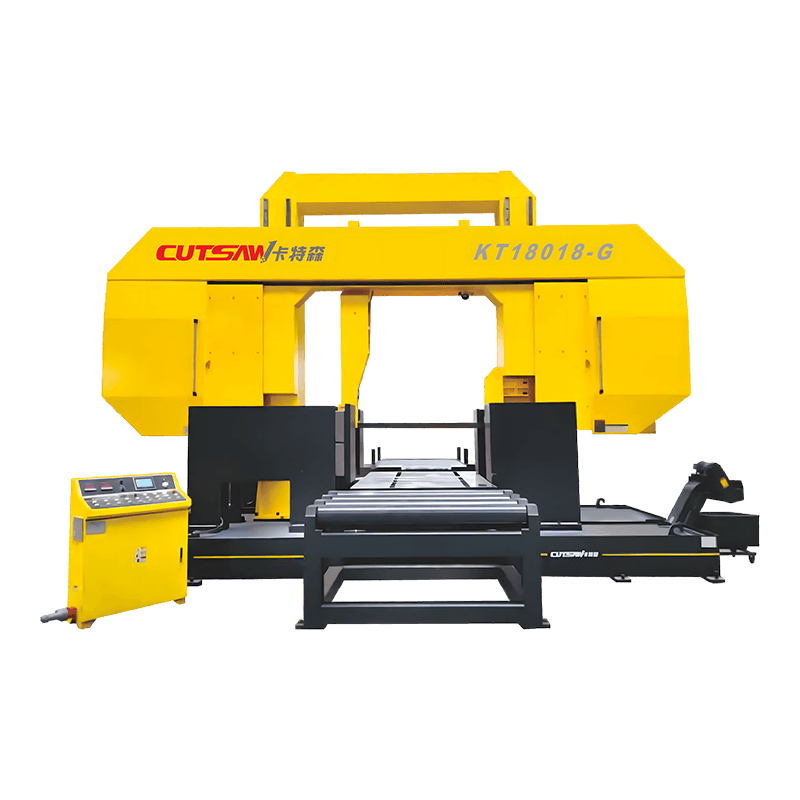
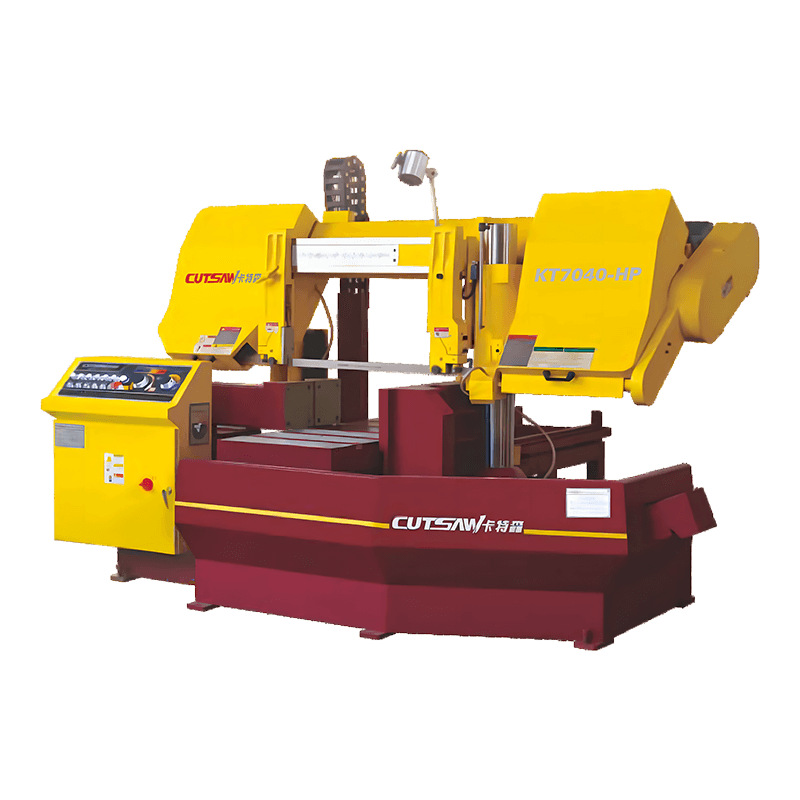
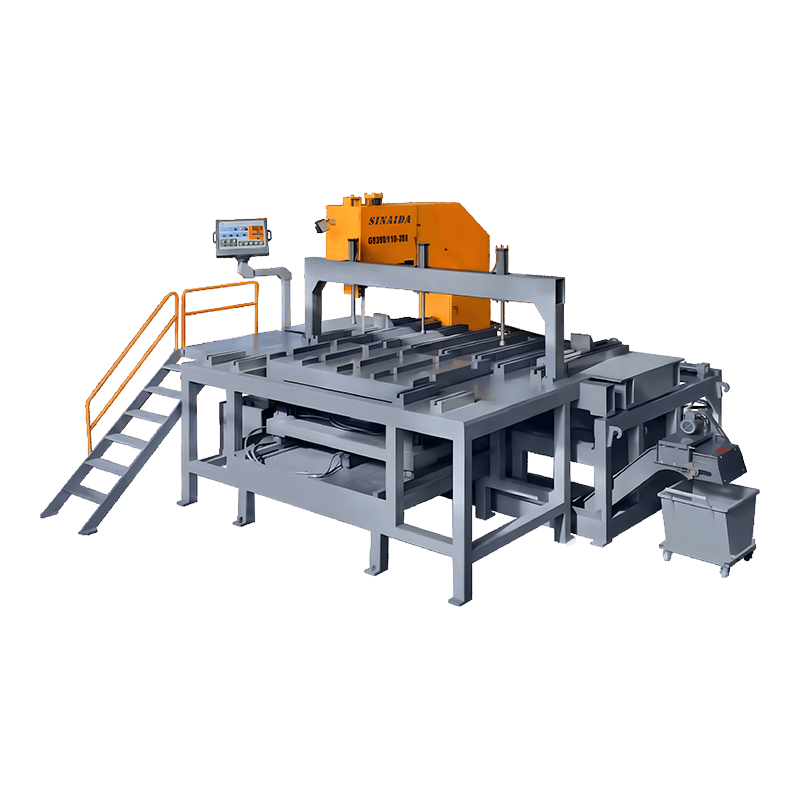
Double-column band saws use two rigid columns to resist deflection in heavier sections. Gantry band saws use a bridge frame for large plates and custom heavy work. Scissors band saws use a pivoting frame and can be compact, but they should be matched to the section and volume rather than treated as a universal substitute for a double-column machine.
SINAIDA builds its CUTSAW series around these categories, from semi-automatic and CNC band saws to constant-load and smart high-speed designs. Two machines with the same nominal capacity can behave very differently when the material is hard, the bundle is loose or the angle must repeat across hundreds of pieces.
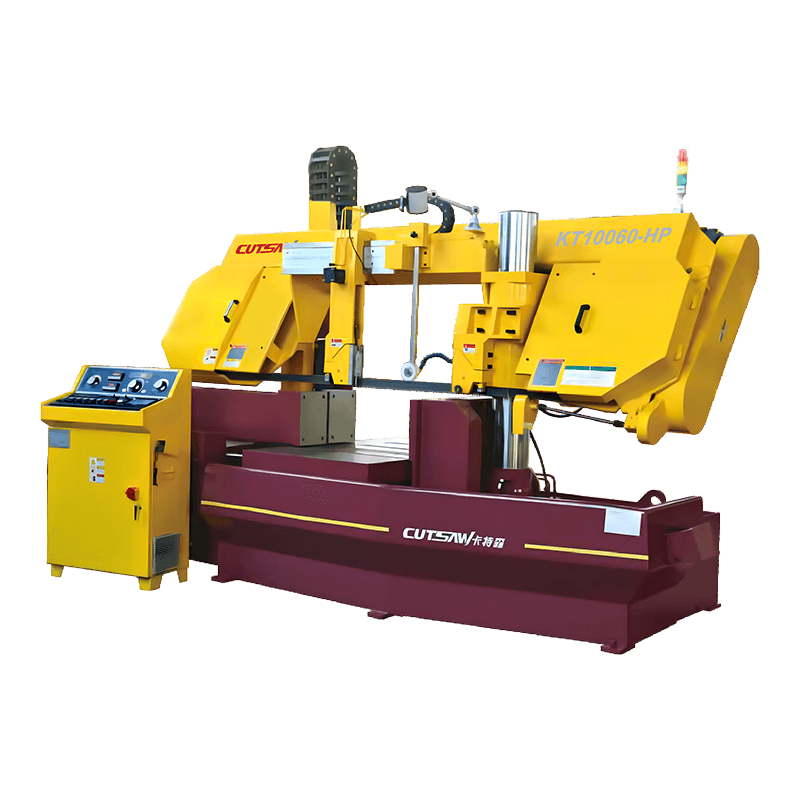 KT10060-HP CNC Double Column Band SawHeavy-duty CUTSAW automatic band saw for precise, programmable cutting of steel and other metals, with 600 mm height and 1000 mm width capacity.View Product →
Circular sawing machines: speed, burr and blade cost
Circular sawing machines use a rotating toothed disc, often carbide-tipped, and are chosen when speed and cut quality matter more than the lowest machine price. They can produce clean, straight cuts on solid bar, tube and plate, but the economics depend on blade cost, change time and material mix. The wrong tooth geometry, clamping pressure or feed rate can shorten blade life quickly. For plate work, a dedicated metal plate sawing machine may be more suitable than a general-purpose circular saw.
SINAIDA's KY-series machines illustrate the category: the KY150 and related models are positioned as metal carbide plate circular saws, while the SY75 targets round steel, tube and stainless cutting. The question is not simply "band or circular?" but whether part geometry, volume and burr tolerance justify the blade cost and setup discipline.
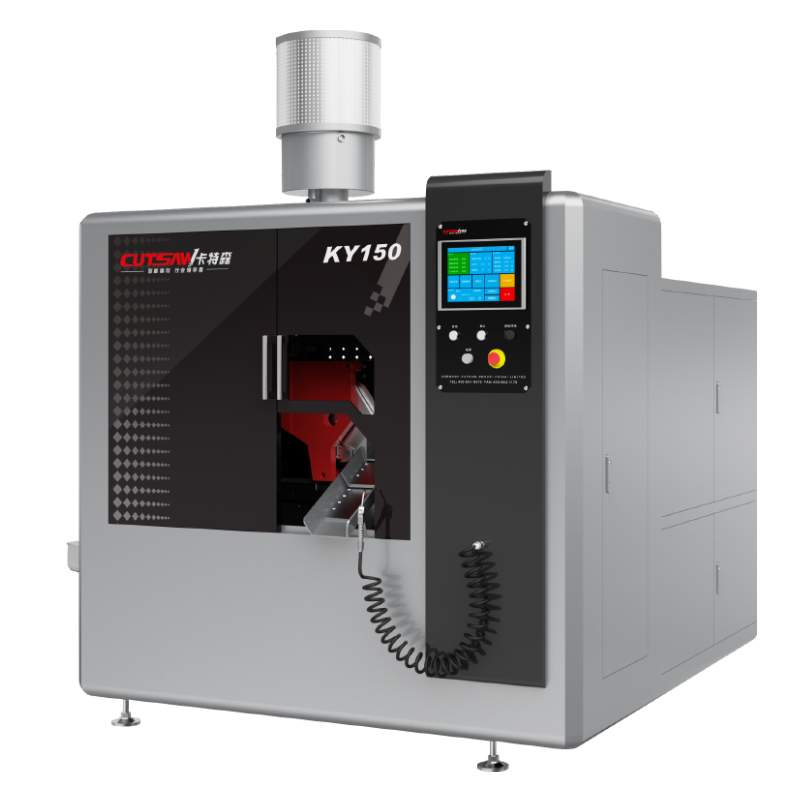 KY150 Metal Carbide Plate Circular SawCast-body circular saw for pipe and rod cutting, combining TCT and HSS blades with three-point clamping and servo feed for precision sawing.View Product →
Hacksaw and reciprocating sawing machines: still useful, rarely first choice
Hacksaw machines cut with a reciprocating blade. They are simple, compact and useful for maintenance work, small sections and mixed materials. The limitations are speed, blade wear and the non-cutting return stroke; in high-volume production, that lost motion adds up. A portable reciprocating saw is not a production sawing machine. For repetitive work, compare a small band saw or circular saw on cost per cut, not only purchase price.
Selection table: matching the saw to the cut
The table below is a starting point, not a specification sheet. Capacity, blade speed, clamping and control options vary by model, so the final check should be a cut sample on your material.
| Machine type | Cutting motion | Best fit | Typical buying check |
|---|---|---|---|
| Horizontal band saw | Continuous loop blade | Bar, tube, profiles and general fabrication | Blade tension, guide-arm span, vice repeatability |
| Double-column band saw | Continuous loop blade with twin columns | Heavy sections and production cutting | Column rigidity, clamping force, chip evacuation |
| Gantry band saw | Continuous loop blade on a bridge frame | Large plates, blocks and custom heavy work | Foundation, loading method, cut width and height |
| Vertical band saw | Vertical loop blade | Contouring, toolroom work and resawing | Throat depth, speed range, table and guide access |
| Angle band saw | Swiveling head or vice | Miter cuts, frames and structural profiles | Angle repeatability, vice design, digital readout |
| Circular saw | Rotating toothed disc | High-speed bar, tube and plate cutting | Blade cost, burr level, noise, clamping pressure |
Procurement warning: A model number is not a guarantee of cutting capacity. Check the actual round, square and bundle capacity, the load height and the machine's footprint before comparing prices.
What to verify before you compare prices
Once the cutting motion is clear, the decision moves to repeatability and operating cost. Check cut capacity on the largest solid section, tube wall, profile and bundle, not the model number. For tolerance, general fabrication may accept a few tenths of a degree; aerospace, precision frames or welding automation may require measured squareness and flatness data. Compare cost per cut rather than blade price. Match automation to changeover frequency: CNC pays back when setup changes are frequent or the same cut must repeat without operator judgement.
- Cut capacity and material: confirm the largest solid section, tube wall, profile and bundle you will cut, and ask for a cut sample in the same material condition.
- Tolerance and angle accuracy: request measured squareness, flatness and angle deviation data for precision work.
- Blade or disc economics: compare cost per cut, including blade life, coolant, chip evacuation and operator discipline.
- Automation level: semi-automatic, automatic feed and CNC controls solve different production problems.
- Utilities and floor space: check power, compressed air, coolant, chip conveyor, foundation and loading clearance.
- Safety and compliance: verify the relevant machine safety documents, CE marking where applicable and quality system evidence. SINAIDA states that it operates under ISO 9001, China Machinery Safety Certification and CE certification; buyers should still confirm the documents for the exact model.
Buying signal: A supplier who asks for your material grade, section, bundle pattern and tolerance target is usually closer to a workable recommendation than one who quotes only by model number.
Matching the machine type to production reality
The same saw can be right in one shop and wrong in another. A job shop needs fast changeover more than maximum speed; a horizontal band saw with good vice access and simple angle setting may be more profitable than a high-speed machine that takes longer to set up. Pipe and tube work rewards stable clamping and angle repeatability; test the angle return, not only the first cut. Heavy plate and large sections need structure; double-column and gantry band saws are common because rigidity and load handling matter. High-volume cutting shifts the focus to feed reliability, chip evacuation and data; smart high-speed band saws can reduce operator variation, but they still need a stable blade, clean coolant and disciplined maintenance.
SINAIDA's smart high-speed band saw range is aimed at this segment, including models with bundle cutting, servo feed and AI-assisted parameter control. The practical test is whether the control system reduces setup time and scrap on your actual mix of materials.
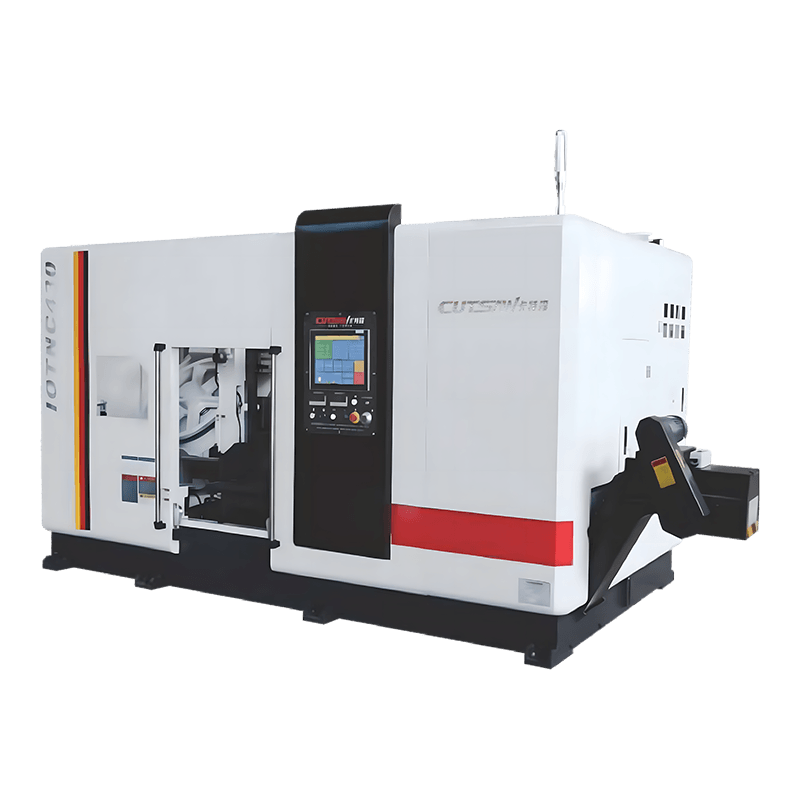 IOTNC430 AI-Optimized High-Speed Band SawCUTSAW band saw with AI-adjusted cutting parameters, servo feeding and touch-screen control, suited to varied materials where setup time and blade life matter.View Product →
Risk to avoid: Do not size a saw around the largest part you might cut once a year. Oversized machines consume floor space, power and maintenance budget; if the rare part is truly occasional, subcontracting or a custom solution may be cheaper than owning capacity you rarely use.
A simple buying conclusion
For most metal cutting operations, start with band saws for flexibility, circular saws for speed and finish on suitable sections, and hacksaws for low-volume or maintenance work. Then choose the structure: horizontal for general work, double-column for heavier sections, gantry for large plate and custom work, vertical for contouring, and angle designs for mitered parts. Finally, decide how much automation the production pattern can repay.
The best sawing machine is not the largest or fastest on the sheet. It is the one that holds tolerance on your material, at your volume, with a blade and maintenance routine your team can sustain. That is the practical difference between a machine purchase and a production decision.