English
 русский
 简体中文


Metal Cutting Fundamentals
Sawing Machine Basics: The Decisions That Shape Every Cut
On a Monday morning, a fabrication shop finds that its new band saw cuts the first ten pieces perfectly, then starts drifting on the eleventh. The blade is not dull. The coolant is full. The real problem is usually a mismatch between the saw, the blade, and the cut plan—one of the first lessons in sawing machine basics.
The conclusion first: the saw that earns its keep is the one that repeats a clean cut with predictable cycle time. Headline speed matters only after the machine has the rigidity, blade support, and control to hold the cut.
Start With the Cut, Not the Machine Category
Before comparing models, write down the cut. Material grade, section shape, largest and smallest piece, bundle weight, angle requirement, finish expectation, and daily volume will narrow the field faster than any brochure. A machine that is oversized for small tube wastes floor space; a machine that is undersized for a 400 mm billet will punish the blade, the guides, and the operator.
- Material: carbon steel, stainless, aluminum, tool steel, and plastics behave differently under the same blade.
- Section: solid bar, pipe, profile, plate, and bundle need different clamping and blade support.
- Angle: occasional mitre cuts and daily 45-degree production are two different buying decisions.
- Volume: ten cuts a day and ten cuts an hour require different automation, coolant, and chip handling.
- Tolerance: squareness, flatness, and burr height should be agreed with the next operation in mind.
For general CNC work, a horizontal machine such as the KT360Z is a useful reference point: it gives a shop programmable feed and repeatable length control without forcing a full production cell. Match its capacity and control level to the real mix of work, not the largest piece the shop might see once a quarter.
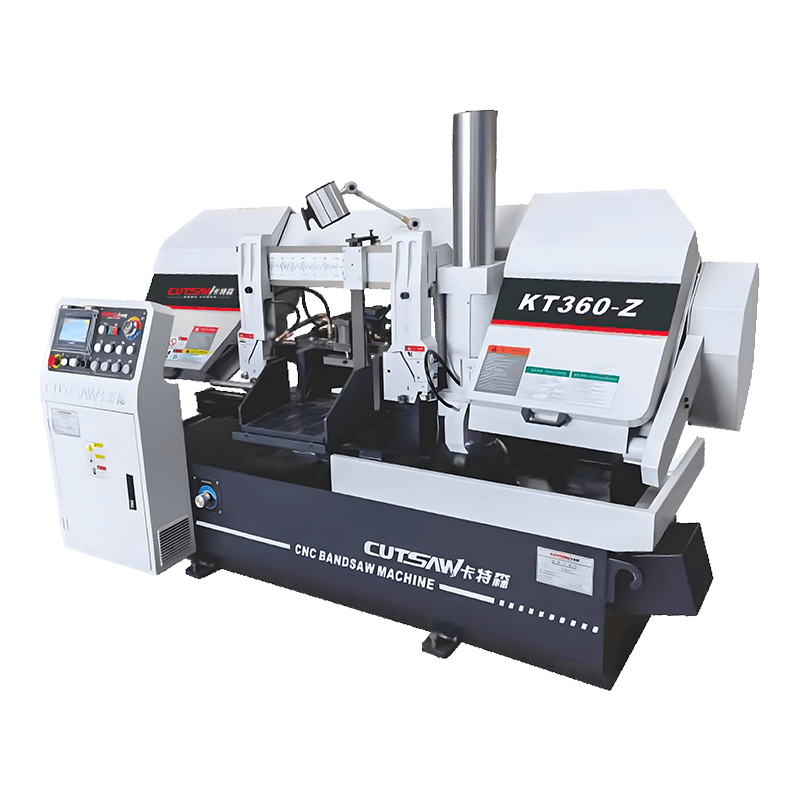 KT360-Z Horizontal CNC Band Saw MachineA horizontal CNC band saw with automatic feeding and programmable control, suited to shops needing repeatable length cutting without a full production cell.View Product →
Band Saw, Circular Saw, or Plate Saw? A Practical Comparison
Most metal sawing machine basics come down to three families: band saws, circular saws, and plate saws. Each has a different sweet spot. The table below is not a ranking; it is a way to expose the trade-off before you request a quote.
| Machine type | Best for | Typical trade-off | Buying check |
|---|---|---|---|
| Horizontal band saw | Bar, tube, and profile in general fabrication | Simple and affordable; slower on very large sections | Vice capacity, blade guides, and feed control |
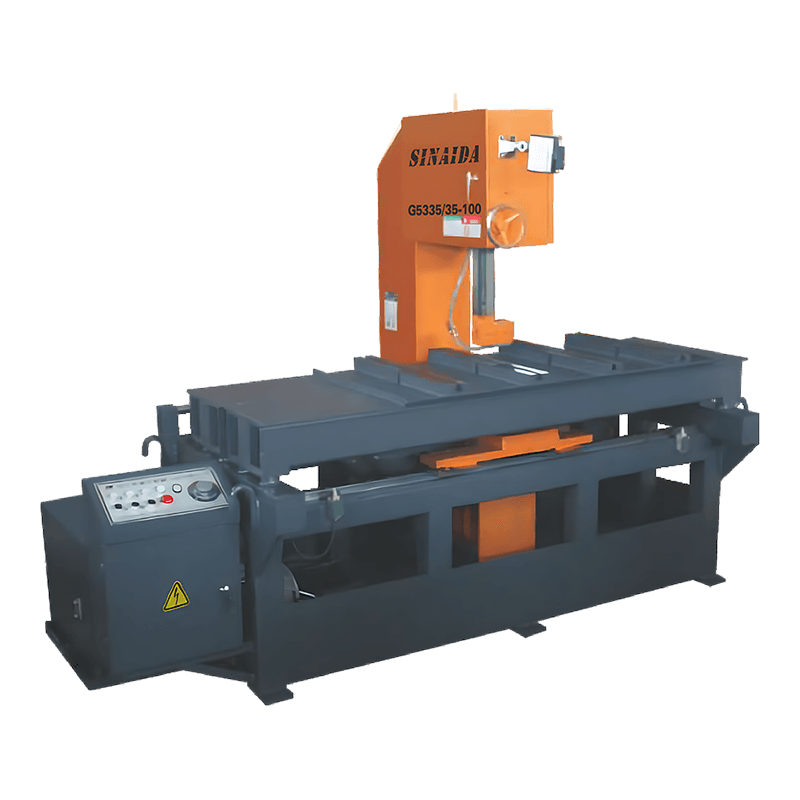
| Double-column band saw | Large sections, heavy billets, and structural work | More rigidity; more floor space and weight | Column stiffness, guide arm reach, and hydraulic clamping |
| Vertical band saw | Plate, tooling, and irregular shapes | Operator-controlled; less automatic in mixed work | Throat depth, table size, and blade tracking |
| Angle band saw | Mitre cuts, frames, and fabricated structures | Setup time can erode the advantage of a fast blade | Angle repeatability and head or vice rotation |
| Circular saw | High-volume tube, bar, and some plate | Fast and clean; blade cost and burr control matter | Blade quality, clamping rigidity, and chip evacuation |
| Plate saw | Plate and slab where cut length is the constraint | Dedicated footprint; handling can dominate cycle time | Loading method, cut length, and table support |
The Parts That Decide Cut Quality
Two saws with the same motor power can produce very different cuts because the working parts are not equal. The blade is only the most visible component. The guides, tension system, vice, coolant delivery, and chip removal set the conditions in which the blade can work.
Blade, tension, and guides
A band saw blade needs tension, alignment, and support close to the cut. If the guides are worn or set too far from the workpiece, the blade can twist under load. The result is not always a dramatic break; often it is a cut that is slightly out of square, a shorter blade life, or a surface that needs extra machining.
Vice and frame rigidity
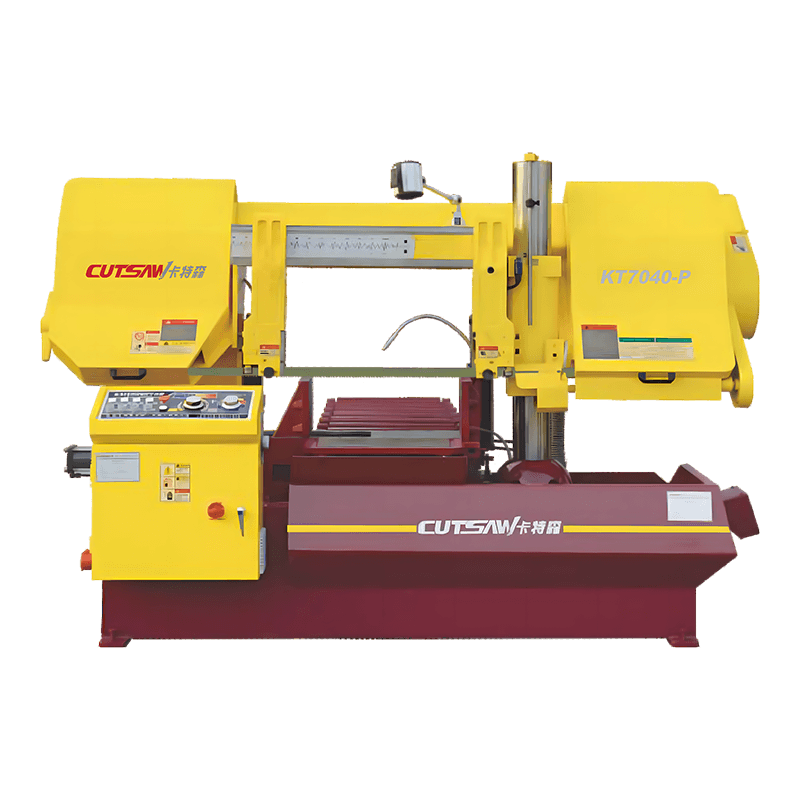
The vice must hold the piece without crushing thin-wall tube or letting a bundle shift. On a double-column machine, frame rigidity is only half the story; the guide arms and clamping must support the workpiece at the point of cut. A semi-automatic model such as the KT7040C is a practical step up for shops moving into heavier sections without a full CNC cell.
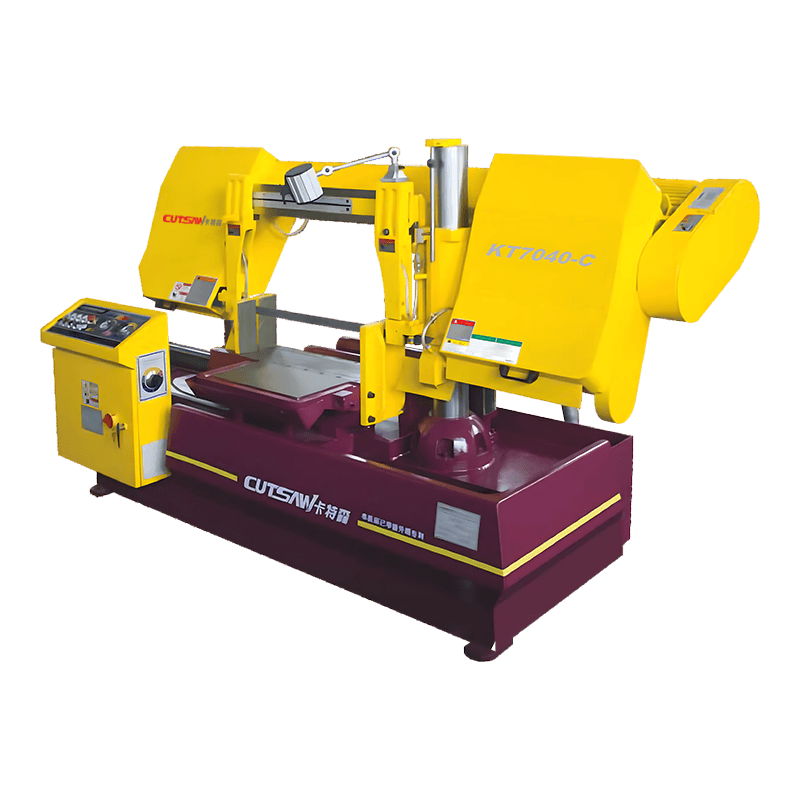 KT7040-C Double Column Semi-Automatic Band SawA semi-automatic double-column band saw for heavier metal sections, offering hydraulic clamping and stepped blade speeds for shops moving beyond manual cutting.View Product →
A saw that cuts fast but leaves a torn surface, a bowed section, or a blade that fails early is not fast. It is simply moving the cost to the next operation.
Angle Cutting and the Hidden Cost of Setup
Angle cuts are where a good saw can become a bottleneck. If the operator spends fifteen minutes setting each 45-degree cut, the machine's cutting speed is irrelevant. For occasional work, a manual or semi-automatic angle saw is enough. For repeat production, the angle adjustment mechanism, the stop system, and the clamping sequence deserve as much attention as the blade.
Ask for a demonstration that includes the actual angle, the actual material, and the actual tolerance. A rotating head and a rotating vice solve different problems. The head may be easier for long pieces; the vice may be more practical for short, heavy sections. The KT4135X is an example of an automatic horizontal mitre saw aimed at shops that need repeatable angle work rather than one-off cuts. For a wider view of the category, see the angle band sawing machine range.
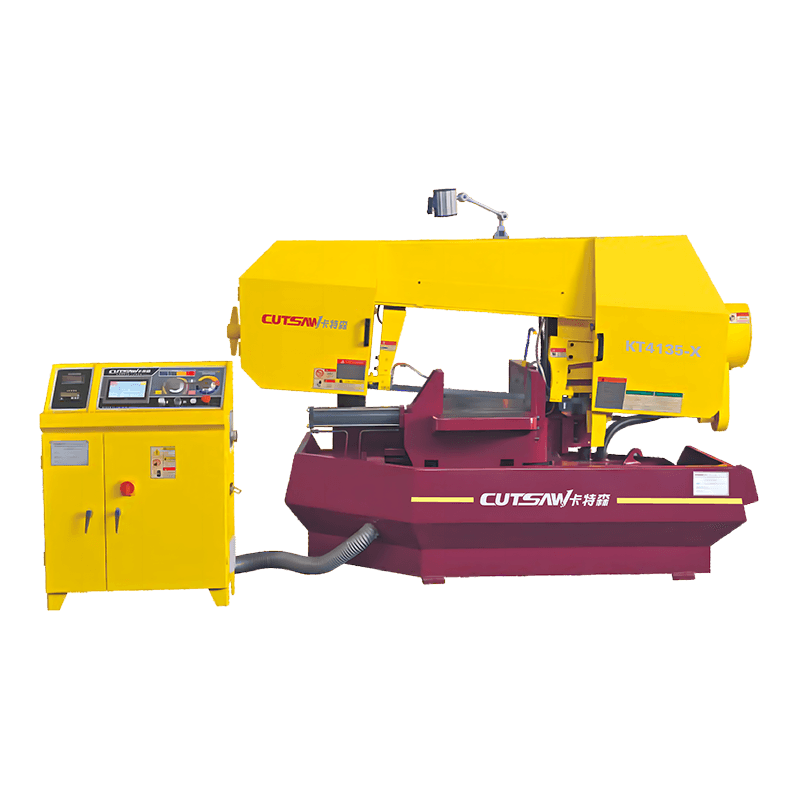 KT4135-X Automatic Horizontal Mitre Band SawAn automatic horizontal mitre saw with PLC control and digital angle positioning, aimed at shops that need repeatable angled metal cuts.View Product →
Coolant, Blade Speed, and Feed: The Three-Way Balance
Coolant does three jobs: it lubricates the cut, carries heat away, and helps flush chips. Weak concentration causes poor finish and premature blade wear; too rich a mix can foam, leave residue, or become a disposal problem. Blade speed and feed rate must be adjusted together. If the blade runs too fast for the material, the teeth overheat. If the feed is too heavy, the blade deflects. If the feed is too light, the teeth rub instead of cutting.
CNC control helps because it can hold the same feed and speed through the cut, but it cannot correct a poor blade choice or a blocked coolant nozzle. The practical check is the chip: thin, curled chips usually indicate a healthy cut; powder or blue chips suggest the parameters need attention. For a closer look at automated control, review the CNC band sawing machines.
Maintenance That Prevents the Expensive Surprise
Most saw failures are not sudden. They are small maintenance misses that compound: a worn guide, a stretched blade, a dirty coolant tank, a loose limit switch. A simple routine protects the cut and the warranty.
- Check blade tension, guide clearance, and coolant flow at the start of each shift.
- Clean the chip conveyor and chip tray daily; packed chips hold moisture and promote corrosion.
- Inspect the vice jaws and clamps for wear that can let work shift under load.
- Top up or replace hydraulic oil and check hoses on the schedule in the manual.
- Keep a blade log with cut count, material, and failure mode so repeat problems are visible.
What to Check Before You Buy
Purchase risk rarely sits in the purchase price alone. It sits in foundation work, power supply, coolant disposal, blade inventory, operator training, spare parts, and service response. A machine that arrives without a local support plan can become a very expensive table.
- Cut sample: test your material at your tolerance, not a demo piece chosen for the brochure.
- Cycle time: include loading, clamping, cutting, and unloading—not only the blade in the material.
- Capacity: confirm the largest section, bundle weight, and angle envelope in writing.
- Safety and compliance: ask for guards, interlocks, emergency stops, and CE or ISO documentation where applicable.
- Service: check spare parts availability, response time, and whether commissioning is included.
- Floor space: include clearance for material in and out, chip bins, and maintenance access.
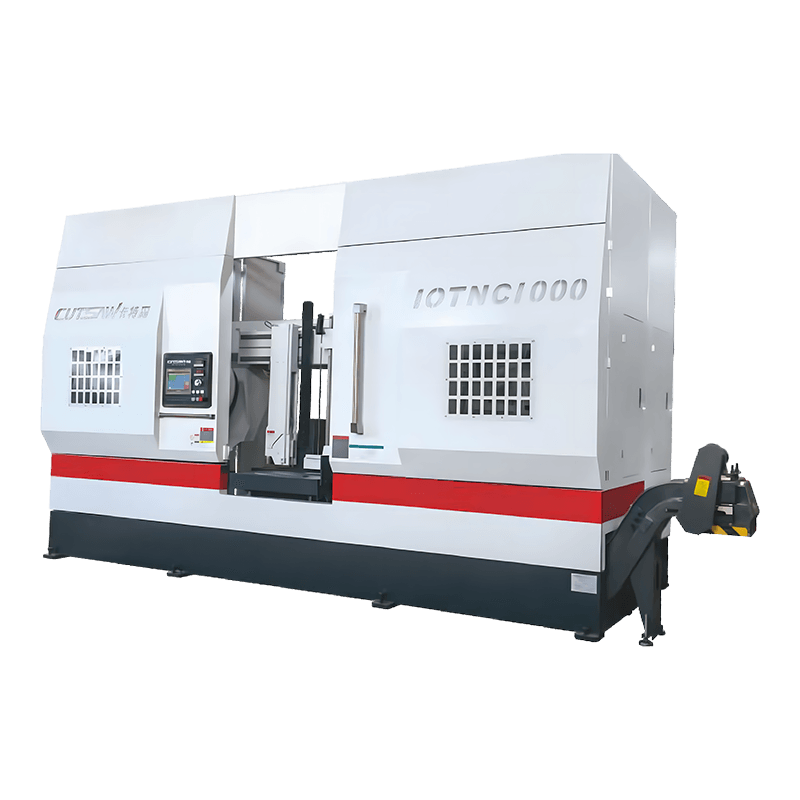
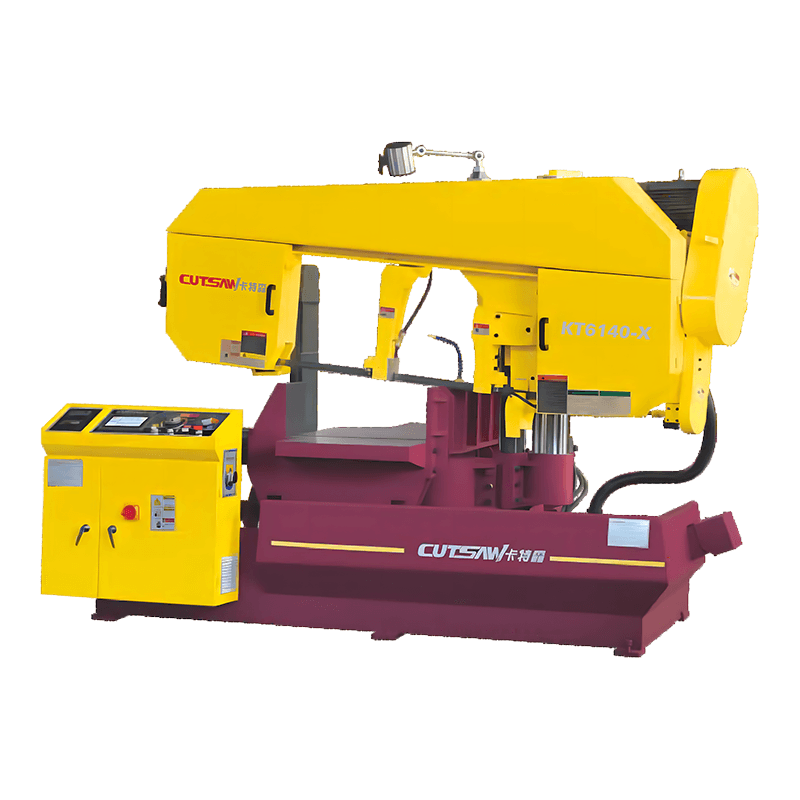
A supplier with ISO 9001 and CE certification should be able to show the certificates and the machine's safety documentation. Production capacity matters too: a manufacturer that can support custom and oversized work is more likely to have the engineering depth to solve an unusual cut. The CUTSAW and SINAIDA ranges are organized around these decisions, from angle and double-column saws to circular and plate machines.
The Bottom Line
Sawing machine basics are not complicated, but they are easy to skip. Match the machine to the cut, support the blade, control the coolant and chips, and buy for repeatability rather than a single impressive demo. The right saw will not just cut metal; it will make the next operation easier and the cost per cut predictable.