English
 русский
 简体中文


Burrless Sawing Machines: Specify Edge Quality, Not Just Blade Speed
A practical guide for buyers who need clean-cut metal, repeatable edge quality, and fewer hidden finishing costs.
At 7:40 a.m., a shop rejects sawn aluminum blanks. Length and squareness pass, but a small rolled burr on the exit edge stops the parts seating in a robot gripper. The saw is not bad; the process was specified for speed, not for what the edge must do next.
The conclusion first: a burrless sawing machine is a matched system of blade geometry, rigidity, clamping, feed control, and chip evacuation. If one variable drifts, the machine still produces a burr someone has to remove.
What “burrless” actually means at the machine
“Burrless” is a drawing callout, not a brochure adjective. Sawn edges usually fall into three families:
- Roll-over burr: ductile material folds at the exit. It is common on aluminum, mild steel, and thin tube when the blade is sharp but the clamp is weak.
- Tear burr: material tears instead of shears because tooth load is too high, the blade is dull, or the section is unsupported.
- Feather burr: a thin, sharp lip remains. It may look minor but can break loose during handling and become a loose sliver in assembly.
The acceptance question is not “Is there a burr?” but “What burr height, edge radius, and loose-edge condition can the next operation tolerate?” A shop that deburrs every part by hand is paying for a process that was not controlled at the saw.
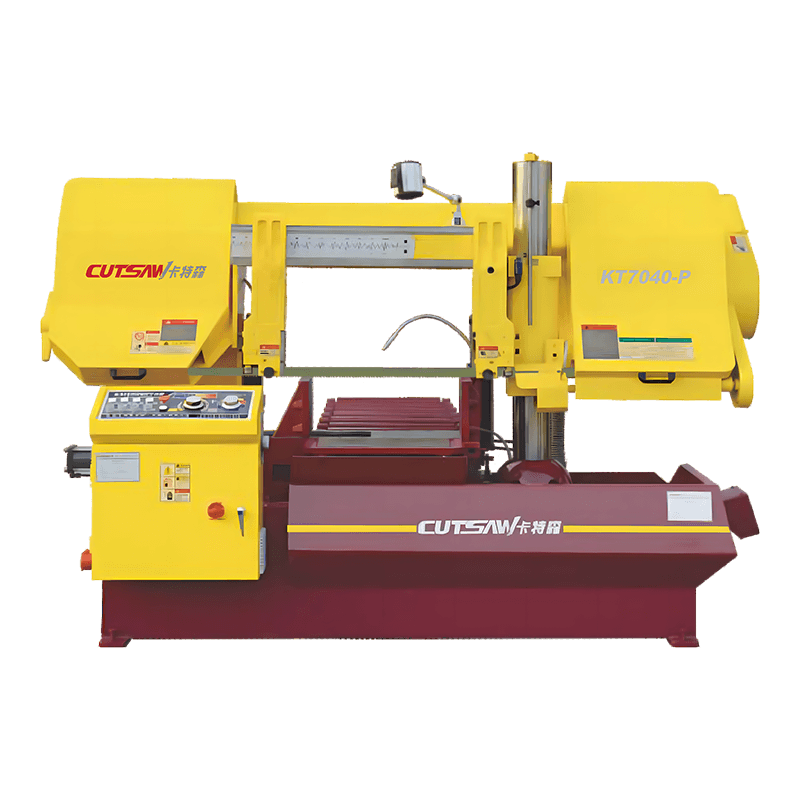
For thin plate and small bar, high-speed carbide circular saws are often the first route to evaluate because the cut is short and the spindle can be made rigid. For thick sections, mixed alloys, and bundles, a CNC band saw is usually more stable because the blade stays supported through a longer cut. Neither route is automatically burrless; each depends on the window where blade, clamp, and feed match the part.
Five variables that decide whether the edge is clean
The variables are not independent. Weak clamping forces the operator to slow the feed, which can work-harden the edge; a dull blade raises load and increases vibration. Burr control is therefore a process conversation, not a blade catalogue conversation.
- Blade geometry and condition. Tooth pitch, rake angle, carbide grade, and sharpness set the cutting mechanics. A blade too coarse for the wall thickness will tear rather than shear.
- Machine rigidity and vibration. A light saw can cut cleanly at low load and lose edge quality when the section gets thicker. Check guide-arm stiffness, base mass, and vice squareness.
- Clamping and support. The exit side needs support. If the part deflects, the blade unloads and rolls material instead of cutting it.
- Feed and speed. Too fast raises tooth load and promotes tear burr; too slow can work-harden some alloys and dull the blade.
- Coolant and chip evacuation. Re-cut chips change effective tooth load and roughen the edge, even when the blade is sound.
If a supplier talks only about blade brand and horsepower, ask how the machine controls the other four variables. That answer usually shows whether the “burrless” claim is a process capability or a sales phrase.
Circular saw or band saw? Match the edge to the part
Both families can cut cleanly, but they solve different edge problems. A high-speed carbide circular saw is usually the stronger start for thin plate, small bar, and tube, where the cut is short and the downstream gripper is sensitive. A rigid spindle and controlled feed let the tooth shear rather than fold material; poor clamping or blade runout can still create a rolled edge.
Buyers comparing routes should review the high-speed metal circular sawing machine range before requesting a sample cut, because spindle stiffness and blade support change with size class.
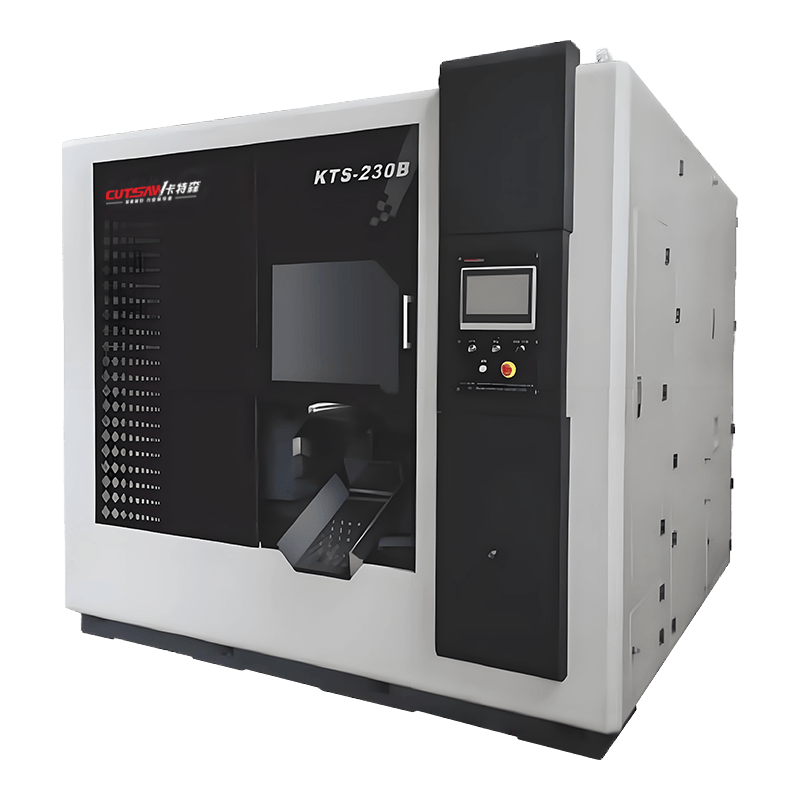 KY230 High-Speed Metal Circular Saw for Pipe and Bar CuttingThis circular saw suits pipe rods and metal bars when spindle stiffness and blade support matter; it accepts TCT and HSS blades with three-point clamping.View Product →
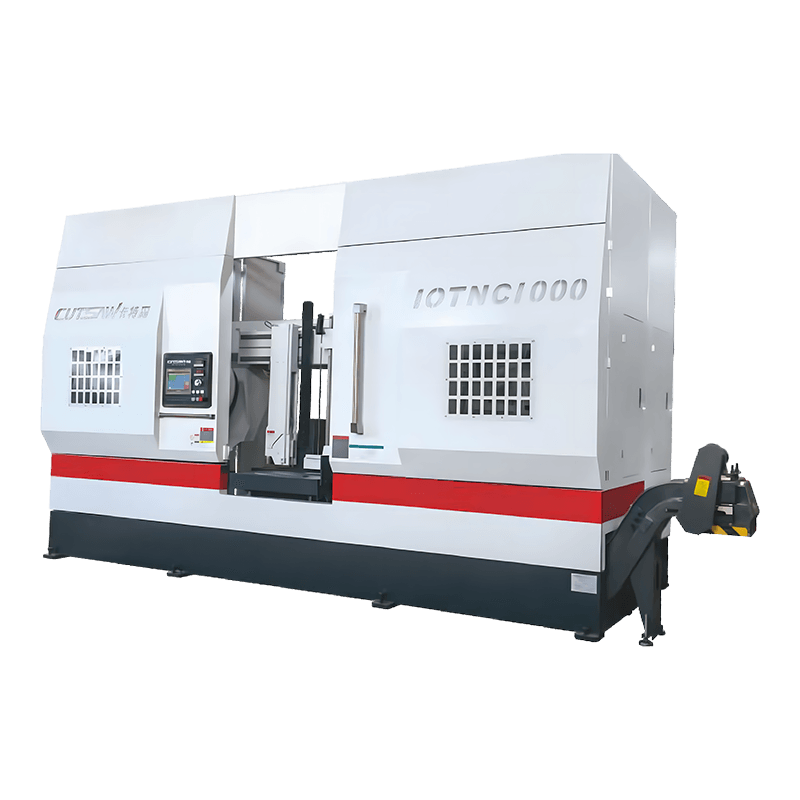
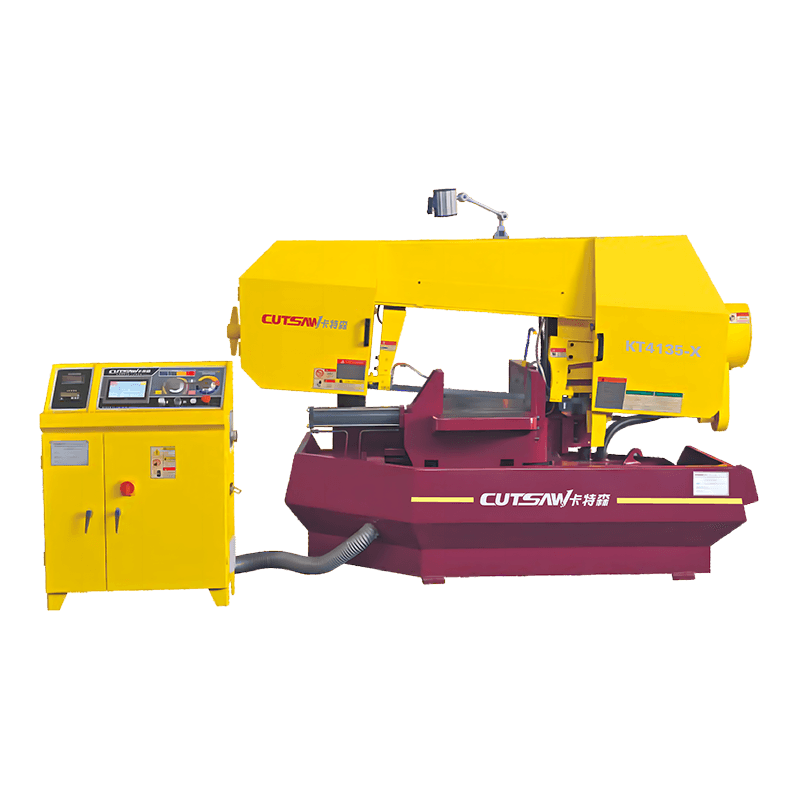
A CNC band saw is often better for thicker sections, mixed alloys, and bundles where the blade stays in the cut longer. Narrow kerf and continuous blade support help on large profiles, but edge quality depends on downfeed stability and chip evacuation. The smart high-speed band sawing machine range is relevant when adaptive feed and repeatable clamping matter more than raw cutting speed.
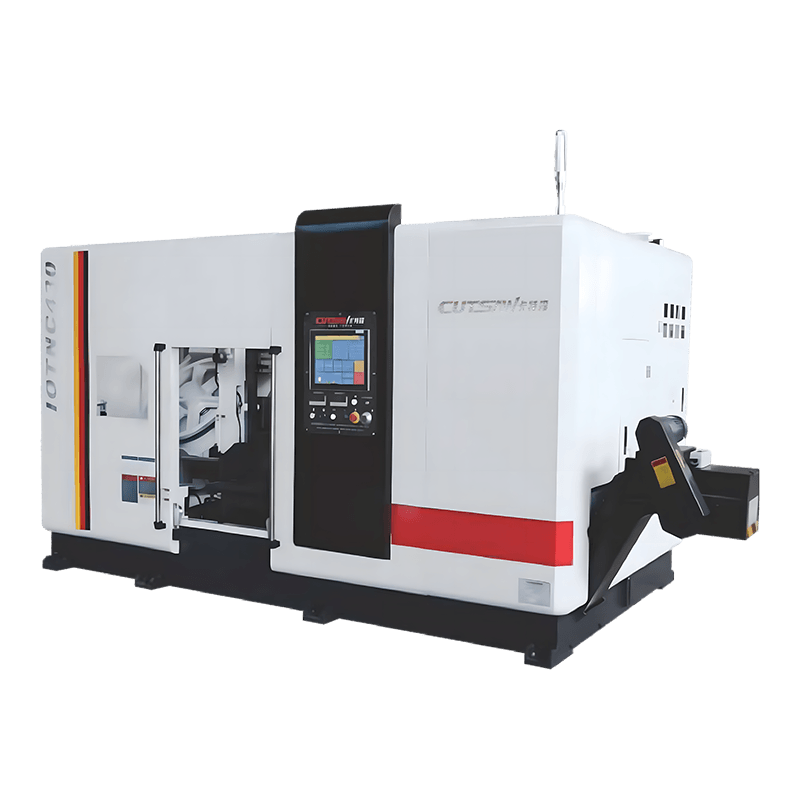 IOTNC430 AI-Optimized High-Speed Band SawView this band saw where adaptive feed and repeatable clamping matter; it adjusts parameters by material and uses hydraulic double-vise clamping.View Product →
The question is not which machine is better; it is which edge failure mode you can afford to control. If the part is thin, flexible, and robot-fed, circular sawing may reduce roll-over. If the part is thick, mixed, and heavy, band sawing may reduce taper and tear burr.
When the section gets heavy, rigidity matters more than speed
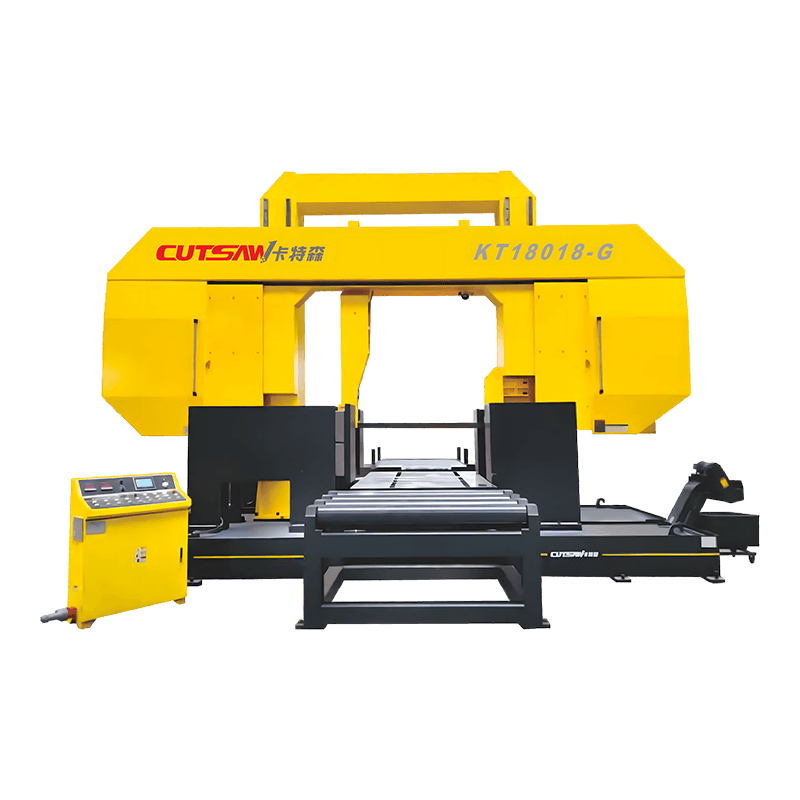
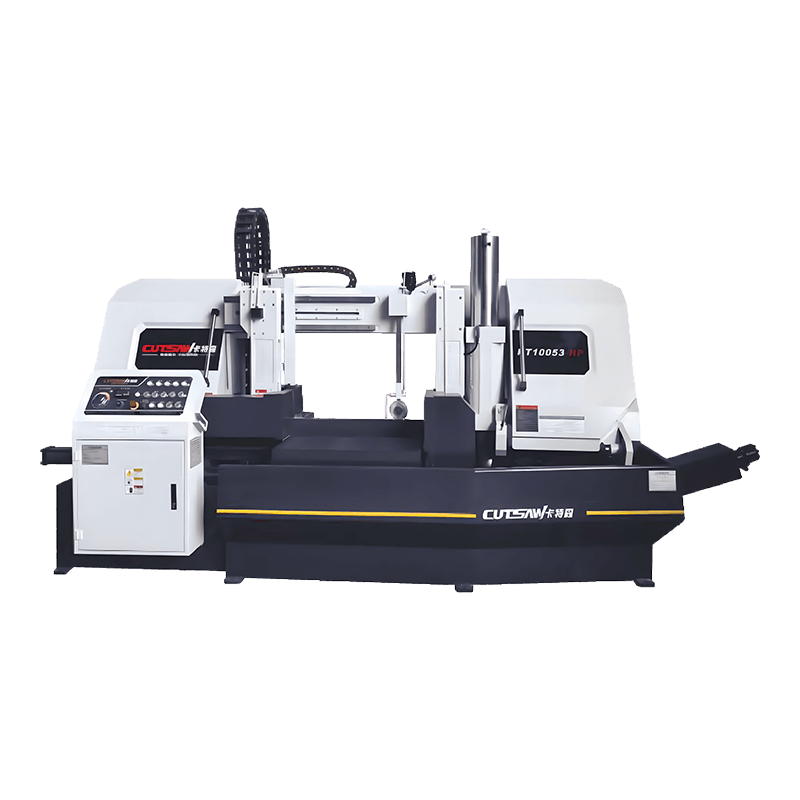
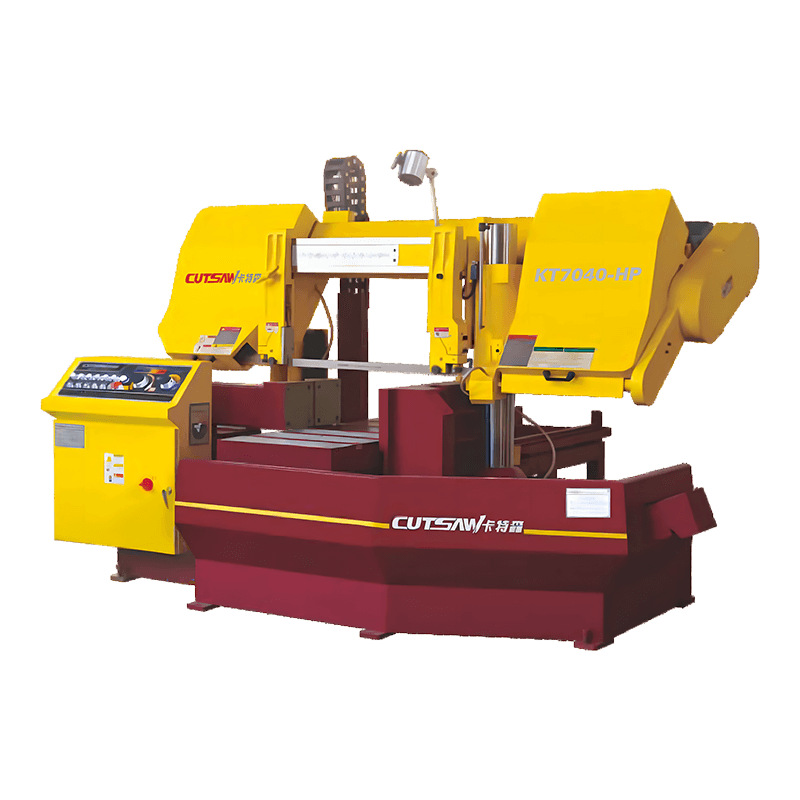
Large billet, heavy plate, and thick tube change the economics of edge quality. The cut runs longer, and any deflection has more time to become a burr or taper. A double-column or gantry structure usually matters more than headline speed: the frame resists twisting, guide arms hold the blade close, and the vice supports the full section.
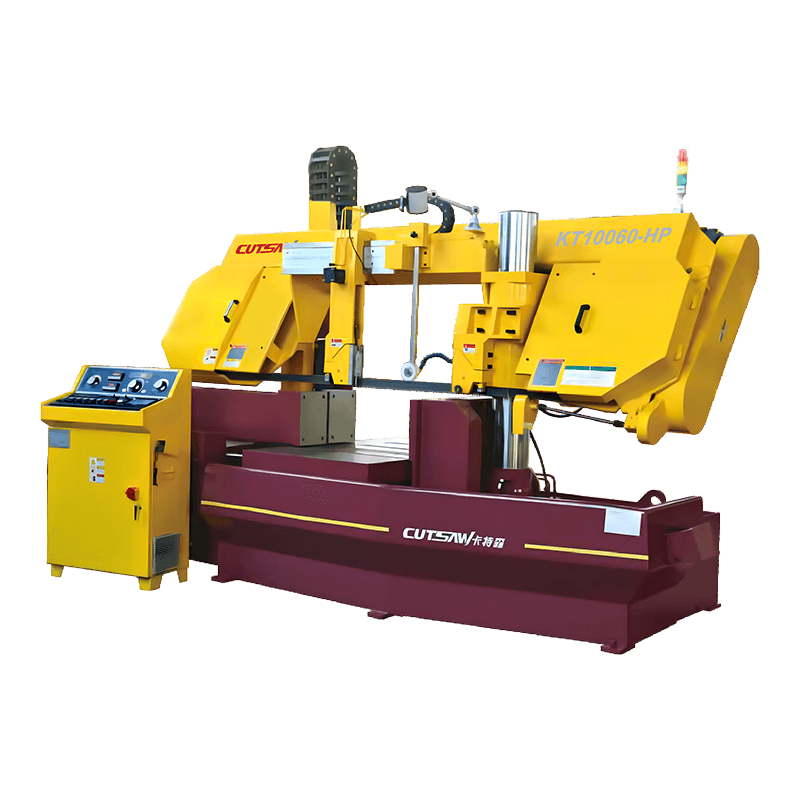 KT10060-HP Heavy-Duty CNC Dual-Column Band SawFor large billet, heavy plate, and thick tube, this dual-column band saw offers heavy steel frame hydraulic blade tensioning and 600 x 1000 mm capacity.View Product →
Specify the heaviest part in the family, not the average one. Ask for a sample cut on the largest section, with the production fixture and the intended blade.
Acceptance standards that prevent arguments
Put the edge requirement into the purchase order in a form that can be measured. The bands below are examples, not universal limits; confirm them against the drawing, downstream operation, and material condition.
| Downstream operation | What to check | Example acceptance band | Why it matters |
|---|---|---|---|
| Robot pick-and-place | Burr height and loose edge | ≤0.15 mm, no loose sliver | Gripper seating and line stability |
| Welding fit-up | Feather burr at joint face | No visible feather burr; ≤0.1 mm | Arc stability and gap control |
| Coating or painting | Visible burr after pretreatment | No protruding edge after blast | Adhesion and appearance |
| Fatigue-critical part | Edge radius and microcrack | ≤0.05 mm and no microcrack | Crack initiation risk |
Measurement method matters as much as the number. A caliper cannot reliably find a feather burr. Use a height gauge with magnification, a profile projector, or a controlled visual check at the agreed magnification. Record alloy, blade, feed, and fixture with the sample.
The cost side: burr is rarely just a cosmetic defect
A small burr becomes expensive after it leaves the saw. Manual deburring adds handling, consumables, inspection, and the risk of removing too much material. In robot-fed cells, a rolled edge can cause gripping errors and line stops. In welding, a feather burr can disturb fit-up and arc stability. In coated parts, a loose edge can interrupt pretreatment.
The calculation is total cost per acceptable part: saw cycle time, blade life, deburring labor, scrap, and inspection. A fast machine that leaves a feather edge has simply moved the cost to finishing.
“Burr-free” is a drawing callout, not a brochure adjective. The saw either delivers an edge the next process can use, or it does not.
Procurement questions that reveal real capability
Use the sample cut as a capability test, not a beauty contest. The supplier should run the production alloy, proposed blade, and a fixture representing the real part. Ask these questions before the quote is final:
- What burr height and edge condition will you guarantee, and how will we measure it?
- Which blade pitch, carbide grade, and tension setting will production use?
- How is downfeed controlled at a hard inclusion or thin wall?
- What is the coolant strategy, and how are chips removed from the kerf?
- How is the part supported on the exit side of the cut?
- Can we inspect the last 50 mm of a production sample, not only the first cut?
If the answer is only “our machine is burrless,” the specification is incomplete. A good supplier asks for the drawing, the downstream operation, and the edge limit before recommending a model.
Bottom line: buy the edge you can inspect
Burrless sawing is a process result. The machine must be rigid enough to resist deflection, the blade must be sharp and matched to the alloy, the clamp must support the exit side, and the feed and coolant must keep tooth load stable. A high-speed circular saw often wins on thin plate and small bar; a CNC band saw often wins on thick sections, bundles, and mixed production. Heavy plate and large billet usually justify a double-column or gantry structure.
Do not buy the word “burrless.” Buy a sample cut, a measurement method, and a repeatable process window. Then edge quality is not a surprise at final inspection—it is a specification both sides can verify.