English
 русский
 简体中文


Sawing Machine Types, Uses, and Safety: Choose by the Cut, Not the Catalog
The right saw does not simply cut metal. It holds the work, controls the blade, and keeps the operator outside the risk zone while repeatable parts leave the table.
A 90 mm solid bar and a 20 mm steel plate rarely belong on the same machine. One asks for a band saw with firm clamping and a controlled descent; the other may run faster on a carbide circular or plate saw. Angle frames, tube bundles, and large gantry work add further distinctions. The practical conclusion is simple: select the machine by cut geometry, volume, and material first, then verify the safety controls and automation that make those cuts repeatable.
Most expensive saw purchases fail at the point where one of those inputs was left out of the specification. A machine can have a convincing CNC screen and still waste money if the blade cannot be guided close to a short remnant, if the clamp cannot hold a bundle, or if the guard has to be removed for a routine angle cut.
Begin with the cut geometry, then name the machine
Industrial sawing machines are usually grouped by structure and blade path. Horizontal band saws, vertical band saws, double-column machines, gantry saws, miter or angle saws, circular saws, and plate saws all solve different handling problems. The label matters less than the way the work is supported and the blade is presented.
| Machine type | Typical structure | Best-fit work | Safety focus | Buying cue |
|---|---|---|---|---|
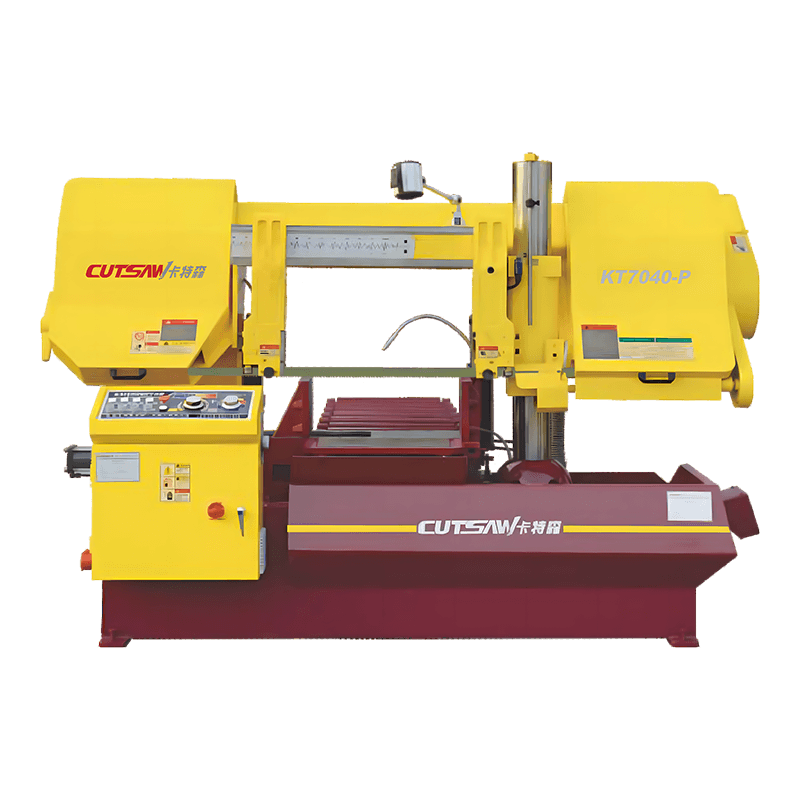
| Horizontal band saw | Horizontal blade path, vise or hydraulic clamp, manual to CNC feed | Bar, tube, profile, general fabrication, mixed batches | Blade guard, clamp security, material support on both sides | Check remnant length, feed control, and clamp opening |
| Vertical band saw | Vertical blade, fixed or adjustable table, guide finger | Contour work, tooling blanks, irregular shapes, resawing | Blade exposure, guide adjustment, hand placement | Confirm throat depth and table stability for the part |
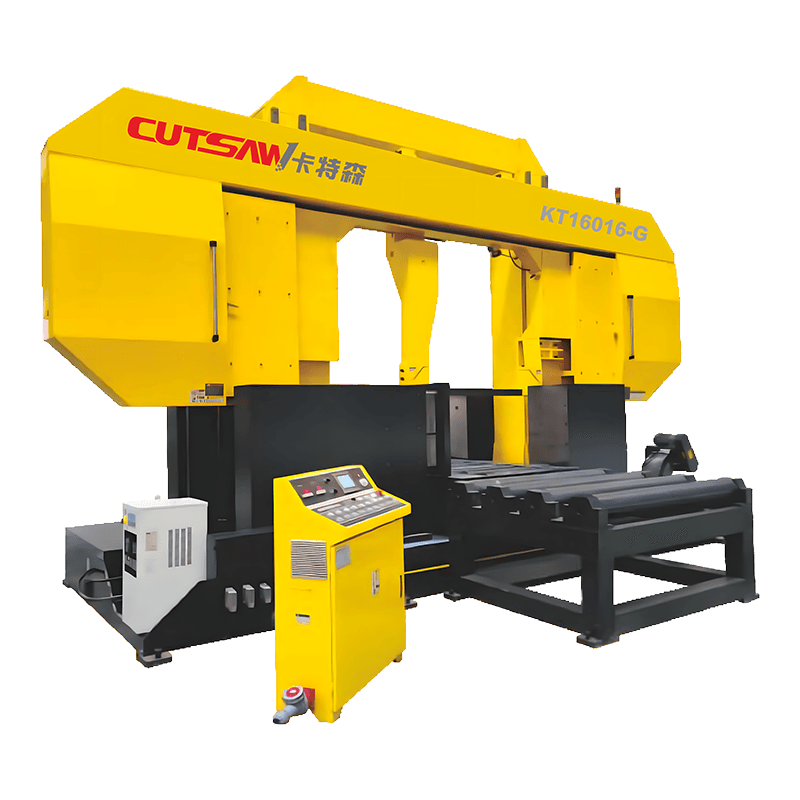
| Double-column band saw | Twin columns, heavy frame, hydraulic clamping | Large billets, heavy sections, high-clamping force | Clamp pressure, blade tension, controlled descent | Rigidity and service access matter more than screen size |
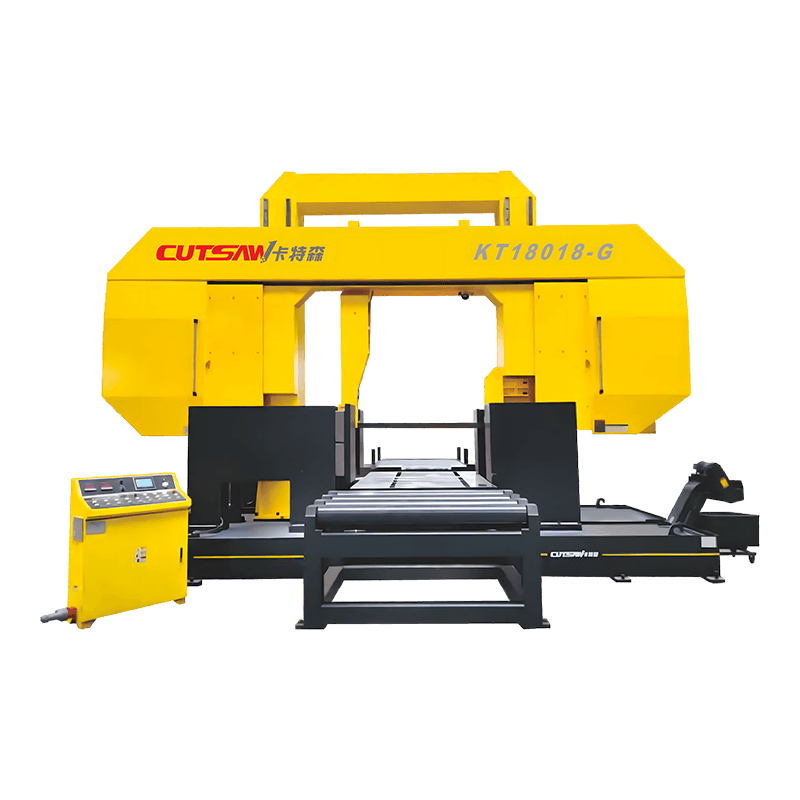
| Gantry band saw | Bridge or gantry beam over a wide table | Large plate, long beams, oversized fabricated sections | Material handling, guard clearance, table loading | Verify table size and lifting plan before delivery |
| Miter or angle band saw | Rotating head, angle vise, or swivel base | Frame joints, 45-degree cuts, structural fabrication | Angle lock, guard position through the cut, clamping | Test angle repeatability, not just the angle scale |
| Circular or plate saw | Carbide disc, high-speed spindle, plate or bar support | Plate, round bar, tube, high-volume straight cuts | Disc guard, chip control, clamp and support close to the blade | Check burr, blade change time, and coolant or chip handling |
Angle work changes the specification
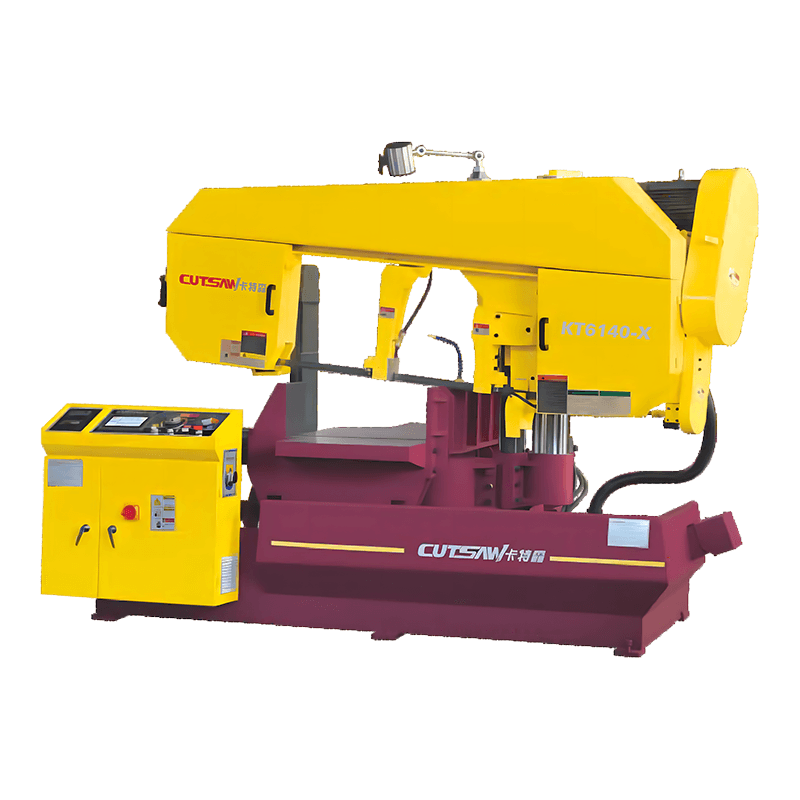
For frames and welded assemblies, an angle band saw removes the need to re-fixture a part after a straight cut. The real question is whether the angle locks securely under load and whether the guard still covers the blade at the chosen position. A 45-degree scale is not proof of repeatability; a test cut on the actual profile is.
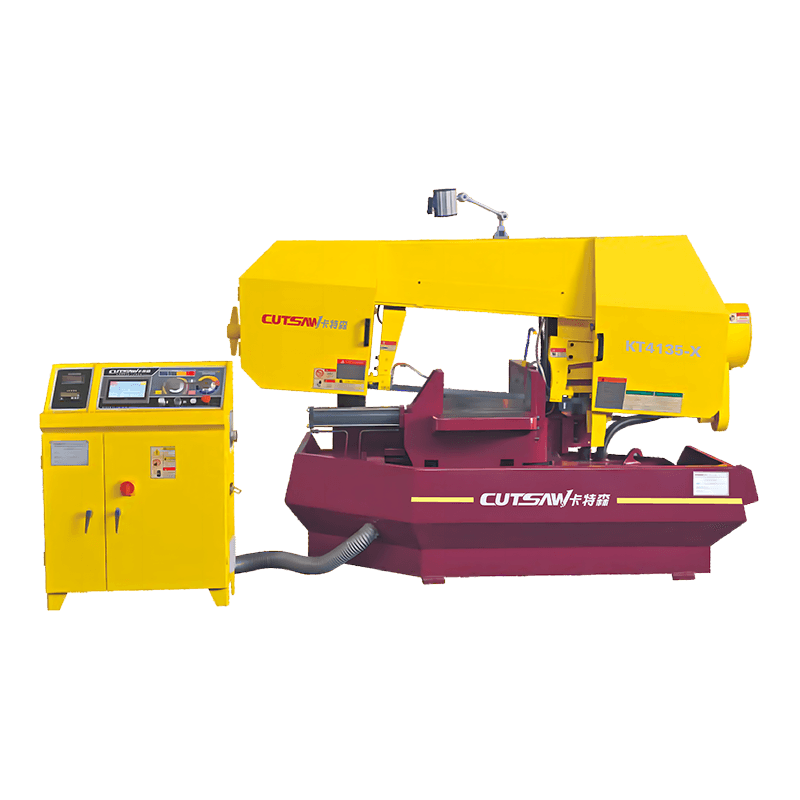 CUTSAW Series Angle Band Sawing MachinesAngle and miter band saw category with KT4135-X and KT6140-X, featuring CNC swivel-head control and adaptive downfeed for angled cuts.View Product →
Where the main sawing machine types earn their keep
A general fabrication shop often needs one saw that can move between bar, tube, and profile without becoming a bottleneck. A CNC band saw with automatic feed reduces changeover time, but only if the clamp and blade guide suit the shortest part in the batch. When parts repeat, CNC band sawing for modern manufacturing matters less as a label and more as a promise: the same clamp position, blade speed, and feed rate on every cycle.
- General metal cutting: bar, tube, angle, channel, and plate cut to length.
- Structural work: mitered frames, brackets, and weld-ready components.
- Heavy sections: large billets and thick profiles that demand a double-column frame.
- Large plate and beams: gantry loading with safe material handling.
- High-volume plate: circular or plate saws where speed and burr control matter.
Batch cutting and bundle work
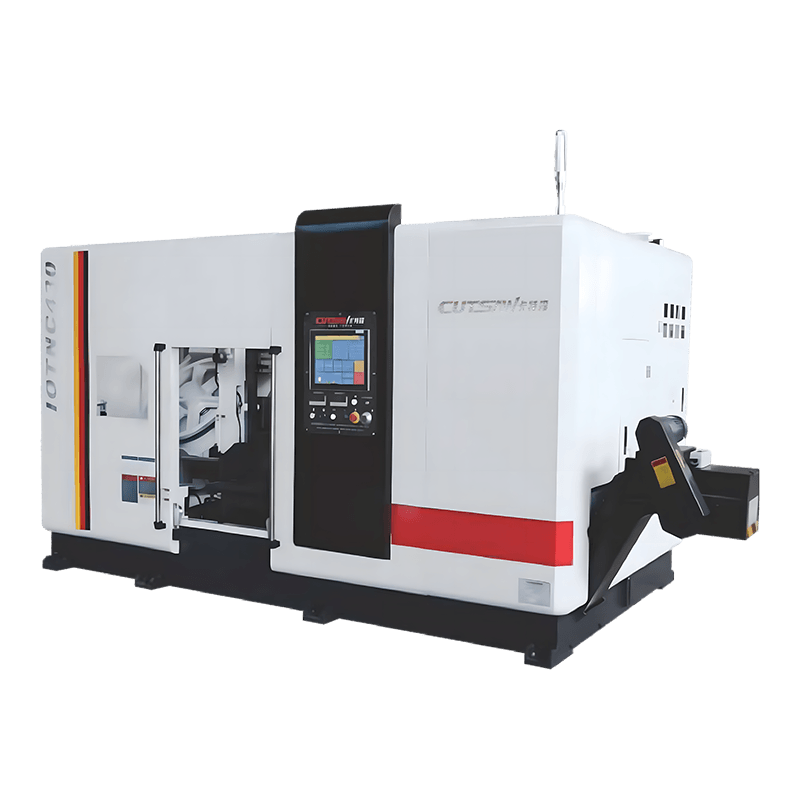
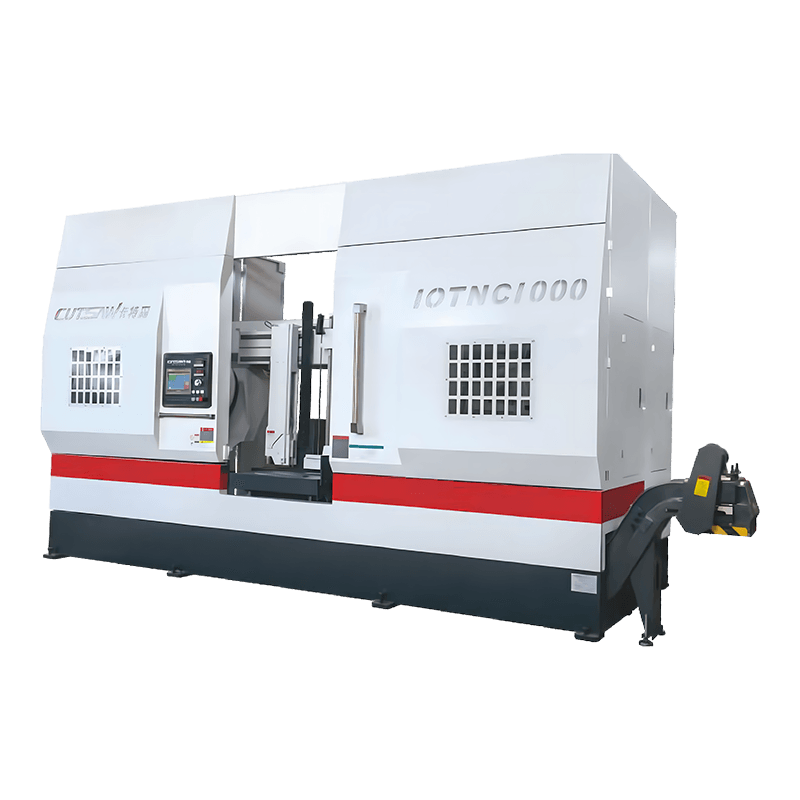
When a shop cuts bundles of bar or tube, the value is in the clamp, the feed system, and the ability to keep every piece aligned. A bundle saw that saves handling time but exposes the operator to shifting stock is not a productivity gain. Ask for the clamping sequence, the maximum bundle size, and the way parts are supported as the blade exits.
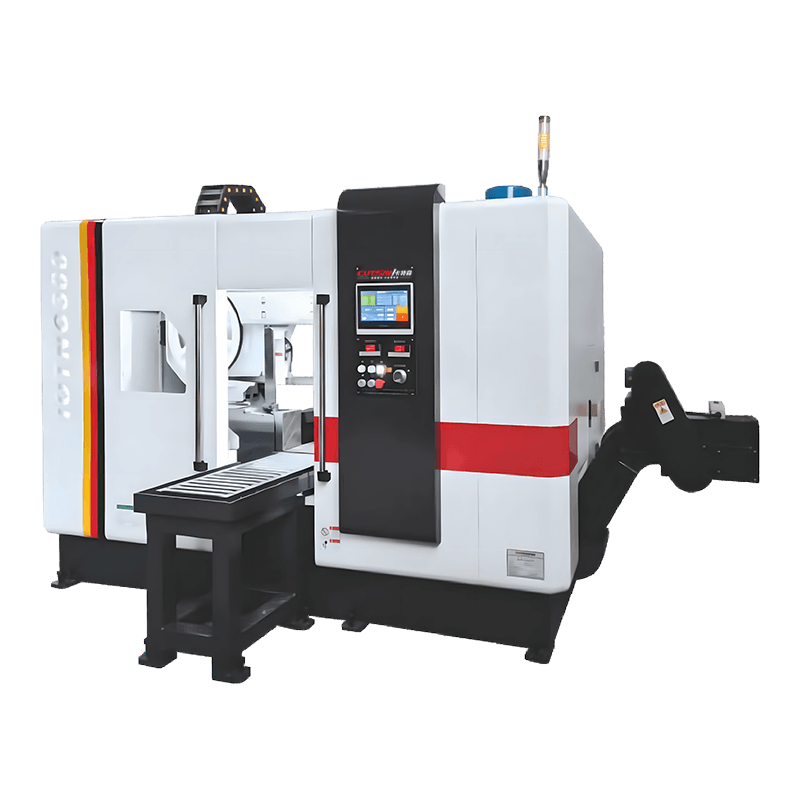 CUTSAW Smart High-Speed Band Sawing MachinesHigh-speed CNC band saw category with IOTNC models, including bundle cutting and adaptive control for bar, tube, and difficult-metal cutting.View Product →
Tube, bar, and mixed profiles
Tube cutting adds a different risk: the blade can grab a round section if the clamp does not hold it against rotation. A dedicated pipe-cutting band saw with a shaped clamp is usually more predictable than a general vise that only grips the outer diameter. For mixed profiles, the blade guide should sit close to the work without forcing the operator to improvise a support.
Material and part shape change the safety equation
Stainless, tool steel, aluminum, and plastics do not respond to the same blade pitch, speed, or coolant strategy. Harder material can raise cutting temperature and blade stress; softer material can produce long chips or poor blade engagement. The machine must allow speed and feed changes without turning a routine adjustment into an unsafe workaround.
Plate work rewards a rigid table and close blade support. A high-speed carbide circular saw can produce a clean edge and short cycle time, but the guard, chip collection, and clamping must be designed for plate rather than adapted from a bar machine. Thin plate needs support near the cut to avoid vibration and blade pinching.
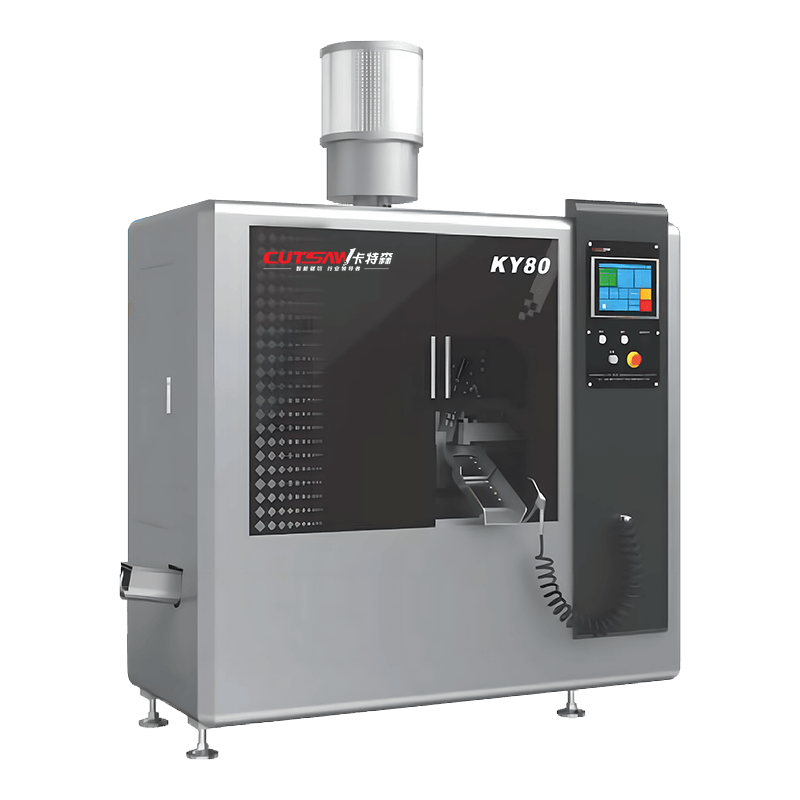 CUTSAW High-Speed Metal Circular Sawing MachinesMetal circular saw category with KY80, KY120, KY230, and KY150 models, including carbide plate saws and TCT/HSS blade options for pipe and bar cutting.View Product →
Info: Coolant and chip removal are not housekeeping details. They influence blade life, cut finish, and the operator's exposure to hot chips and mist. Confirm the delivery method, tank access, and cleaning routine before the machine is installed.
For heavy or large-section work, the material handling plan belongs in the same conversation as the saw specification. Roller tables, lifting equipment, and outfeed supports can reduce the temptation to reach across a moving blade or hold a part by hand.
Safety is a specification, not a sticker
A saw can carry a CE mark or a safety certificate and still be unsafe in a particular shop if the guard, clamp, and work handling do not match the actual part. Safety begins before purchase: it sits in the guard design, the control logic, the material support, and the training routine that surrounds the machine.
If the operator has to defeat a guard to make the cut, the process is wrong, not the operator.
Warning: Never remove, bypass, or wire around an interlock to save a setup step. A blade that is still slowing down is still dangerous, and a clamp that can release under pressure can turn a cut into a pinch or impact hazard.
- Verify blade guards and interlocks before every shift, including angle and vertical configurations.
- Clamp the work securely and support the outfeed so the part cannot drop or rotate into the blade.
- Set blade tension and speed for the material; do not rely on sound alone to judge the cut.
- Keep chip removal and coolant delivery working, and clean around the blade path safely.
- Use eye, hearing, and foot protection as required, and keep hands outside the guarded zone.
- Lock out the machine before blade changes, guide adjustments, or clearing a jam.
- Train operators on emergency stops, remnant handling, and the limits of the clamp.
For setup and daily checks, a practical guide to sawing machine use is useful only when it is tied to the actual model. Ask for model-specific guarding drawings, the emergency-stop arrangement, and a residual-risk list in the handover documents.
A buying checklist that prevents expensive surprises
Do not compare saws by horsepower alone. Compare them by the cut they must repeat, the stock they must hold, and the safety routine the operator can sustain over a full shift.
- Test the shortest remnant and the largest section the shop expects to cut.
- Bring a sample of the actual material and profile to the demonstration.
- Measure angle repeatability over several cycles, not one display reading.
- Confirm clamp pressure, bundle capacity, and support for long outfeed.
- Review guard access, chip removal, coolant maintenance, and blade change time.
- Ask for safety documentation, spare-parts availability, and service response.
- Include operator training and lockout procedures in the purchase plan.
A supplier that claims ISO 9001, CE, or machinery safety certification should be able to provide current documents and a clear explanation of the machine's limits. A capable saw is one that makes the safe cut the easy cut.
The practical takeaway
Choose the sawing machine type after the part geometry, volume, and material are known. A horizontal band saw suits mixed bar and profile work; a double-column or gantry machine suits heavy sections; an angle saw protects repeatability on mitered frames; a circular or plate saw is often the better fit for high-volume plate. Safety must be specified with the same discipline as capacity, because guards, clamps, coolant, and chip control determine whether the machine can be used as intended.
Success: The best safety investment is often a correctly sized machine with a guard, clamp, and service access that operators actually use. Fit reduces workarounds, and workarounds are where risk hides.
SINAIDA's CUTSAW and SINAIDA ranges reflect this logic across angle, double-column, gantry, circular, plate, vertical, and smart high-speed sawing categories. The useful question is not which model looks most advanced, but which configuration holds the work, guides the blade, and supports a safe, repeatable cut for the parts a shop actually runs.