English
 русский
 简体中文


The short answer: geometry first, volume second
If your parts are tall, long, stacked, or awkward enough to need a fixture and an operator watching the line, a vertical sawing machine will usually cut cleaner and change over faster than a horizontal one. If your work is thousands of identical straight cut-offs per shift, a horizontal automatic will beat it on throughput every time. The decision is that blunt, and most of the disappointment buyers feel six months after installation comes from choosing the wrong layout rather than the wrong supplier.
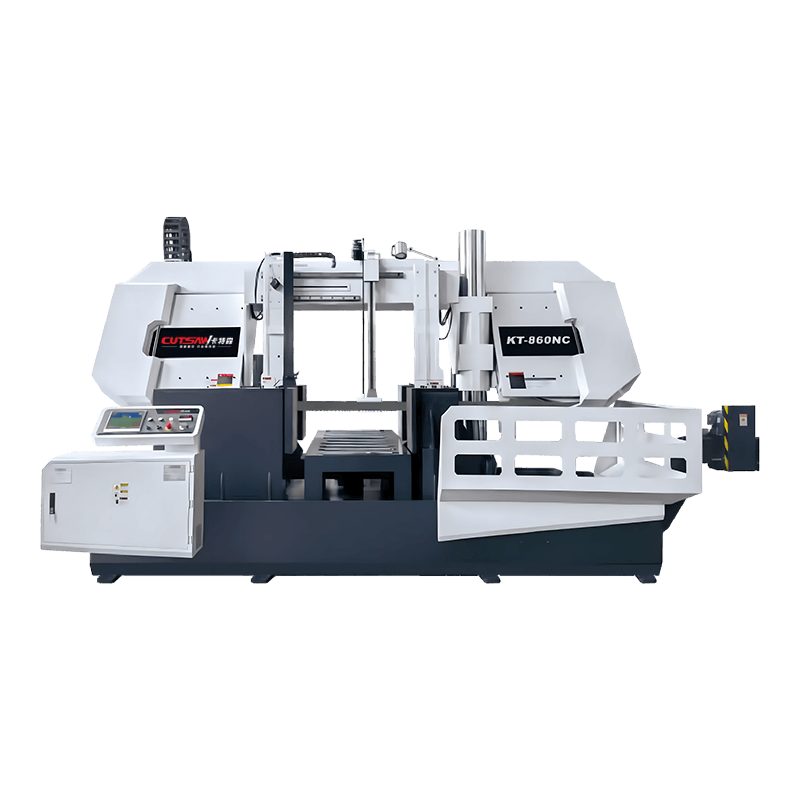
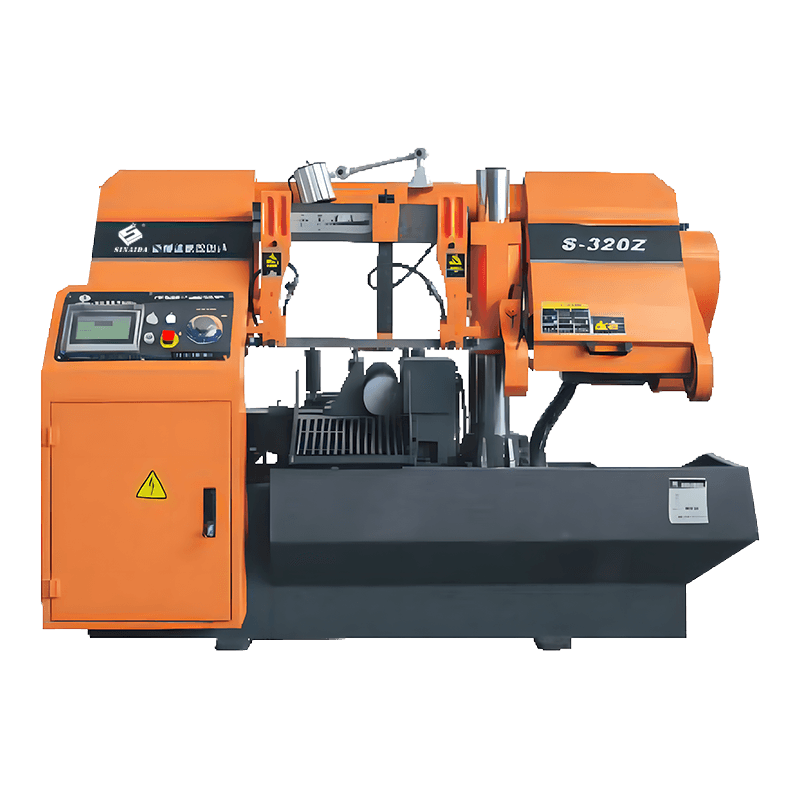
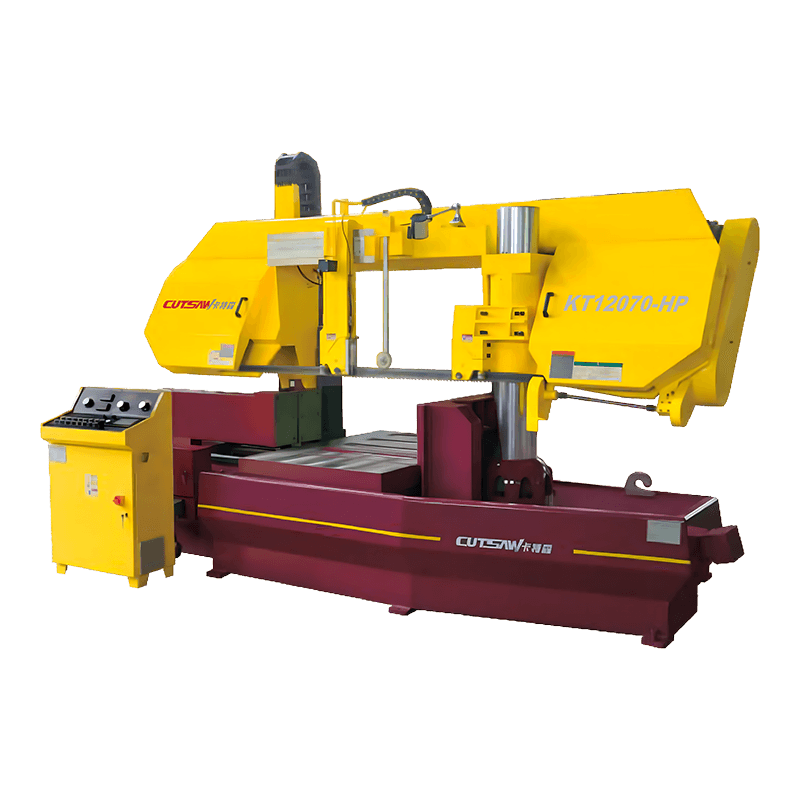
The reason is mechanical. On a vertical machine the blade runs in a fixed vertical plane and the workpiece rests on a table, so the operator guides the work by hand or through a powered table feed. Gravity holds the part down, sight lines are direct, and the same table can carry a plate stack, a length of tube, or a contoured blank. On a horizontal machine the blade descends onto a clamped bundle and the cycle runs without anyone standing over it. Each layout is excellent at precisely what the other finds awkward. Our own breakdown of how the vertical layout behaves against a horizontal machine goes deeper into blade path, clamping and operator exposure.
What the vertical layout actually changes
The practical advantages are specific, and they are the ones worth testing against your own job list:
- Direct sight of the cut line, so kerf drift, blade wander and clamping lift show up immediately rather than at final inspection.
- Stack and bundle cutting, where thin plates clamped together behave as one solid piece, which matters for fixture, die and jig work.
- Contour and resaw capability, where a narrow blade turns the table into a profiling station for one-offs, repairs and prototypes.
- Fixturing for awkward shapes, because castings, weldments and pre-machined parts clamp to a table rather than into a vise.
- Compact footprint for tall work, where a vertical machine often occupies less floor than a horizontal sized for the same section.
The trade-off is equally concrete: the operator is inside the process. Output depends on how fast someone loads, clamps and feeds, and table load ratings quietly cap what you can stack. If a machine is rated for a heavy plate but the table structure flexes under it, the cut will bow no matter how sharp the blade is.
Vertical and horizontal, side by side
| Criterion | Vertical band saw | Horizontal band saw |
|---|---|---|
| Geometry it handles best | Tall plate, stacked sheet, contoured blanks, long sections fed by hand | Bar, tube, billet and block cut square to length |
| Operator involvement | Continuous, through manual or powered table feed | Setup only; the cycle then runs unattended |
| Straight cut-off throughput | Moderate | High, especially with automatic indexing |
| Angle and miter work | Tilt table or swivel head, strong for one-offs | Dedicated swivel head, strong for repeats |
| Changeover between jobs | Minutes, fixture-based | Minutes, program-based |
| Weak point to watch | Table load limit and operator fatigue over a long shift | Fixture range and bundle alignment |
The specifications that decide whether the machine fits
Ignore the brochure headline and read five figures instead: throat depth, maximum work height, table load, blade width range and blade speed range. Everything else is secondary.
- Throat depth and work height: measure your tallest recurring part and add 20 to 30 percent headroom. Buying to the single largest part you have ever produced is how machines end up oversized and underused.
- Table load capacity: quoted in kilograms, but the useful figure is load per square metre. A two-tonne table sounds generous until a full-size plate lands on it.
- Blade width range: narrow blades of roughly 6 to 13 mm make contour work possible; wide blades of 25 to 40 mm hold a straight line in thick section. Confirm the guides and wheels support both ends of that range.
- Blade speed range: stainless, tool steel and aluminium want different surface speeds. An inverter-driven range of about 15 to 100 m/min covers most shop work; stepped pulleys do not.
- Feed and clamping: manual, hydraulic or servo feed changes repeatability far more than motor rating does. Ask for positioning tolerance, not kilowatts.
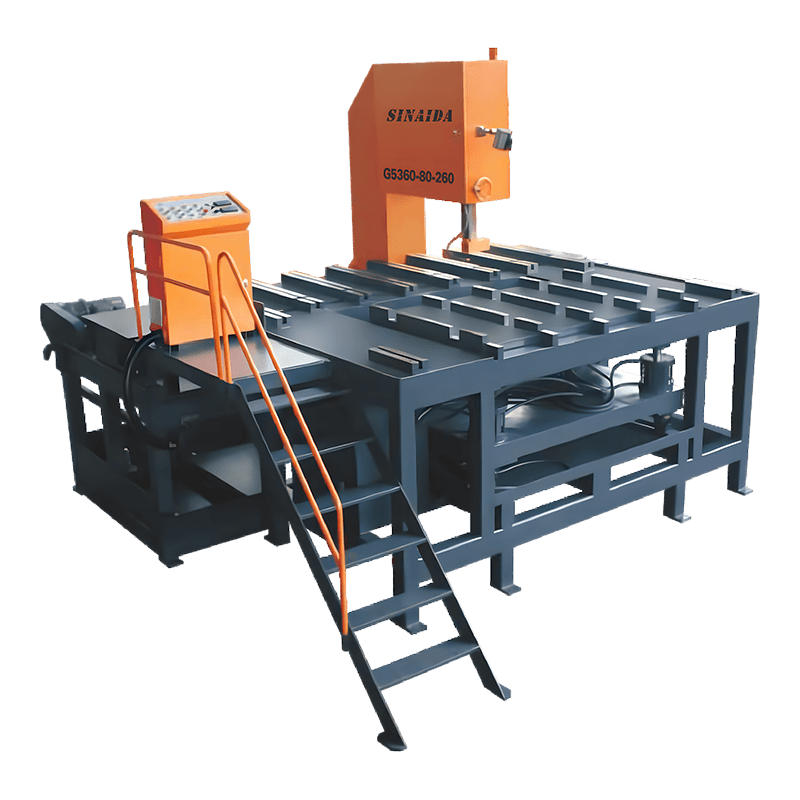
Zhejiang SINAIDA Machine Tools builds its vertical range around these variables rather than around one headline model. The KT10090350S handles steel plate with a hydraulic table, the KT5050250S adds CNC control for repeat work, and the G-series models from G5335 up to G536080260 and G5385100350 extend throat and height for beam and structural cutting. The company states ISO 9001, China Machinery Safety Certification and EU CE compliance across its production.
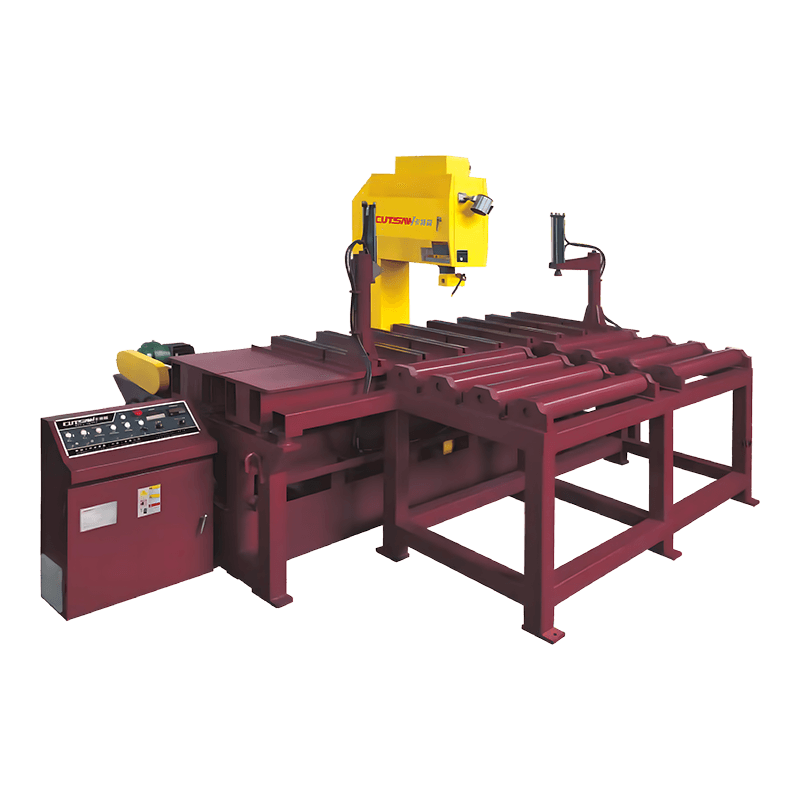
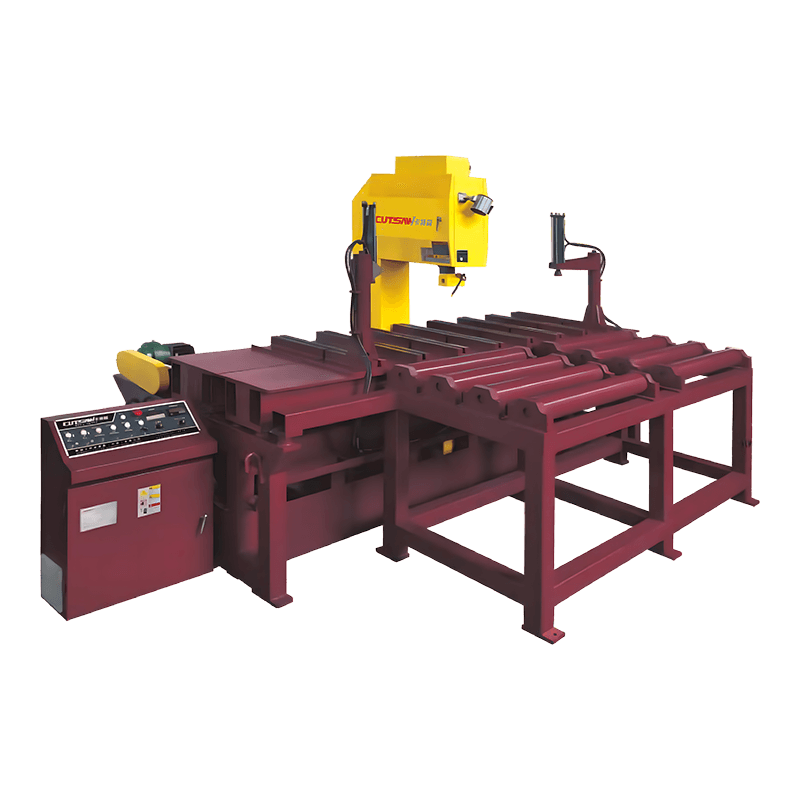 CUTSAW Series Vertical Band Sawing MachinesBrowse CUTSAW vertical band sawing machines, including KT5050-250S and KT10090-350S, for precision steel cutting, contour work and efficient material use.View Product →
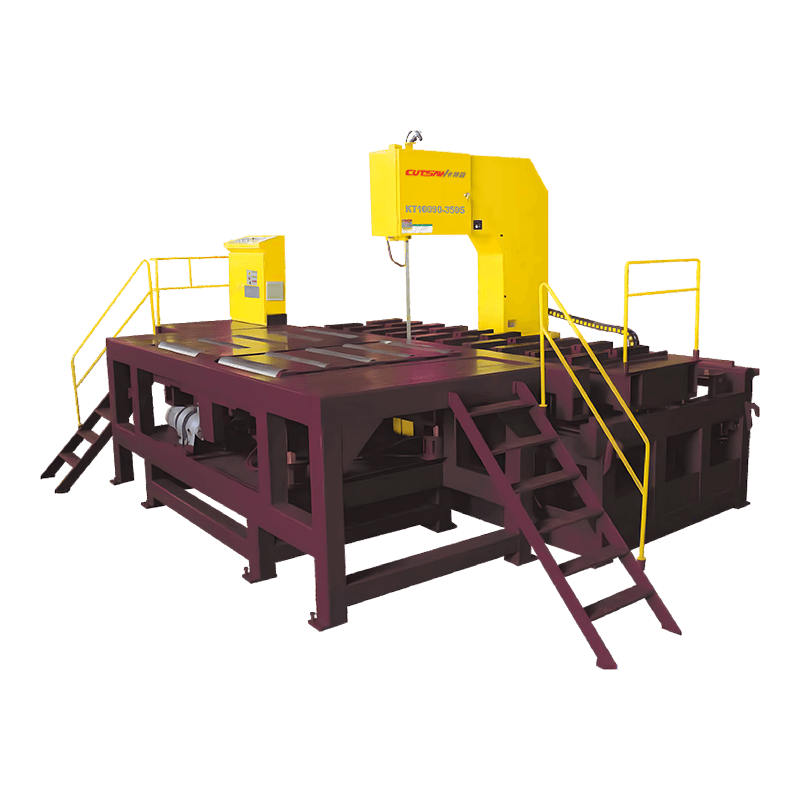 KT10090-350S Vertical Metal Band Saw for SteelLarge-capacity vertical saw for steel plate and irregular workpieces, with 18–80 m/min variable blade speed, hydraulic tensioning and cooling, and precision ball-screw feed.View Product →
Blade speed, tension and coolant do more for finish than horsepower
Surface speed sets blade life more than any other single setting. Mild steel cuts comfortably around 60 to 90 m/min, stainless typically wants 20 to 35 m/min, and aluminium rewards higher speed with coarser tooth pitch and generous chip clearance. Tension is the second lever: an under-tensioned blade drifts in the kerf, and the resulting bow looks exactly like a worn guide or a misaligned column. Flood coolant, correctly mixed and filtered, controls heat at the tooth tip and flushes chips out of the cut so the blade does not re-cut them.
Watch this before calling service: a bowed or scored cut on a vertical machine is diagnosed as an alignment fault far more often than it deserves. Check blade life, tension and coolant concentration first, because a dull blade and tired coolant will imitate a structural problem convincingly.
Chip evacuation deserves the same attention. A vertical saw that recirculates fines through the coolant pump will slowly lose flow, and flow loss shows up as heat, then as tooth strippage, then as an unexplained blade bill.
Matching machine class to the volume you really run
Vertical saws are not a single product. They sit on a ladder, and the right rung is the one your current workload can keep occupied:
- Semi-automatic machines with hydraulic clamping suit job shops running mixed batches where the operator sets each cut.
- CNC vertical machines add programmable feed rates and repeatable table positioning, which pays off on recurring families of parts.
- Smart high-speed classes, such as bundle-cutting and AI-optimised models, target shops pushing volume where feed rate is adjusted continuously instead of by feel.
- Custom and oversized builds handle sections that standard castings cannot support, including beam and structural work.
Above roughly a metre of section, the argument usually shifts toward double-column and gantry structures, where the frame rather than the blade determines whether the cut stays square. For work that falls outside any catalogue entry, the sensible route is a documented custom build with an acceptance cut on your own material. The SINAIDA vertical sawing machine range covers both the standard and the made-to-order end of that ladder.
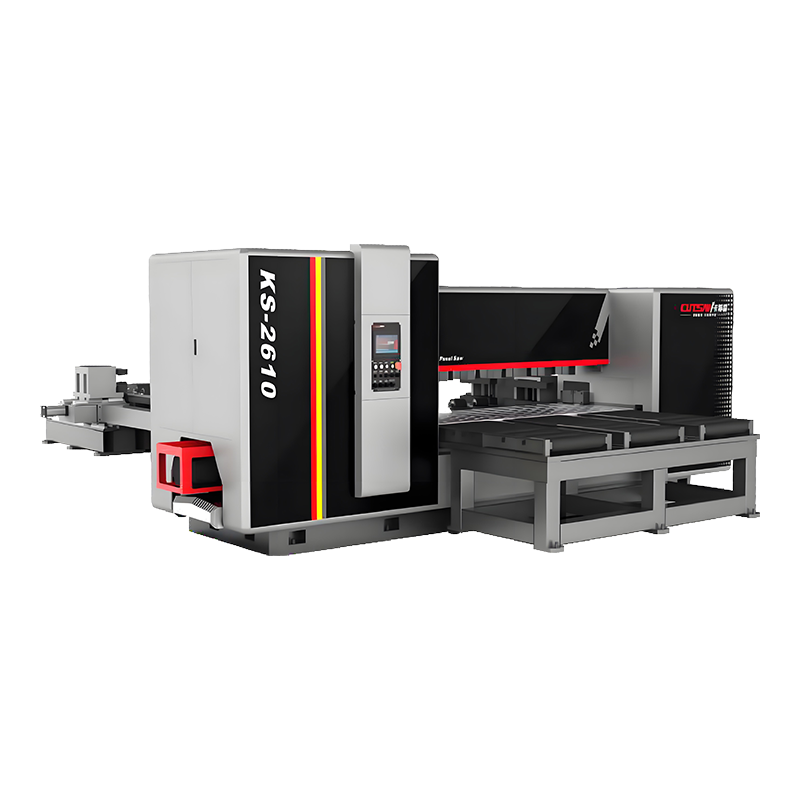 Customized Sawing Machine Design and ProductionExplore SINAIDA’s custom sawing-machine design and production capability for extra-large or non-catalogue work, with documented builds and acceptance cuts on your material.View Product →
A procurement checklist that catches most surprises
Most commissioning problems are commercial rather than technical. Settle these points before the purchase order is signed:
- Send real parts, not drawings alone, and ask for a timed acceptance cut recording cycle time, squareness and surface finish.
- Confirm throat and height against your recurring work, and get the figures written into the specification.
- Ask what the table does under a full-size plate, not just what it is rated to hold.
- Verify blade width range against the guides; a machine that claims contour work but only guides 25 mm blades is a straight-line machine.
- Check power, air and coolant requirements against your building services before shipping.
- Obtain a spare parts list with lead times for guides, wheels, coolant pump and control board.
- Confirm what commissioning and operator training include, and put it in the contract.
- Request certificates for quality and safety claims, plus a reference list you can actually call.
That last point matters when a supplier claims aerospace-grade supply status. SINAIDA states an annual capacity of 3,600 units and qualified-supplier status with the China Academy of Launch Vehicle Technology; treat such claims as a starting point for verification, not as a substitute for it.
The takeaway
Vertical sawing is not an upgrade path from horizontal cutting. It is a different answer to a different question: can the work be held, seen and guided on a table, and does the throat allow it? Answer that honestly and the layout decision makes itself.
Then buy the capacity with headroom, insist on an acceptance cut with your own material, and budget for blades and coolant as running costs rather than afterthoughts. A vertical sawing machine that fits the parts you make every week will outperform a larger, faster one that fits only the parts you made once.